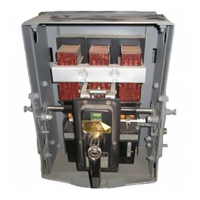
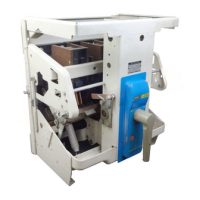
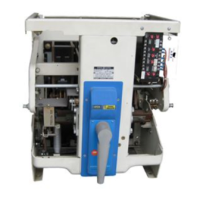
This document describes the installation and maintenance of MicroVersaTrip® Plus and PM Conversion Kits for GE Types AK-15, AK-25, AKU-25, AKR-30S, and AKRU-30S Low Voltage Power Circuit Breakers. These kits are designed to upgrade existing GE Low Voltage Power Circuit Breakers by replacing older trip devices (EC Power Sensor, ECS, SST, MicroVersaTrip, and Micro VersaTrip RMS-9) with enhanced solid-state MicroVersaTrip® Plus or PM trip units, incorporating the latest technological advancements in GE trip systems.
Function Description:
The MicroVersaTrip® Plus and PM Conversion Kits provide an upgrade path for older GE low voltage power circuit breakers, enhancing their protective capabilities with modern solid-state trip units. These trip units are responsible for detecting overcurrents and ground faults, and initiating a trip operation to protect the electrical system. The conversion process involves stripping the breaker of its existing trip devices and installing the new kit components, followed by performance testing. The kits are designed to conform with ANSI standard C37.59, ensuring proper installation and acceptance testing of the converted breaker.
Important Technical Specifications:
- Breaker Compatibility: GE Types AK-15, AK-25, AKU-25, AKR-30S, AKRU-30S Low Voltage Power Circuit Breakers.
- Trip Unit Types: MicroVersaTrip® Plus and MicroVersaTrip® PM.
- Compliance: ANSI standard C37.59 for proper installation and acceptance testing.
- Current Sensor (CT) Ratings and Resistances:
- AK-15: 150A (7-15 Ohms), 225A (12-20 Ohms)
- AK-25: 225A (12-20 Ohms)
- AKU-25: 600A (40-50 Ohms)
- AKR-30S: 150A (6-14 Ohms)
- AKRU-30S: 400A (21-25 Ohms), 800A (59-70 Ohms)
- Flux Shifter Trip Rod Gap: When the breaker is in the OPEN position and mechanism fully charged, the gap between the trip paddle and the end of the flux shifter trip rod should be set to 0.093 to 0.125 inches. A 0.100-inch diameter rod can be used for setting.
- Primary Contact Force (Drawout Breakers Type AK-15): The nuts on the ½ x 20 mounting bolts should be tightened to obtain a spring dimension of 13/16 to 27/32 inches. The proper dimension between contact fingers is 7/16 inches, resulting in a contact force of 60 to 70 lbs. when contacts are spread to ½ inch.
- Torque Specifications: Two 3/8" bolts in the CT strap should be torqued to 250 in.-lbs. to ensure proper contact integrity.
- Wiring: #14 minimum wire for neutral sensor connections, wires must be run together and tied to prevent loops.
- Power Supply for Flux Shifter Test: 9 V DC power source.
Usage Features:
- Upgrade Capability: Allows for the upgrade of existing breakers rather than complete replacement, offering a cost-effective solution.
- Enhanced Protection: Incorporates advanced solid-state trip units for improved overcurrent and ground fault protection.
- Four-Wire Ground Fault Option: Requires an additional neutral sensor (CT) for breakers used on 4-wire systems with grounded neutrals at the transformer. The neutral sensor is installed in the neutral bus and connected to the breaker via a 4th-wire neutral disconnect.
- Programmable Trip Unit: The kits include programmable trip units, allowing for customized protection settings.
- Compatibility with Accessories: Designed to accommodate various mounting circumstances or accessory combinations, with provisions for minor modifications or relocation of components if necessary.
Maintenance Features:
- Pre-Installation Verification: Installers should verify that appropriate current sensors and programmable trip units are furnished.
- Safety Procedures: Emphasizes critical safety procedures before, during, and after installation, including turning off and locking out power sources, removing the breaker to a well-lighted work area, ensuring the breaker is OPEN and springs are discharged, and avoiding intermediate positions in the switchgear compartment.
- Breaker Separation: Instructions for separating the front and back breaker frames (for AK-15 and AK-25) are provided, which is also an opportunity for normal breaker maintenance.
- Trip Device Removal: Detailed steps for removing existing overcurrent trip devices, primary disconnect fingers, and copper stud assemblies.
- Relay Remounting: Instructions for relocating and remounting X and Y relays on electrically operated AK-2-25 and AK-2A-25 breakers to create space for new components.
- Flux Shifter Installation and Adjustment: Clear steps for mounting the flux shifter trip paddle and assembly, including precise gap adjustment between the trip paddle and trip rod. An optional test for the flux shifter assembly is also provided.
- Programmer Bracket and Harness Installation: Detailed instructions for assembling the programmer shock mount bracket, mounting the X relay, modifying the X relay harness, and installing the programmer harness and connector.
- Communications Harness Installation: Guidelines for installing the communications harness on the breaker compartment's door hinge side to prevent damage, with specific instructions for AK-15/25 and AKR-30S breakers.
- Phase Sensor Installation: Comprehensive steps for mounting current sensor assemblies to the back frame, including stud insertion, CT positioning, and torque specifications.
- Equipment Conversion: Instructions for modifying stud shield insulators, remounting primary disconnect fingers (with specific details for AK-15 drawout breakers), and installing the insulator bracket and wire harness.
- Post-Conversion Testing: Mandates performance testing of the converted breaker before energizing, including verifying programmer installation, meggering the primary circuit, and primary injection testing for CTs, bus, wiring harness, flux shifter, and trip unit.
- Troubleshooting Guide: Provides a systematic approach to diagnosing malfunctions, including checking for nuisance tripping on ground fault equipped breakers, verifying sensor types, tap settings, and harness connections, and measuring sensor resistances.
- Cautionary Notes: Highlights important warnings such as not changing current sensor taps or trip unit settings while the breaker is carrying current, and the potential for harness plug failure if the adapter bracket is not installed correctly. Also notes that slight epoxy separation or surface imperfections on current sensors do not affect performance.

 Need help?
 General

 To Next Page