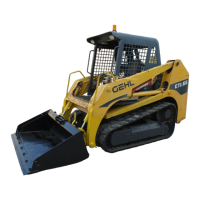
Using Rubber Tracks
Precautions
Follow the following precautions when
operating the machine:
Avoid changing course abruptly and
spinning on concrete surfaces whenever
possible.
Doing so may wear or damage the rubber
tracks.
Avoid drops that may expose the rubber
tracks to strong shocks.
Salt, potassium chloride, ammonium
sulfate, potassium sulfate, and triple
superphosphate of lime can damage the
tracks. If any of these substances get on
the tracks, wash them off thoroughly with
water.
Do not let the sides of the rubber tracks
rub against concrete or walls.
Be especially careful in the winter on
snowy or frozen surfaces as the tracks
tend to slip.
Use rubber tracks only at temperatures
between –25°C to + 55°C (–14°F to
131°F).
When storing the rubber tracks for long
periods of time (3 months or more), do so
indoors in a place not exposed to direct
sunlight or rain.
Preventing the Rubber Tracks from
Slipping Off
Heed the following to prevent the rubber
tracks from slipping off:
Always keep the tracks at the proper
tension.
When traveling up large cobblestone or
rock steps [20 cm (8 in.) or greater], climb
up the steps at a straight angle and do not
change course on top of the step.
When climbing in reverse, do not change
course at the point where the slope
starts.
Avoid traveling with one track on a slope
or projecting object and the other track on
a flat surface (with the machine at a tilt of
10° or greater). Travel with both tracks on
flat surfaces.



 To Next Page