NFPA 72, 2016 Edition, Chapter 29, Section 29.5.1 Required Detection, states the
following:
29.5.1.1 Where required by other governing laws, codes or standards for a specific
type of occupancy, approved single and multiple-station smoke alarms shall be
installed as follows:
1) In all sleeping rooms and guest rooms
2) Outside of each separate dwelling unit sleeping area, within 6.4m (21ft) of any
door to a sleeping room, the distance measured along a path of travel
3) On every level of a dwelling unit, including basements
4) On every level of a residential board and care occupancy (small facility), including
basements and excluding crawl spaces and unfinished attics
5) In the living area(s) of a guest suite
6) In the living area(s) of a residential board and care occupancy (small facility)
29.5.1.2 Where the area addressed in 29.5.1.1(2) is separated from the adjacent
living areas by a door, a smoke alarm shall be installed in the area between the door
and the sleeping room, and additional alarms shall be installed on the living area side
of the door as specified by 29.5.1.1 and 29.5.1.3.
29.5.1.3 In addition to the requirements of 29.5.1.1(1) through 29.5.1.1(3), where the
interior floor area for a given level of a dwelling unit, excluding garage areas, is
greater than 93m
2
(1000ft
2
)
, smoke alarms shall be installed per 29.5.1.3.1 and
29.5.1.3.2.
29.5.1.3.1 All points on the ceiling shall have a smoke alarm within a distance of 9.1m
(30ft) travel distance or shall have an equivalent of one smoke alarm per 46m
2
(500ft
2
)
is evaluated by dividing the total interior square footage of floor area per level by 46m
2
(500ft
2
).
29.5.1.3.2 Where dwelling units include great rooms or vaulted/ cathedral ceilings
extending over multiple floors, smoke alarms located on the upper floor that are
intended to protect the aforementioned area shall be permitted to be considered as
part of the lower floor(s) protection scheme used to meet the requirements of
29.5.1.3.1.
The installation of additional alarms of either the smoke, heat or CO type should
result in a higher degree of protection. Adding alarms to rooms that are normally
closed off from the required alarms increases the escape time because the fire does
not need to build to the higher level necessary to force smoke out of the closed room
to the required alarms. As a consequence, it is recommended that the householder
consider the installation of additional fire protection devices. However, it should be
understood that NFPA 72 does not require additional smoke alarms over and above
those called for in FIGURES 1, 2, 3 and 4 where required smoke alarms are shown.
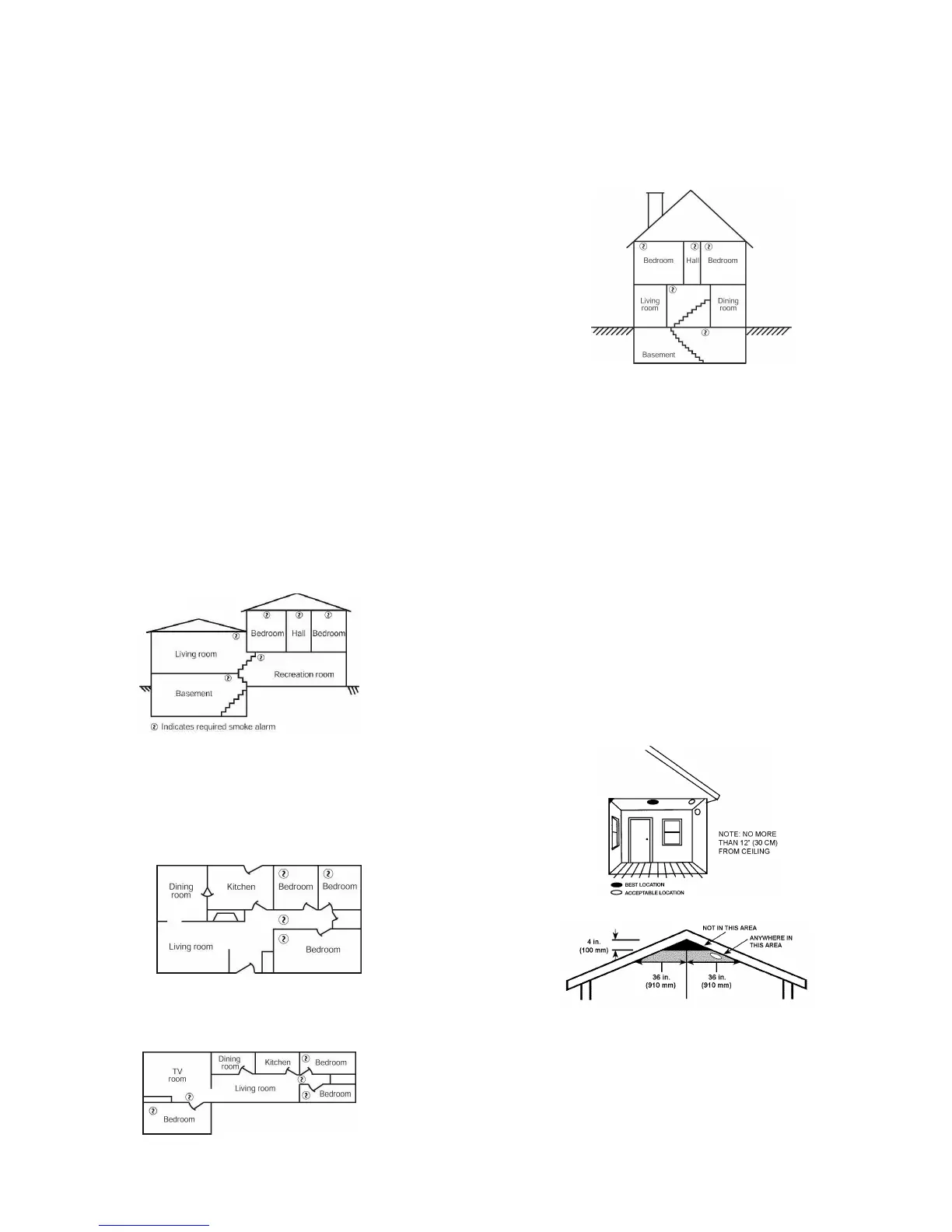
FIGURE 2: A SMOKE ALARM MUST BE LOCATED BETWEEN THE SLEEPING
AREA AND THE REST OF THE DWELLING UNIT AS WELL AS IN EACH BEDROOM
In dwelling units with more than one bedroom area or with bedrooms on more than
one floor, more than one smoke alarm is required, as shown in FIGURE 3.
FIGURE 2
FIGURE 1: A SMOKE ALARM MUST BE LOCATED ON EVERY LEVEL OF
DWELLING UNIT, INCLUDING BASEMENT, WITHIN EACH SLEEPING ROOM AND
OUTSIDE SLEEPING AREAS
Where to Locate the Required Smoke Alarms. The major threat from fire in a
dwelling unit occurs at night when everyone is asleep. Persons in sleeping areas can
be threatened by fires in the remainder of the unit; therefore, smoke alarms are best
located in each bedroom and between the bedroom areas and the rest of the unit as
shown in FIGURE 2.
FIGURE 1
FIGURE 4
FIGURE 4: A SMOKE ALARM MUST BE LOCATED ON EACH LEVEL IN ADDITION
TO EACH BEDROOM.
IMPORTANT CONSIDERATION
NFPA 72, 2016 Edition, Chapter 29, Section 29.8.1.4(5)(b) states: “Smoke
alarms installed in one- and two-family dwellings shall not remain in service
longer than 10 years from the date of manufacture.” Smoke alarms should be
replaced for the following reasons:
w Dust, dirt, and other environmental contaminants can affect your smoke alarm over
a prolonged period.
w Fast changing industry consensus standards and codes on all smoke alarms
make it advisable to periodically upgrade your smoke alarm to maximize life safety.
w Assurance that your smoke alarm needs are kept abreast with the constantly
improving electronic technology.
w Smoke alarms are recognized as one of the lowest cost ways to protect dwelling
inhabitants against the danger of fire(s). It makes good common sense to
periodically replace and update your smoke alarm that contributes so much to life
safety.
MOUNTING LOCATION
This smoke alarm can be mounted on a ceiling or wall with equal efficiency in either
location.
w Ceiling location - smoke alarm should be mounted as close as possible to the
center of a hallway or room.
w Wall location - locate the top of the smoke alarm not more than 12 inches from
the ceiling.
Figures 1, 2, 3, & 4 are reprinted with permission from NFPA 72, National Fire Alarm Code®, Copyright ©2002,
National Fire Protection Association, Quincy, MA 02169. This reprinted material is not the complete and official
position of the National Fire Protection Association on the referenced subject which is represented only by the
standard in its entirety. National Fire Alarm Code® and NFPA 72® are registered trademarks of the National Fire
Protection Association, Inc., Quincy, MA 02169
.
550-0008
Pg. S-3
FIGURE 5: RECOMMENDED SMOKE ALARM MOUNTING LOCATIONS
FIGURE 5
FIGURE 3: IN DWELLING UNITS WITH MORE THAN ONE SLEEPING AREA, A
SMOKE ALARM MUST BE PROVIDED TO PROTECT EACH SLEEPING AREA IN
ADDITION TO SMOKE ALARMS REQUIRED IN BEDROOMS
FIGURE 3
FIGURE 6: RECOMMENDED SMOKE ALARM LOCATION IN ROOMS WITH
SLOPED, GABLED, OR PEAKED CEILINGS.
The placement of the smoke alarm is critical if maximum speed of fire detection is
desired. Thus, a logical location for a smoke alarm is the center of the ceiling. At this
location, the device is closest to all areas of the room.
FIGURE 6
In addition to smoke alarms outside of the sleeping areas and in each bedroom,
NFPA 72 requires the installation of a smoke alarm on each additional level of the
dwelling unit, including the basement. These installations are shown in FIGURE 4.
The living area smoke alarm should be installed in the living room or near the stairway
to the upper lever, or in both locations. The basement smoke alarm should be installed
in close proximity to the stairway leading to the floor above. Where installed on an
open-joisted ceiling, the smoke alarm should be placed on the bottom of the joists.
The smoke alarm should be positioned relative to the stairway so as to intercept smoke
coming from a fire in the basement before the smoke enters the stairway.


 To Next Page
 Loading...