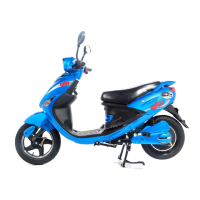
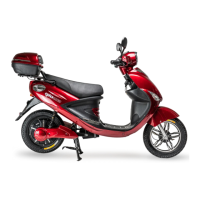
The GIO Electric Wisp eScooter is a personal electric scooter designed for urban commuting and recreational use. This manual provides comprehensive instructions for assembly, operation, maintenance, and troubleshooting, ensuring a safe and enjoyable riding experience.
Function Description:
The GIO Electric Wisp is an electric scooter that provides personal transportation. It is powered by a battery and controlled via a twist-grip throttle for acceleration and hand levers for braking. The scooter is designed for single-adult use and emphasizes safety and adherence to local traffic laws. It features a robust design with components like a rear fender, footrests, handlebars, pedals, and a front basket for carrying small items. The scooter's electrical system includes a motor, controller, and a sealed lead-acid (SLA) battery, all designed to work in harmony for efficient operation.
Important Technical Specifications:
- Load Capacity: The eScooter is designed for one adult only, with a maximum load capacity of 220 lbs (100 kg).
- Battery Type: Sealed Lead Acid (SLA) battery.
- Battery Life: Average battery life for SLA batteries is 2-3 years or 250-350 charge cycles.
- Charging Time: 8-10 hours for a full charge.
- Tire Pressure: Recommended tire pressure is between 30-40 PSI.
- Pedal Tightening Torque: Left pedal: counterclockwise (40NM recommended); Right pedal: clockwise (40NM recommended).
- Handlebar Hex Bolt Tightening Torque: 25NM recommended.
- Operating Temperature (Battery): Recommended between 0 and 35°C. Temperatures below -10°C may cause permanent battery damage.
- Warranty: 12-month limited warranty covering manufacturing defects for the product, including charger, motor, and controller, from the date of shipment.
Usage Features:
- Acceleration: Controlled by a twist-grip throttle on the handlebar. Rotate towards you to accelerate and away to slow down. Gradual power application is recommended for efficiency.
- Braking: Applied by squeezing levers on both sides of the handlebars. It is recommended to apply both front and rear brakes simultaneously, leading with the rear lever first, especially in slippery or wet conditions.
- Cruise Control: The manual advises keeping hands on brake levers to control speed and disengage cruise control, implying the scooter may have a cruise control feature, although its operation isn't explicitly detailed.
- Visibility: The scooter is equipped with vehicle lights for operation in darker conditions.
- Assembly: Requires a Phillips Screwdriver, 4mm & 6mm Allen wrenches, and a 14mm open-ended wrench. Key assembly steps include attaching the rear fender and footrests, installing handlebars, and connecting pedals.
- Battery Connection: The eScooter ships with disconnected battery packs. Users must connect positive red to positive red and negative black to negative black wires in the battery compartment before first use.
- Charging Process: Ensure the ignition key is switched to "OFF." Plug the charger's output into the charging port, then plug the charger into a standard wall socket. The charger light will turn red while charging and green when fully charged. Remove the charger from the wall outlet and then from the eScooter/battery once charging is complete.
- Storage: Turn off power when not in use and park on a level surface. Store in a dry, temperature-regulated area, away from direct sunlight, heat sources, open flames, or corrosive substances. Avoid extreme temperatures (cold/hot) to prevent battery damage.
Maintenance Features:
- Pre-ride Checklist: Before each ride, users should check:
- Headlight working condition.
- Brakes functioning properly and easily engaged.
- All screws, nuts, bolts, and parts securely fastened and adjusted.
- Tires for excessive wear, tears, cuts, proper seating on the rim, and correct inflation.
- Wheels spinning straight, and rims not bent or damaged.
- Battery fully charged.
- Cleaning: The frequency of cleaning depends on usage. Weekly cleaning is recommended for frequent riders. Clean gently, avoiding aggressive water sprays or power jets, especially near electrical components (battery, motor, brain module). Ensure the eScooter is dry after cleaning or riding in wet conditions. Do not open electrical parts to clean inside.
- Lubrication: After cleaning, lubricate moving and/or rubbing components such as axles, bushings, and free wheels approximately every 6 months (more often with heavy or bad weather use). Apply lubricant, let it sit, wipe off excess, and periodically clean with a degreaser before relubricating.
- Tire Maintenance: Maintain tire air pressure between 30-40 PSI to prevent decreased battery usage time, poor handling, and damage to tires and rims.
- Battery Maintenance:
- Always fully recharge the battery after each ride, especially if the riding distance was not very short, to maximize battery life.
- Store batteries at 50% to 100% charge capacity.
- Recharge the battery every 4-6 weeks to prevent premature diminishment.
- Do not drop the battery or charger.
- Keep the charger dry and out of reach of children.
- Never recharge batteries unattended. If batteries become hot or emit odor, immediately stop charging and contact customer service.
- Use only the charger specifically designed for the GIO Wisp.
- Troubleshooting Guide: The manual includes a table outlining common issues (e.g., no power, eScooter not running, charger not working, battery not charging, reduced running distance, brakes not stopping) with possible causes and corresponding solutions.
- Safety Warnings: Emphasizes observing local traffic laws, wearing protective equipment, avoiding drugs/alcohol while operating, not standing on the eScooter, not attempting repairs with power ON, avoiding sudden turns at excessive speeds, and not storing by hanging from handlebars. Crucially, it warns against any alterations or modifications not authorized by GIO Electric, as this can lead to serious injury, death, electrical short, or fire. GIO Electric disclaims responsibility for consequences of non-compliance with regulations.

 Need help?
 General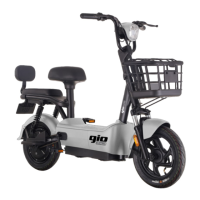

 To Next Page