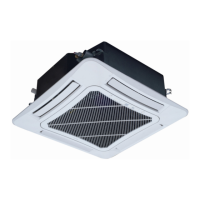
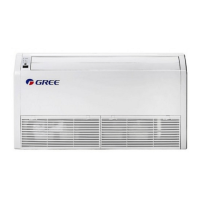
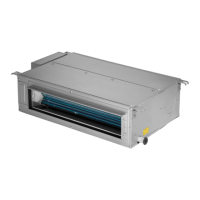
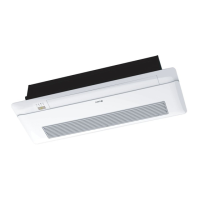
This document serves as the Owner's Manual for Gree Multi Variable Air Conditioners, specifically for Duct Type Indoor Units. It provides comprehensive instructions for installation, operation, and maintenance of these commercial air conditioning units.
The primary function of these devices is to provide multi-variable air conditioning for commercial spaces, utilizing a duct-type indoor unit design. This means the unit is typically concealed within the ceiling or a dedicated space, with air distributed through a system of ducts to various rooms or zones. This design allows for a discreet appearance while delivering conditioned air efficiently. The "multi-variable" aspect indicates that these units are part of a larger system, likely a VRF (Variable Refrigerant Flow) or VRV (Variable Refrigerant Volume) system, which allows for multiple indoor units to be connected to a single outdoor unit, offering flexible climate control across different areas.
Usage Features:
The manual emphasizes proper installation as crucial for optimal performance and safety. It outlines requirements for communication lines, ensuring reliable data exchange between indoor units, outdoor units, and wired controllers. The system supports both single-phase and three-phase power connections, with detailed wiring requirements provided to ensure correct electrical setup and prevent issues like overload or electric shock.
A key aspect of usage is the control system. The indoor units can be controlled by a wired controller, and the manual details how to connect this controller. A single wired controller can manage up to 16 indoor units simultaneously, provided they are of the same model. The system also supports two wired controllers (master and sub-master) for enhanced control, requiring distinct addresses for each. This flexibility in control allows for tailored climate management in various commercial settings.
The duct-type design necessitates careful consideration of air duct installation. The manual provides instructions for both rectangular and circular ducts, emphasizing the importance of insulation to prevent heat loss and moisture, and proper sealing to avoid air leakage. It also highlights the need for noise and vibration damping in duct design, especially for air return openings, to ensure a comfortable indoor environment. Fresh air intake is also addressed, with guidelines for installing fresh air ducts and baffles, ensuring filtered air supply.
Maintenance Features:
The manual provides clear guidelines for general maintenance, focusing on safety and prolonging the unit's lifespan. Before any cleaning or maintenance, it is imperative to turn off the unit and disconnect the power supply to prevent electric shock or injury. Users are advised to use a stable standing platform when cleaning and to avoid hot water (over 45°C) to prevent discoloration or deformation of the unit. Volatile liquids like thinner or gasoline are strictly prohibited for cleaning, with recommendations for soft dry cloths and mild detergents.
A crucial maintenance task is the cleaning of the air filter. The filter, located at the air inlet, should be removed and cleaned using a dust catcher or water. For heavily soiled filters, warm water (below 45°C) mixed with mild detergent is recommended, followed by natural drying in a cool place. The frequency of cleaning depends on the dustiness of the environment, with a general recommendation of once every two weeks for dusty locations.
The manual also outlines specific maintenance routines for before and after the use-season. Before the use-season, users should check for any blockages in the air inlets and outlets of both indoor and outdoor units. Verifying the grounding wire's condition and the correctness of wire connections is also essential. Finally, connecting the power and checking the wired controller's display for characters confirms basic functionality.
After the use-season, the manual suggests operating the air conditioner for half a day on a sunny day to ensure its inner parts are dry. For extended periods of non-use, disconnecting the power supply is recommended, which will also clear the display screen of the wired controller.
The document also includes an "Exception Clauses" section, which clarifies the manufacturer's responsibilities. It states that the manufacturer will not be liable for personal injury or property loss resulting from improper use, unauthorized alterations, corrosive gas exposure, improper transportation, non-compliance with instructions during operation or maintenance, issues caused by third-party components, or damages due to natural calamities or force majeure. This underscores the importance of adhering to the manual's instructions for safe and effective operation and maintenance.



 To Next Page
 General