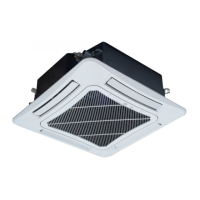
This document is an owner's manual for Gree Multi Variable Air Conditioners, specifically the Fresh Air Series Indoor Unit, designed for commercial use.
Function Description
The device is a commercial air conditioner from Gree's Fresh Air Series, designed for indoor use. It provides multi-variable air conditioning and is intended to deliver fresh air. The system can be configured with a single outdoor unit or multiple outdoor units (modular system) connected to various indoor units, including VRF fresh air series indoor units and conventional VRF indoor units. It supports both single-phase and three-phase power connections. The system is controlled via a wired controller, and communication lines are used for interaction between indoor units, wired controllers, and outdoor units.
Important Technical Specifications
Models Covered:
- GMV-NDX125P/A-T
- GMV-NDX140P/A-T
- GMV-NDX224P/A-T
- GMV-NDX250P/A-T
- GMV-NDX280P/A-T
Connection Capacity (Single Module Outdoor Unit):
- GMV-NDX125P/A-T (GMV5): Total capacity of connected fresh air indoor units cannot exceed 50%~100% of the capacity of outdoor units.
- GMV-NDX140P/A-T (GMV5): Total capacity of connected fresh air indoor units cannot exceed 50%~100% of the capacity of outdoor units.
- GMV-NDX224P/A-T (GMV6): Total capacity of connected fresh air indoor units cannot exceed 50%~100% of the capacity of outdoor units.
- GMV-NDX250P/A-T (GMV Slim*): Total capacity of connected fresh air indoor units cannot exceed 50%~100% of the capacity of outdoor units.
- GMV-NDX280P/A-T (GMV Slim*): Total capacity of connected fresh air indoor units cannot exceed 50%~100% of the capacity of outdoor units.
Connection Capacity (Modular Outdoor Units):
- GMV-NDX125P/A-T (GMV5): The total capacity of connected fresh air indoor units cannot exceed 50%~100% of the capacity of outdoor units.
- GMV-NDX140P/A-T (GMV5): The total capacity of connected fresh air indoor units cannot exceed 50%~100% of the capacity of outdoor units.
- GMV-NDX224P/A-T (GMV6): The total capacity of connected fresh air indoor units cannot exceed 50%~100% of the capacity of outdoor units.
- GMV-NDX250P/A-T (GMV Slim*): The total capacity of connected fresh air indoor units cannot exceed 50%~100% of the capacity of outdoor units.
- GMV-NDX280P/A-T (GMV Slim*): The total capacity of connected fresh air indoor units cannot exceed 50%~100% of the capacity of outdoor units.
Rated Working Condition (Indoor Side):
- Dry Bulb Temp°C: 35 (Rated Cooling), 7 (Rated Heating)
- Wet Bulb Temp°C: 28 (Rated Cooling), 6 (Rated Heating)
Rated Working Condition (Outdoor Side):
- Dry Bulb Temp°C: 35 (Rated Cooling), 7 (Rated Heating)
- Wet Bulb Temp°C: 28 (Rated Cooling), 6 (Rated Heating)
Outdoor Ambient Dry Bulb (°C) for Working Temperature Range: -7 ~ 45
Power Supply and Wiring Requirements:
- GMV-NDX125P/A-T & GMV-NDX140P/A-T:
- Power Supply: 220-240V~50Hz / 208-230V~60Hz
- Air Switch Capacity: 6A
- Min. Sectional Area of Ground Wire: 1.0mm²/AWG18
- Min. Sectional Area of Power Cord: 1.0mm²/AWG18
- GMV-NDX224P/A-T, GMV-NDX250P/A-T & GMV-NDX280P/A-T:
- Power Supply: 220-240V~50Hz / 208-230V~60Hz
- Air Switch Capacity: 10A
- Min. Sectional Area of Ground Wire: 1.0mm²/AWG18
- Min. Sectional Area of Power Cord: 1.0mm²/AWG18
- Power cord size is based on multicore copper core cable with operation temperature of 90°C when laying on wire groove at 40°C ambient temperature (IEC 60364-5-523).
- Circuit breaker size is based on ambient temperature of 40°C when the circuit breaker is working.
- Install circuit breaking device near the unit, with a minimum distance of 3mm between each stage of circuit breaking.
Communication Line Specifications:
- Between IDU and Wired Controller:
- Total length L ≤ 250m (820-1/5ft)
- Wire size: 2×0.75~2×1.25mm² (2×AWG18~2×AWG16)
- Material standard: IEC 60227-5
- Cord must be Circular cord (cores twisted together). Shielded wire recommended in places with intense magnetic field or strong interference.
- Between IDU and IDU (ODU):
- Total length L ≤ 1000m (3280-5/6ft)
- Wire size: ≥2×0.75mm² (≥2×AWG18)
- Material standard: IEC 60227-5
- If wire diameter is enlarged to 2×1mm² (2×AWG16), total communication line length can reach 1500m (4921-1/4ft).
- Cord must be Circular cord (cores twisted together). Shielded wire recommended in places with intense magnetic field or strong interference.
Pipe Connection:
- Pipe diameter (mm) and corresponding torque (N·m):
- Φ6.35: 15~30
- Φ9.52: 35~45
- Φ12.7: 45~50
- Φ15.9: 60~65
- The pipe should not be bent too much or it may crack. Use a pipe bender when bending the pipe.
Usage Features
- Safety Precautions:
- Installation should be conducted by qualified personnel.
- Do not attempt to install the air conditioner by yourself. Improper installation may lead to water leakage, electric shock, or fire hazard.
- Check power supply compliance with nameplate specifications.
- Use dedicated accessories and parts to prevent water leakage, electric shock, and fire hazard.
- Ensure proper wiring and connections to avoid loose connections, overheating, and fire.
- Never plug in or unplug the power plug directly to turn on or turn off the air conditioner.
- Do not operate with wet hands.
- Do not spray or flush water towards the air conditioner.
- Do not expose the air conditioner to moist or corrosive environments.
- Do not use volatile liquids (e.g., diluent, gasoline) to clean the air conditioner.
- In case of abnormal circumstances (e.g., burning smell), turn off the unit and cut off the main power supply immediately.
- Installation:
- Location: Appliances are not accessible to the general public. The top holder must be strong enough to support unit's weight. Drain pipe can drain water out easily. No obstacle at inlet or outlet. Ensure good air circulation.
- Space: Ensure sufficient space for maintenance. Install the indoor unit according to the dimension described.
- Heat Source: Keep the unit away from heat sources, inflammable gas, or smoke.
- Concealed Ceiling Type Unit: This is a concealed ceiling type unit.
- Power Cord: Indoor unit, outdoor unit, power cord, and electric wire should stay at least 1m from the TV set and radio. Avoid strong electric waves, noise, and interference.
- Drilling: Punch holes on the installation area according to the paper pattern.
- Expansion Bolt: Insert expansion bolt M10 and drive the iron nail into the bolt. Length of bolt can be based on the height of room.
- Lifting: Lift the unit to the ceiling and secure it on the bolt using specialized nuts.
- Horizontal Alignment: After installation, check the horizontal status of the whole unit. It should be horizontal from front to back and slant 1% from left to right, following the drainage direction.
- Drainage Pipe: Use a sponge to wrap the uninsulated connection pipe and the joint. Tie it tight with a plastic tape.
- Drainage Test: Perform a drainage test after electric work is finished. Inject approximately 1L purified water to drain pan from air vent, ensuring no splash onto electrical components. Check for leakage.
- Air Duct Installation: There should be insulating layer on air-out duct, air-return duct, and fresh air duct to avoid heat loss and moisture. Adhere a nail on the air duct and then add thermal sponge with a layer of tin. Fasten it with a nail cover and then seal the junction with tin tapes. Use other materials that have good insulation quality.
- Air-Return Duct: Each air-out duct and air-return duct should be fixed on a pre-made board with iron frame. The junction of air duct should be well-sealed to prevent air leakage.
- Design and Construction: Design and construction of air duct should comply with national requirements.
- Air-Return Opening: The edge of air-return duct is suggested to be more than 150mm away from the wall. Add afilter to the air-return opening.
- Noise and Vibration Damping: Consider noise-damping and vibration damping for the design and construction of air duct. Besides, noise source must be away from people. For instance, do not have the air-return opening installed on top of the user (offices, rest area, etc.).
- Wiring:
- Safety: For personal safety, the air conditioner must be properly grounded.
- Voltage: Carefully read the voltage indicated on the nameplate before connecting wires.
- Power Capacity: Power capacity should be large enough. Sectional area of room wires should be above 2.5mm².
- Power Supply: For unit's power supply, use specialized branch circuit and specialized power socket.
- Compliance: All wiring must comply with standards to ensure safe and correct operation.
- Circuit Breaker: Install specialized branch circuit breaker according to related laws and regulations and electrical standards.
- Pressure Terminal: For all wiring, use pressure terminal or single wire. Multi-twisted wire that connects directly to the wiring board may cause fire hazard.
- Refrigerant Pipe: Keep the wires away from refrigerant pipe, compressor, and fan.
- Damage: Do not alter the inner wires of air conditioner. Manufacturer does not assume responsibility for damage or abnormal operation due to this reason.
- Electromagnetic Interference: If the unit is installed in places with strong electromagnetic interference, it's recommended to use twin-twisted shield wire. During wire connection, pay attention that the metal shield layer of the twin-twisted wire must be grounded (outer case) in order to prevent the unit from electromagnetic interference.
- Communication Line: Communication line should be separated from the power cord and the connection wire of IDU and ODU.
- Static Pressure: If the project needs higher static pressure, you can set it through the wired controller.
- Disconnection: The appliance must be fitted with means for disconnection from the supply mains having a contact separation in all poles that provide full disconnection under overvoltage category III conditions, and these means must be incorporated in the fixed wiring in accordance with the wiring rules.
- National Wiring Regulations: The appliance shall be installed in accordance with national wiring regulations.
- Wired Controller: When the wired controller is controlling multiple indoor units at the same time, the indoor units must be of the same model. Fresh air indoor unit cannot share the same wired controller with other types of VRF indoor unit.
- Address Setting: When two wired controllers are controlling the indoor units, you need to set an address for each wired controller. Address No.1 refers to master wired controller while address No.2 refers to sub-master wired controller. They should not share the same address.
- Fresh Air Indoor Unit: If connecting the fresh air indoor unit with wired controller for operation, fresh air indoor unit code "FAP" will be displayed.
Maintenance Features
- Routine Maintenance (Warning):
- Turn off the unit and cut off the main power supply before cleaning to avoid electric shock or injury.
- Stand on a solid table when cleaning.
- Do not clean with hot water (>45°C) to prevent fading or deformation.
- Do not dry filters by fire to avoid fire or deformation.
- Clean filters with a wet cloth dipped in neutral detergent.
- Contact after-sales service staff for abnormal situations.
- Cleaning of Filter:
- Remove filters from the inlet of the indoor unit.
- Use a vacuum cleaner to remove dust.
- If filters are dirty, wash them with warm water and mild detergent, then dry them in the shade.
- In dusty environments, clean regularly (usually once every two weeks).
- Maintenance before Seasonal Use:
- Check if the air inlet and outlet of indoor and outdoor units are blocked.
- Check if securely grounded.
- Check if all power cords and communication cables are securely connected.
- Check for any error codes displayed after energizing.
- Maintenance after Seasonal Use:
- Set the unit in fan mode for half a day on a sunny day to dry the inner part of the unit.
- When the unit will not be used for a long time, cut off the power supply for energy saving. The characters on the wired controller screen will disappear after cutting off the power supply.
- Troubleshooting:
- A troubleshooting table is provided for common issues like "unit can't start," "unit stops after running for a while," "poor cooling effect," "poor heating effect," and "indoor fan doesn't start up during heating."
- If the air conditioner still fails to work normally after checking and handling, stop using it immediately and contact the local service center.



 To Next Page
 General