Need help?
Do you have a question about the Harbor Freight Tools MADDOX MH-DCT19 and is the answer not in the manual?
Essential safety precautions for operating the fuel injection kit.
Crucial safety warnings before testing the fuel system.
Instructions for connecting to vehicles with a dedicated test port.
How to connect to GM TBI vehicles lacking a test port.
Procedure for connecting to vehicles using banjo bolt fittings.
Critical safety warning about fire hazards during connection and testing.
Safety warning regarding damaged equipment during maintenance.
Procedures for cleaning and maintaining the fuel injection service kit.
Warranty terms and conditions for the product.
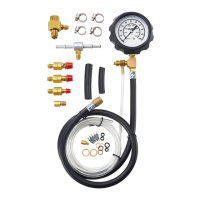
The MADDOX Basic Fuel Injection Service Kit (MH-DCT19) is a specialized tool designed for diagnosing fuel system issues in gasoline engines. It allows users to measure fuel pressure, identify leaks, and assess the overall health of a vehicle's fuel injection system. The kit is intended for use by qualified technicians or individuals with a thorough understanding of automotive fuel systems and safety procedures.
The primary function of this kit is to provide accurate fuel pressure readings, which are crucial for diagnosing various fuel system problems. By connecting the gauge assembly to different points in the fuel system, users can determine if the fuel pump is operating correctly, if there are restrictions in the fuel lines, or if the fuel pressure regulator is malfunctioning. The kit includes a pressure gauge, various adapters, hoses, and clamps to facilitate connections to different types of fuel systems, including those with test ports, GM TBI (Throttle Body Injection) systems, and banjo bolt connections. A pressure relief button is integrated into the gauge assembly, allowing for safe depressurization of the fuel system after testing. The clear relief hose enables the user to safely drain residual fuel into a collection container.
Before using the kit, it is imperative to read and understand all safety information provided in the manual. The kit is not to be used on diesel engines. Safety precautions include working in a well-ventilated area, ensuring no ignition sources are present, and having a dry chemical (class B) fire extinguisher nearby. The vehicle's ignition must be off, and the gas cap loosened to relieve fuel pump pressure before any connections are made. It is critical to avoid overtightening fasteners, especially brass or hollow ones, as they can be easily damaged. All connections must be tight to prevent fuel leaks, and shop rags should be readily available to collect any spilled fuel.
The manual outlines specific connection methods for different vehicle types:
Once the kit is connected, and all connections are verified to be leak-free, the fuel pumps (if disabled) are re-enabled. The ignition is turned to the "on" position, and the fuel pump should briefly start. The system is checked for leaks again. The ignition is cycled on and off to ensure pressure builds to the manufacturer's specification, and further leak checks are performed. Any additional idle or other test measurements are then performed as directed by the vehicle's service instructions.
After testing, the ignition is turned off, and the pressure relief button is pressed and held until the gauge reads 0 PSI/kPa, ensuring the system is depressurized. Remaining fuel is allowed to drain from the relief hose into a collection container. When disconnecting the kit, shop rags are used to catch any spilled fuel. If a banjo bolt connection was used, the stock banjo bolt and washers are reinstalled according to manufacturer specifications.
Proper maintenance of the MADDOX Basic Fuel Injection Service Kit is essential for its longevity and safe operation. Before each use, a thorough inspection of the tool's general condition is required. This includes checking for:
Any damage or wear found must be corrected before further use to prevent serious injury or fire. Procedures not specifically explained in the manual should only be performed by a qualified technician.
Before storage, it is crucial to ensure that all fuel has been completely drained from all hoses and fittings, and all fuel vapors have dissipated. The kit should be allowed to dry completely in an area away from ignition sources and other flammable materials. All shop rags and other materials that have come into contact with fuel or fuel vapor must be placed in an approved, ignition-resistant safety oily waste can or disposed of properly, following local regulations. This meticulous cleaning and drying process prevents the accumulation of flammable residues and ensures the kit remains safe for future use.
 General
| Model | MH-DCT19 |
|---|---|
| Quantity | 1 |
| Display | LCD |
| Material | Steel |
| SAE or Metric | Both |
| Type | Digital |

 To Next Page