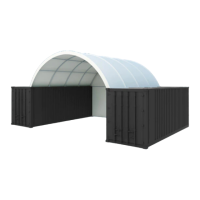
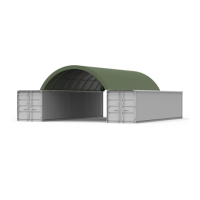
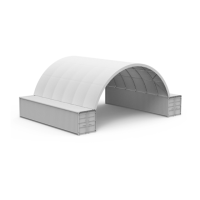
The Hardlife Utility C2620 / C2640 Container Shelter is a versatile and durable storage solution designed to maximize space and protect goods, vehicles, and machinery from inclement weather. These canopy tents are suitable for year-round use and can be customized with front and rear panels.
Function Description:
The primary function of the Hardlife Utility C2620 / C2640 Container Shelter is to provide an affordable and robust covered space by utilizing two shipping containers as a base. This design creates a large, sheltered area for various applications, including storage, workshops, or temporary workspaces. The shelter's structure is designed for ease of assembly and installation, offering a practical alternative to traditional buildings for temporary or semi-permanent needs. It aims to offer protection against environmental elements such as rain, snow, and sun, ensuring the safety and preservation of stored items.
Important Technical Specifications:
The Hardlife C2620 / C2640 Container Shelters feature a sturdy, hot-dip galvanized steel frame constructed from Q215 steel tubes. The fabric roof cover is made of heavy-duty PVC, known for its durability and resistance to harsh weather conditions.
Dimensions:
- C2620: Overall Dimensions (m): 8W x 6L x 3H
- C2640: Overall Dimensions (m): 8W x 12L x 3H
Component List (Key Components and Quantities):
The shelters are supplied with a comprehensive set of components, each identified by a specific code for user-friendly assembly.
- Base Plates (L1, R1): These are crucial for anchoring the frame to the containers. The C2620 model includes 4 left (L1) and 4 right (R1) base plates, while the C2640 model has 7 left (L1) and 7 right (R1) base plates. These base plates feature tie-down ratchets.
- Frame Tubes:
- Top Bent Tube (1): 2 for C2620, 7 for C2640.
- Middle Bent Tube (2): 8 for C2620, 14 for C2640.
- Bottom Bent Tube (3): 8 for C2620, 14 for C2640.
- These tubes form the arch groups of the shelter.
- Connection Purlin (4): 15 for C2620, 30 for C2640. These connect the arch groups.
- Supporting Tube (5): 12 for both C2620 and C2640.
- Clips (6): 24 for C2620, 21 for C2640.
- Lower Tensioning Tube for the Roof Cover (7): 2 groups for both models.
- Roof Cover (8): 1 for each model. Made of heavy-duty PVC.
- Fasteners:
- M8 x 70 mm Bolts (9): 48 for C2620, 94 for C2640.
- M10 x 80 mm Bolts (10): 20 for C2620, 35 for C2640.
- Ropes (11): 1 dozen for both models, used for lacing the roof cover.
- Ø32 Plastic Plug for the Lower Tensioning Tube (12): 4 for C2620, 12 for C2640.
- Ratchet Tie-Down Straps (13): 8 for C2620, 14 for C2640.
- Angle Set (14): 4 for C2620 (not applicable for C2640).
- Tie-Down Ratchet (15): 8 for C2620, 14 for C2640.
- Steel Plate for Base Plate (15A): 14 for C2640 (not applicable for C2620).
- M12 x 30 mm Screws (15B): 42 for C2640 (not applicable for C2620).
Usage Features:
- Easy Assembly: Designed for user-friendly assembly, the shelter can be installed by a team of 3–4 members within 1–2 days, provided the instructions are followed carefully.
- Container-Based Structure: The shelter utilizes two shipping containers as its foundation, providing a stable and elevated structure. The base plates are welded onto the containers for secure attachment.
- Modular Frame Design: The frame consists of group arches (four for C2620, seven for C2640) made from top, middle, and bottom bent tubes, connected by purlins and supporting tubes.
- Secure Roof Cover Installation: The heavy-duty PVC roof cover is installed over the frame and secured using lower tensioning tubes, plastic plugs, and ratchet tie-down straps. The straps are threaded through slits in the cover pocket and tightened with ratchets attached to the base plates, ensuring a taut and wrinkle-free fit.
- Safety Guidelines: The manual emphasizes critical safety instructions, including assembling on flat, hard, and level surfaces, avoiding windy conditions, wearing personal protective equipment (safety goggles and gloves), and ensuring adequate ventilation. It also warns against leaving the product partially assembled due to potential dangers.
- Environmental Considerations: Users are advised to clear snow from the roof fabric, keep the shelter away from heat sources, and remove the fabric cover before hurricanes and blizzards.
- Customization: The canopy tents can be customized with front and rear panels, enhancing their versatility for various applications.
Maintenance Features:
- Regular Fabric Tensioning: It is mandatory to tighten the roof fabric regularly to prevent "hammocks" on the roof. The fabric tends to stiffen in colder seasons (autumn and winter) and slacken during summer, so retightening before winter is crucial.
- Monthly Cover Adjustment: The roof cover should be adjusted every month to ensure it remains flat and tensioned, maximizing its lifespan and effectiveness.
- Component Inspection: Regular inspection of the shelter is recommended, and any damaged components should be replaced promptly to maintain the structural integrity and safety of the shelter.
- Gap Sealing: Duct tape can be used to close any gaps between the steel frame components after installation, particularly near the top of the frame, to prevent the roof cover from tearing due to rubbing against sharp corners. This proactive measure helps extend the life of the PVC cover.
The Hardlife Utility C2620 / C2640 Container Shelter is presented as an economical solution with a best price guarantee in the UK. Hardlife Utility also offers 24-hour dispatch (subject to availability), a 5-year spare part replacement policy, efficient after-sales support with lifelong technical assistance, and the option for customized shelters to meet specific requirements.

 Need help?
 General

 To Next Page