1.12REAR BELT AND SPROCKETS
GENERAL
When a drive belt is replaced for any reason other than stone
damage, it is recommended that the transmission and rear
sprockets also be replaced to increase the longevity of the new
drive belt. In the case of stone damage, inspect sprockets for
damage and replace as required.
Never bend belt forward into a loop smaller than the drive
sprocket diameter. Never bend belt into a reverse loop.
Over bending can damage belt resulting in premature
failure, which could cause loss of control and death or
serious injury. (00339a)
CLEANING
Keep dirt, grease, oil, and debris off the belt and sprockets.
Clean the belt with a rag slightly dampened with a light cleaning
agent.
INSPECTION
Sprockets
NOTE
If chrome chips or gouges to rear sprocket are large enough
to be harmful, they will leave a pattern on the belt face.
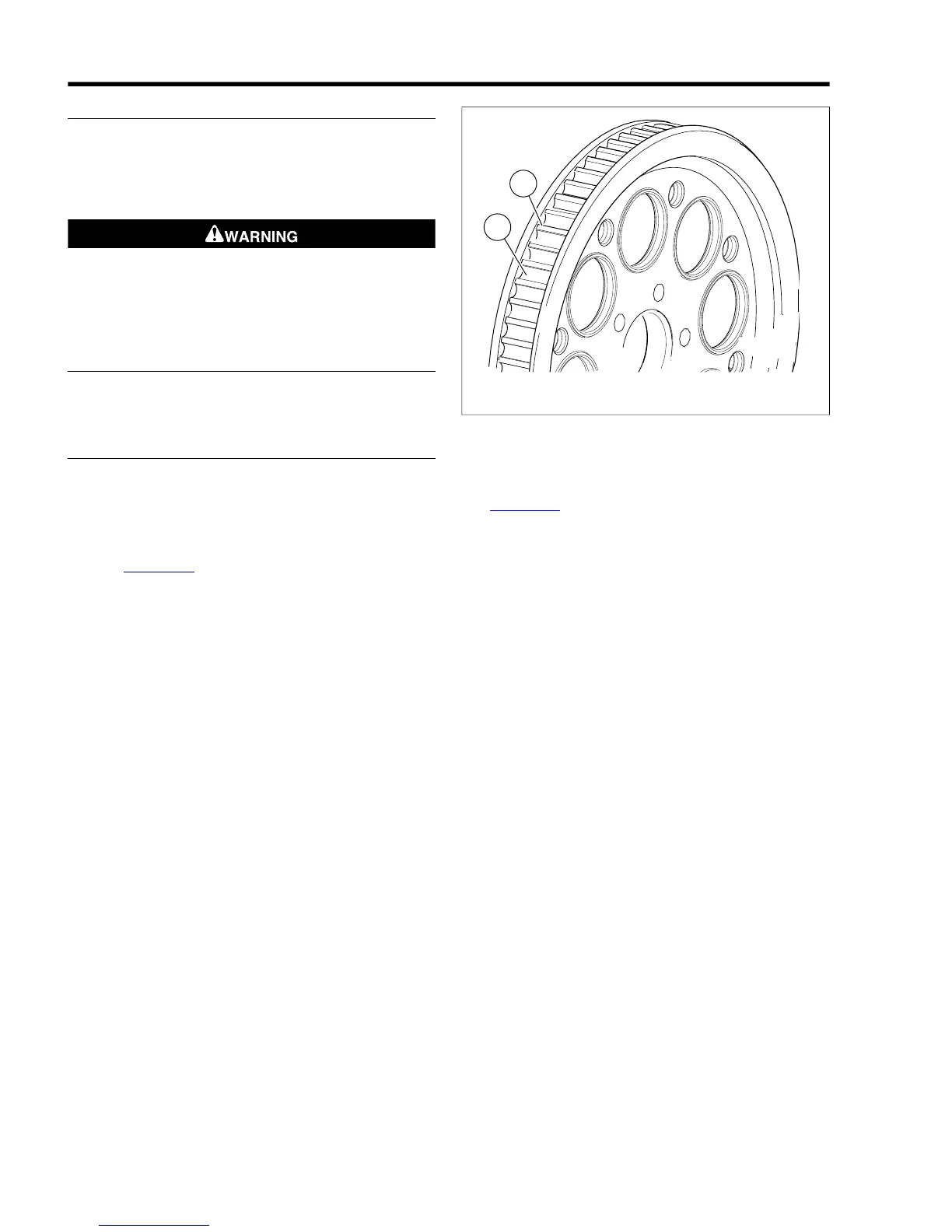
1. See Figure 1-23. Inspect each tooth (1) of rear sprocket
for:
a. Major tooth damage.
b. Large chrome chips with sharp edges.
c. Gouges caused by hard objects.
d. Excessive loss of chrome plating (see next step).
2. To check if chrome plating has worn off, drag a scribe or
sharp knife point across the bottom of a groove (2)
(between two teeth) with medium pressure.
a. If scribe or knife point slides across groove without
digging in or leaving a visible mark, chrome plating
is still good.
b. If scribe or knife points digs in and leaves a visible
mark, it is cutting the bare aluminum. A knife point
will not penetrate the chrome plating.
3. Replace rear sprocket if major tooth damage or loss of
chrome exists.
1. Tooth
2. Groove
Figure 1-23. Rear Sprocket
Rear Belt
See Figure 1-24. Inspect drive belt for:
• Cuts or unusual wear patterns.
• Outside edge bevelling (8). Some bevelling is common,
but it indicates that sprockets are misaligned.
• Outside ribbed surface for signs of stone puncture (7). If
cracks/damage exists near edge of belt, replace belt
immediately. Damage to center of belt will require belt
replacement eventually, but when cracks extend to edge
of belt, belt failure is imminent.
• Inside (toothed portion) of belt for exposed tensile cords
(normally covered by nylon layer and polyethylene layer).
This condition will result in belt failure and indicates worn
transmission sprocket teeth. Replace belt and transmission
sprocket.
• Signs of puncture or cracking at the base of the belt teeth.
Replace belt if either condition exists.
• Replace belt if conditions 2, 3, 6 or 7 (on edge of belt)
exist.
NOTE
Condition 1 may develop into 2 or 3 over time. Condition 1 is
not grounds for replacing the belt, but it should be watched
closely before condition 2 develops which will require belt
replacement.
1-24 2008 Dyna Service: Maintenance



 To Next Page