The CA80 is a cold-curing, single-component superglue from Hottinger Brüel & Kjaer GmbH, designed specifically for the installation of strain gauges (SG). This solvent-free cyanoacrylate adhesive is suitable for SG in the Y, C, LD, E series, and residual stress SG (offering optimal suitability), as well as G series SG (providing good suitability).
Function Description:
The primary function of CA80 is to bond strain gauges to various materials for measurement purposes. Its cold-curing nature simplifies the installation process, as it does not require external heat. The adhesive's curing is initiated by the catalytic effect of humidity absorbed from the air, making environmental conditions a key factor in its performance.
Important Technical Specifications:
- Composition: Solvent-free cyanoacrylate group-based superglue.
- Curing Mechanism: Cold-curing, single-component, initiated by atmospheric humidity.
- Optimal Curing Conditions: Relative humidity between 40% and 70%.
- Curing Delay: Noticeable delay if relative humidity is less than 30%; may not cure at all in extreme cases.
- Impact Curing: Occurs if relative humidity is greater than 80%.
- Layer Thickness: Cures only in thin layers. Thick layers may not cure completely or at all.
- Surface Suitability: Unsuitable for heavily scratched or rough surfaces due to layer thickness requirements.
- Material Compatibility:
- Suitable: Steel, Aluminum, Plastics.
- Unsuitable: Porous materials such as wood, concrete, or foam. Polyethylene and untreated fluoropolymer cannot be bonded.
- Curing Time (at 20°C, 65% relative humidity):
- Steel: 60 to 120 seconds
- Aluminum: 50 to 100 seconds
- Plastics: 10 to 60 seconds
- Final Hardness: Approximately 24 hours.
- Minimum Curing Time for Measurements (at 20°C):
- Dynamic measurements: 10 minutes
- Static measurements: 15 minutes
- Temperature Limits:
- For zero-point related measurements: -55°C to +100°C
- For non-zero-point related measurements: -70°C to +120°C
- Solubility: Dimethyl sulfoxide, alkali, boiling water.
- Swelling: Occurs with prolonged storage in esters (ethyl acetate) and ketones (acetone, methyl ethyl ketone).
Usage Features:
- Scope of Delivery: Each CA80 package includes:
- 10 ml bottle of CA80 superglue with a drop nozzle (sufficient for 250 to 500 SG).
- Fluoropolymer tape.
- Fluoropolymer strip.
- 2 dosing tips.
- Usage instructions.
- Surface Preparation:
- General: The quality of the adhesive bond depends significantly on surface preparation. The goal is to achieve a uniform, oxide-free, and easily wettable surface.
- Coarse Cleaning: Remove oxide layers, anodized layers, paint residues, and other contaminants in a generous area around the measurement point.
- Degreasing: Use cleaning agents like RMS1 (a mixture of acetone and isopropanol) for most applications. Strong fat-dissolving substances like methyl ethyl ketone or acetone are also common. Toluene is suitable for wax-like substances. Clean with solvent-soaked non-woven material, starting from a larger area and moving inwards to avoid spreading dirt.
- Roughening: A slightly roughened surface provides better adhesion. This can be achieved by sandblasting (grain 320, clean and new) or sanding with emery cloth (grain 220 to 300, circular movements). CA80 can also be applied to smooth or polished surfaces if the object must not be damaged. Roughening is not required for glass, porcelain, or enamel.
- Fine Cleaning: Remove all dirt and dust. Use clean tweezers to dip a non-woven pad into solvent and clean the measuring point with a single stroke per pad. Continue until no discoloration is observed. Ensure complete solvent evaporation.
- Non-Metallic Surfaces: Treat similarly to metals, ensuring surfaces are grease-free and, if possible, slightly roughened. Pre-testing bonding capability is recommended.
- SG Preparation: Strain gauges are supplied ready for use and should only be handled with tweezers. If contaminated, clean the adhesive side with a solvent-soaked cotton bud (e.g., RMS1 or RMS-SPRAY) and allow solvent to evaporate. For SG with installation aids, ensure the adhesive film is not dissolved.
- Installation Process:
- Lead Shortening & Solder Terminal Fixation: Shorten the SG lead and fix the solder terminal in place with adhesive tape. For SG without leads, create a hinge-like connection.
- SG Positioning: Attach another piece of adhesive tape over the SG, overlapping on both sides. Place the SG on the measurement point and align it carefully. Press down firmly on one end of the adhesive strip with tweezers.
- Hinge Creation: Gently pull up the adhesive tape on the opposite side to create a hinge, allowing the SG to be lifted without changing its position.
- Masking: To prevent excessive adhesive spread, apply adhesive tape around the installation area, leaving a 5 to 10 mm distance.
- Adhesive Application:
- Ensure the adhesive is at room temperature before opening to prevent moisture ingress.
- Apply a drop of CA80 to the workpiece.
- Use the supplied fluoropolymer strip to carefully spread the adhesive without pressure or touching the measurement object.
- Immediately fold the SG down onto the adhesive layer. Use the fluoropolymer tape to prevent adhesive from sticking to other objects (and skin).
- Press the SG (covered by fluoropolymer tape) onto the workpiece with your thumb for approximately 1 minute.
- Curing and Post-Installation:
- Initial strength is reached within minutes under optimal humidity.
- Remove adhesive tape only after the adhesive has reached sufficient initial strength and excess adhesive is fully dry.
- Remove tape at a low angle, starting from the SG, to minimize the risk of pulling off the SG.
- Accelerator BCY01: Can be used under unfavorable conditions (low humidity, acidic surfaces, low temperatures) to reduce curing time. Apply BCY01 to one of the surfaces to be bonded for immediate curing. Important: Use BCY01 only when necessary, as inappropriate use can lead to ultra-rapid polymerization, causing stress in the adhesive layer, unstable measurement points, and reduced maximum elongation.
Maintenance Features:
- Storage:
- Store the bottle upright as much as possible.
- Protect CA80 from heat, sunlight, and humidity.
- Store in a cool, dry place.
- With correct storage, the adhesive remains usable at least until the best-before date indicated on the packaging.
- Dosing Tip Care:
- Unscrew and carefully cut the tip of the dropper.
- After use, close it by replacing the cap.
- Firmly push the plastic tip onto the drop nozzle. The dosing tip dispenses very fine drops and allows application in difficult-to-reach areas.
- If the adhesive is not used for a long time, it may harden and seal the tip. Clean the dosing tip or cut it down if it can still be used.
- Important: Remove dosing tips immediately after use. Remove adhesive residues from the nozzle with a lint-free cloth to prevent the cap from bonding. Put the cap back on the bottle immediately to close it, preventing moisture ingress and rendering the adhesive unusable. Tap the end of the dosing tip against an absorbent base to remove any residual adhesive. Eject any residual adhesive from the capillary tube with a disposable syringe or by gently tapping it against an edge. To reduce the risk of the drop nozzle drying out, seal it with a pin after use. Then put the cap back on for secure storage.
- Safety: Always refer to the Material Safety Data Sheet (MSDS) for detailed safety information, available on the HBM website (http://www.hbm.com/sds/).

 Need help?
 General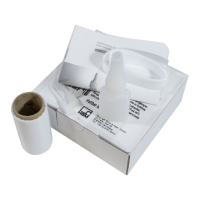

 To Next Page