EasyManua.ls Logo

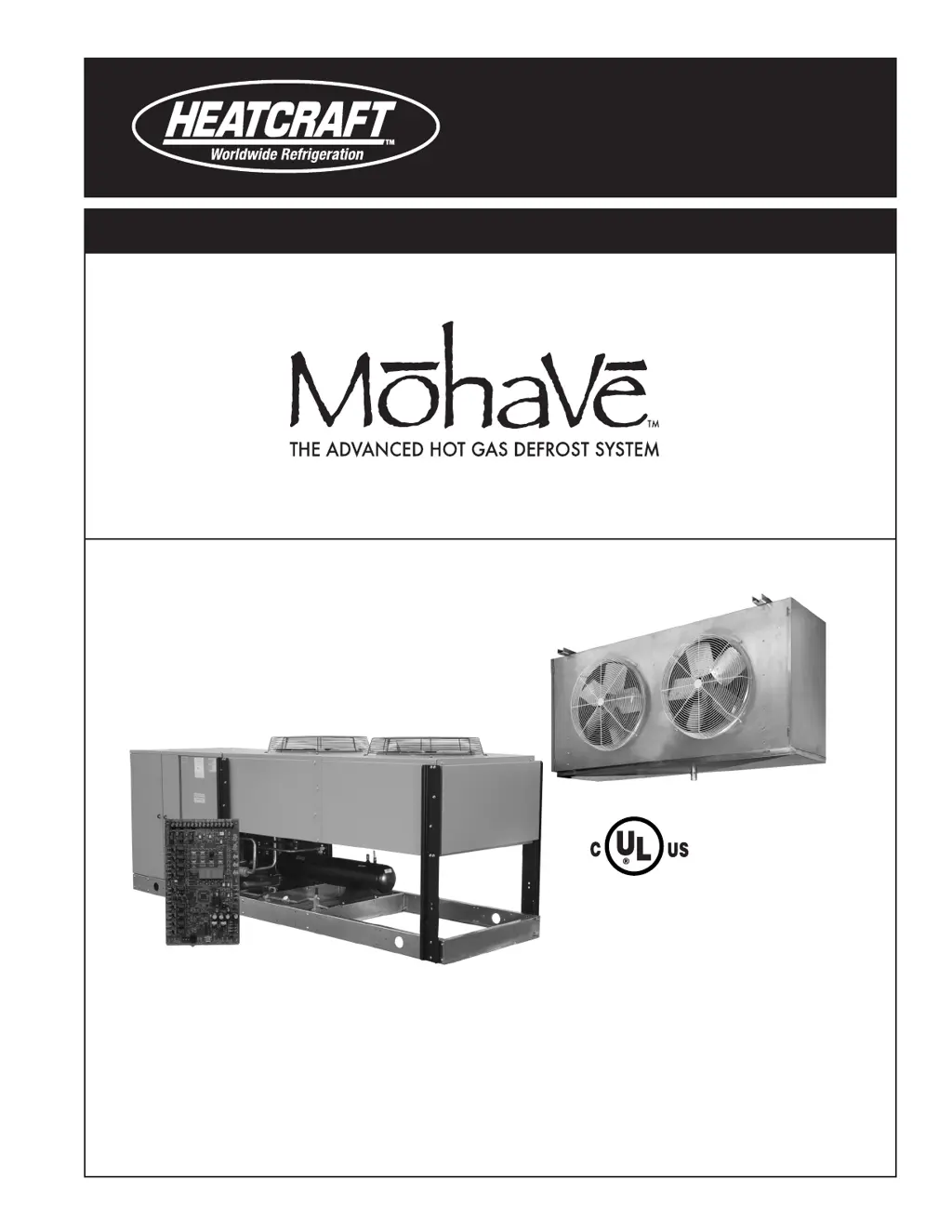
Heatcraft Mohave - User Manual

Heatcraft Mohave
76 pages
Print Icon
To Next Page IconTo Next Page
Loading...
H-IM-HGD0 FEBRUARY 2021
Part Number 25007401
Installation, Start-Up, Operation and
Troubleshooting with Wiring Diagrams
Mohave Hot Gas Defrost
Installation
& Operation
Replaces June 2017

Questions and Answers

  • J
    Joshua MarshallAug 20, 2025
    Why is the room temperature too high with my Heatcraft Industrial Equipment?
    • A
      aprilcollierAug 20, 2025
      If the room temperature is too high when using your Heatcraft Industrial Equipment, there are several potential causes. First, check if the room thermostat is set too high and adjust it accordingly. Also, the superheat might be too high, requiring adjustment of the thermal expansion valve. A low refrigerant level could also be the problem, in which case you should add refrigerant. Other possible causes include a coil iced-up (manually defrost the coil and check defrost controls), the unit cooler being too close to doors (relocate it or add a strip curtain), or heavy air infiltration (seal unwanted openings in the room).
  • D
    Derrick MendezAug 25, 2025
    Why is ice accumulating on the ceiling around the evaporator in my Heatcraft Industrial Equipment?
    • J
      Jason CruzAug 25, 2025
      If ice is accumulating on the ceiling around the evaporator and/or on the fan guards, venturi, or blades of your Heatcraft Industrial Equipment, it might be due to a defrost duration that is too long. Try adjusting the defrost termination settings. A defective defrost thermostat or timer could also be the cause, requiring replacement of the component. Alternatively, there may be too many defrosts scheduled; reduce the number of defrosts to resolve the issue.
  • R
    Rebecca GarciaAug 26, 2025
    What to do if the coil is not clearing of frost during defrost cycle in my Heatcraft Industrial Equipment?
    • H
      Heather RamosAug 26, 2025
      If your Heatcraft Industrial Equipment's coil is not clearing of frost during the defrost cycle, it could be because the coil temperature isn't getting above the freezing point during defrost; check the heater operation. Another reason might be that there are not enough defrost cycles per day; adjust the controller for more cycles. The defrost cycle might also be too short, so adjust the defrost settings for a longer cycle. Finally, a defective timer or defrost thermostat can cause this issue, so replace the defective component.
  • K
    Kimberly AlexanderAug 27, 2025
    How to troubleshoot fan not operating in Heatcraft Industrial Equipment?
    • J
      James KeyAug 27, 2025
      If the fans on your Heatcraft Industrial Equipment will not operate, it could be due to several reasons. First, check if the main switch is open and close it. Blown fuses could also be the cause, so replace them and check for short circuits or overload conditions. A defective motor or a defective timer or defrost thermostat might also be the problem, requiring replacement of the component. If the unit is in a defrost cycle, wait for the cycle to complete.
  • T
    Travis WigginsAug 30, 2025
    Why is ice accumulating in the drain pan of my Heatcraft Industrial Equipment?
    • D
      dylan40Aug 30, 2025
      If you notice ice accumulating in the drain pan of your Heatcraft Industrial Equipment, it could be due to a defective heater, which would need to be replaced. The unit might not be pitched properly, so check and adjust it if necessary. A plugged drain line can also cause this, so clean the drain line. Additionally, a defective drain line heater or a defective timer or thermostat could be the issue, requiring replacement.
  • B
    Brian MeyersSep 1, 2025
    Why is my Heatcraft Industrial Equipment compressor noisy or vibrating?
    • F
      francodavidSep 1, 2025
      If your Heatcraft Industrial Equipment's compressor is noisy or vibrating, it could be due to flooding of refrigerant into the crankcase; check the setting of the expansion valves. Improper piping support on the suction or liquid line could also cause this, so relocate, add, or remove hangers as needed. A worn compressor can also be the source of the noise or vibration, requiring replacement.
  • H
    hjohnsonSep 3, 2025
    What causes high discharge pressure in Heatcraft Industrial Equipment?
    • D
      Donna HannaSep 3, 2025
      If you're experiencing high discharge pressure with your Heatcraft Industrial Equipment, it could be due to non-condensables in the system, which should be removed. An overcharged system with refrigerant can also cause this, so remove the excess. Check that the discharge shutoff valve is fully open. Ensure the fan is running and check the electrical circuit if it is not. The head pressure control setting might need adjustment. Lastly, a dirty condenser coil can lead to high discharge pressure, so clean the coil.
  • P
    Patrick WyattSep 5, 2025
    What causes high suction pressure in Heatcraft Industrial Equipment?
    • W
      wmccallSep 5, 2025
      If the suction pressure is high in your Heatcraft Industrial Equipment, it could be due to an excessive load. Try reducing the load or adding additional equipment. Another cause could be the expansion valve overfeeding; check the remote bulb and regulate the superheat.
  • M
    Maria PhillipsSep 7, 2025
    What causes little or no oil pressure in Heatcraft Industrial Equipment?
    • K
      Kelly FreemanSep 7, 2025
      If your Heatcraft Industrial Equipment shows little or no oil pressure, it could be due to a clogged suction oil strainer, which needs cleaning. Excessive liquid in the crankcase could also be the cause; check the crankcase heater, reset the expansion valve for higher superheat, and check the liquid line solenoid valve operation. A defective low oil pressure safety switch or a worn oil pump might require replacement. If the oil pump reversing gear is stuck, reverse the direction of compressor rotation. Worn bearings may also necessitate compressor replacement. Low oil level should be addressed by adding oil and/or going through defrost. Check for loose fittings on oil lines and tighten them. Finally, pump housing gasket leaks require gasket replacement.
  • A
    Adam NewtonSep 9, 2025
    What causes low discharge pressure in Heatcraft Industrial Equipment?
    • T
      Todd BennettSep 9, 2025
      If you're experiencing low discharge pressure in your Heatcraft Industrial Equipment, it could be due to faulty condenser temperature regulation, so check the condenser control operation. Another cause might be a suction shutoff valve that is partially closed; open the valve fully. Insufficient refrigerant in the system can also lead to low discharge pressure, so check for leaks, repair them, and add refrigerant. Low suction pressure itself can cause this issue. Finally, check the valve setting of the variable head pressure valve.

Summary

Mohave Hot Gas Defrost Installation & Operation

Controller Quick Reference Guide

Controller Operation and Modes

Details on controller buttons, operating modes, and service switch functionality.

Program and Monitor Menus

Navigating menus for programming settings and monitoring system values.

Safety, Inspection, and Warranty

General Safety Information

Essential safety precautions, inspection procedures, and warranty terms for the equipment.

System and Components Overview

Condensing and Evaporator Unit Features

Description of standard and optional features for both condensing and evaporator units.

Unit Cooler Installation

Placement, Clearances, and Condensate Drains

Guidelines for unit cooler placement, clearances, and condensate drain line installation.

Condensing Unit Installation

Location, Rigging, and Mounting

Requirements for condensing unit location, rigging, mounting methods, and access for service.

Refrigerant Piping Practices

Recommended Piping and Support

Best practices for refrigerant piping installation, including slope, traps, and proper support techniques.

Unit Cooler Piping Sizing

Calculating Line Sizes and Examples

Methodology for determining line sizes, including examples and fitting allowances.

Line Sizing Tables

Recommended Line Sizes

Tables providing recommended suction and liquid line sizes for various refrigerants and conditions.

Optional Controls and System Features

Control Options Overview

Details on dual valve systems, ambient fan cycle, phase loss monitors, and evaporator power options.

Demand Cooling System Explained

Explanation and design considerations for the Copeland Demand Cooling system.

Wiring Installation Procedures

Field Wiring, General Installation, and Modbus

Guidelines for field wiring, general installation, and Modbus communication setup.

Wiring Diagrams

Interconnection Wiring (Single;Dual Evaporator)

Diagrams for 24V interconnection wiring for single and dual evaporator systems.

Typical Evaporator Wiring

Wiring diagrams for evaporators with electric drain pan heaters and hot gas drain pans.

Condensing Unit Wiring (208-230 V & 460 V)

Wiring diagrams for condensing units and control boards across different voltage configurations.

Factory Piping Diagrams

Unit Cooler and Condensing Unit Piping

Diagrams illustrating typical factory piping configurations for unit coolers and condensing units.

Refrigeration Operation

System Operation, Fan Control, and Pump Down

Explanation of refrigeration cycle, solenoid control, fan operation, and pump down sequences.

Defrost Operation Details

Defrost Process, Termination, and Skip Logic

Details on defrost stages, programming, termination parameters, and skip logic.

Evacuation, Leak Detection, and Insulation

System Evacuation and Leak Testing

Procedures for proper system evacuation, leak testing, and line insulation to ensure system integrity.

Start-Up, Program Review, and Settings

Initial Start-Up and Mode Display

Steps for initial system start-up, power-on sequence, and understanding operating modes.

System Parameter Programming

How to review and change system settings via the program review menus.

Monitoring Operation Values

Reviewing System Status and Controller Functions

Using controller buttons to monitor values, forced outputs, and system status indicators.

Error and Alarm Details

System Alarms, Errors, and Contingencies

Comprehensive list of system alarms, error codes, and associated contingency actions for troubleshooting.

Refrigerant Charging Procedures

Charging Instructions and System Configurations

Guidelines for refrigerant charging, including capacity calculations and system configuration recommendations.

Operational Check Out and Superheat Adjustment

System Checks and Superheat Balancing

Procedures for operational check out, system balancing, and adjusting compressor/evaporator superheat.

Refrigeration Oils and Properties

Polyol Ester Lubricants and Oil Level

Information on polyol ester lubricants, their hygroscopicity, and proper oil level management.

Troubleshooting Guides

Controller, Sensor, and System Issues

Charts for diagnosing issues with controllers, sensors, system pressures, and component failures.

Evaporator and General System Problems

Common evaporator symptoms and general system issues with possible causes and corrective steps.

Preventive Maintenance Schedules

Unit Cooler and Condensing Unit Tasks

Recommended maintenance schedules and tasks for unit coolers and air-cooled condensing units.

Service Parts List

Electrical and Piping Components

List of replacement parts, including electrical components and piping parts with part numbers.

Factory Default Settings

Control Parameter Defaults

Tables detailing default settings for fan cycles, defrost parameters, and pressure controls.

Control Board Comparison

First vs. Second Generation Boards

Comparison of features and differences between Mohave control board generations.

Pressure Regulator Comparison

Alco vs. Carel Regulator Identification

Pictorial guide to identify Alco and Carel electronic pressure regulators.

Modbus Communication Definitions

Modbus Data Registers, Commands, and Errors

Definitions for Modbus inputs, coils, registers, commands, errors, and operating modes.

Heatcraft Mohave Specifications

General IconGeneral
BrandHeatcraft
ModelMohave
CategoryIndustrial Equipment
LanguageEnglish