Firebox Door Hoses and Elbows
Principle of the Door Hoses
The door hoses allow water to circulate between the
rebox door and the water jacket.
Operation of the Door Hoses
The door hoses allow water from the water jacket
to pass through the rebox door, through thermal
siphoning. Refer to “Firebox Door” for further details.
Maintenance / Result
Maintaining the door hoses and elbows ensures that
water is able to
ow through the door. Build-up (calcium) in the elbows is possible
over time, which slowly reduces the water ow through the door. If
water does not ow freely through the hoses to the rebox door, you
may hear popping sounds in the door. Once the hoses are around
ve years old or if they show signs of wear, they should be replaced.
Replacement of hoses or cleaning of the elbows is always easier if
the water is cool rather than hot. To clean the elbows, remove the
hoses and use a pipe cleaning brush to clear out the build-up.
Removal and Replacement
To remove and replace the door hoses, use the following
steps:
1) Turn off power to the air combustion blowers.
2) Ensure that the re in the rebox is extinguished,
which will allow the water to cool.
3) With hose clamps or vice-grips, pinch the door
hoses in the middle of the hose.
4) Before removing the old door hose, cut the new
pieces of door hose, one at 19 inches and the other at 21 inches.
These measurements are critical.
5) Pinch the new door hose in the middle of the hose, creating a tight seal.
6) Loosen the hose clamps on each end of the door hose.
7) Remove the rst end of the door hose needing
replacement.
8) Push on the end of the new door hose and repeat the steps for the opposite end
of the hose.
9) Tighten the hose clamps, securely fastening the door hose to the nipple on the
furnace or rebox door.
10) Remove the vice-grips pinching the door hoses. This will allow water to ow through.
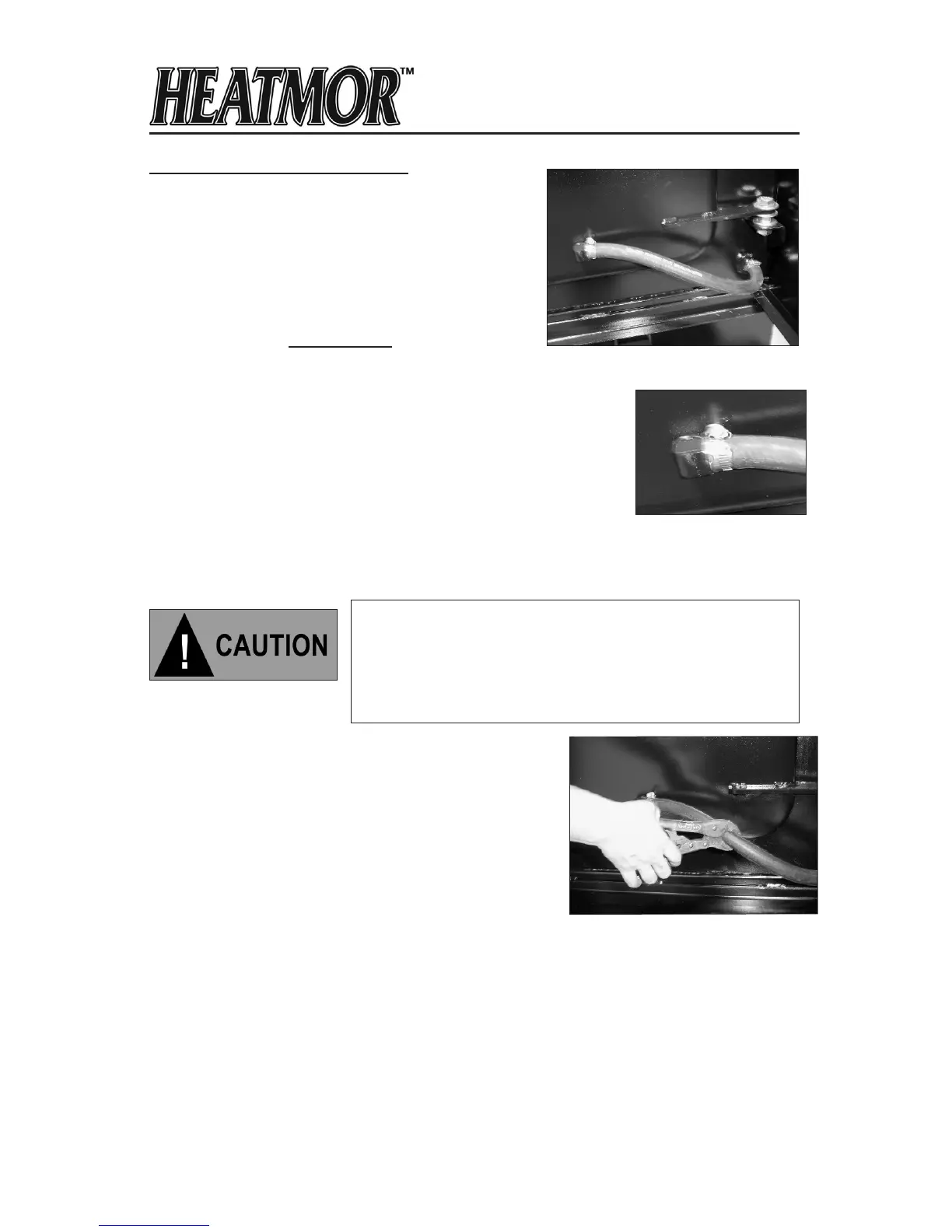
Door Hose
Elbow
Clamping hose
ABSOLUTELY NO FIRE IN THE FIREBOX WHEN
PERFORMING THIS REPAIR. DO NOT PERFORM THIS
REPAIR WHEN UNIT WATER TEMPERATURE IS UNSAFE.
ALWAYS WEAR PROPER PERSONAL PROTECTIVE
EQUIPMENT WHEN WORKING WITH WATER AND CHEMICALS.
40


 To Next Page