6
• WARNING: Keep all ventilation openings in the appliance enclosure clear of obstruction.
Provide sufficient ventilation in the surrounding structure when building-in. Never block
the air flow suction and air outlet in order to keep air circulation.
• WARNING: Do not use electrical appliances inside the food storage compartments of the
appliance, unless they are of the type recommended by the manufacturer.
• Place the appliance on a clean, stable, dry, level surface only.
• Keep the appliance away from any hot surfaces and open flames. Protect the appliance
against heat, dust, direct sunlight, moisture, dripping and splashing water.
• Allow at least 50 cm surrounding spacing for ventilation purpose during use.
• Do not use hard utensils to hit the glass surface. Do not use water jet, flush directly with
water or steam cleaner as the parts will get wet and electric shock might be resulted.
• Do not place articles on top of the appliance. Do not place objects with open sources of
fire (e.g. candles) on top or beside the appliance. Do not place objects filled with water
(e.g. vases) on or near the appliance.
• Never cover the appliance during use. This may cause a fire hazard.
• Do not wash the appliance with water. Washing can cause leakages and increase the risk
of electric shock.
• Do not make any additional openings on the appliance. Do not install any gadgets in the
appliance.
• Do not overload the shelves inside to avoid damage. Max. loading of each shelf is about
15kg. Place the food evenly on each shelf.
• Do not attempt to climb up to the top of the appliance.
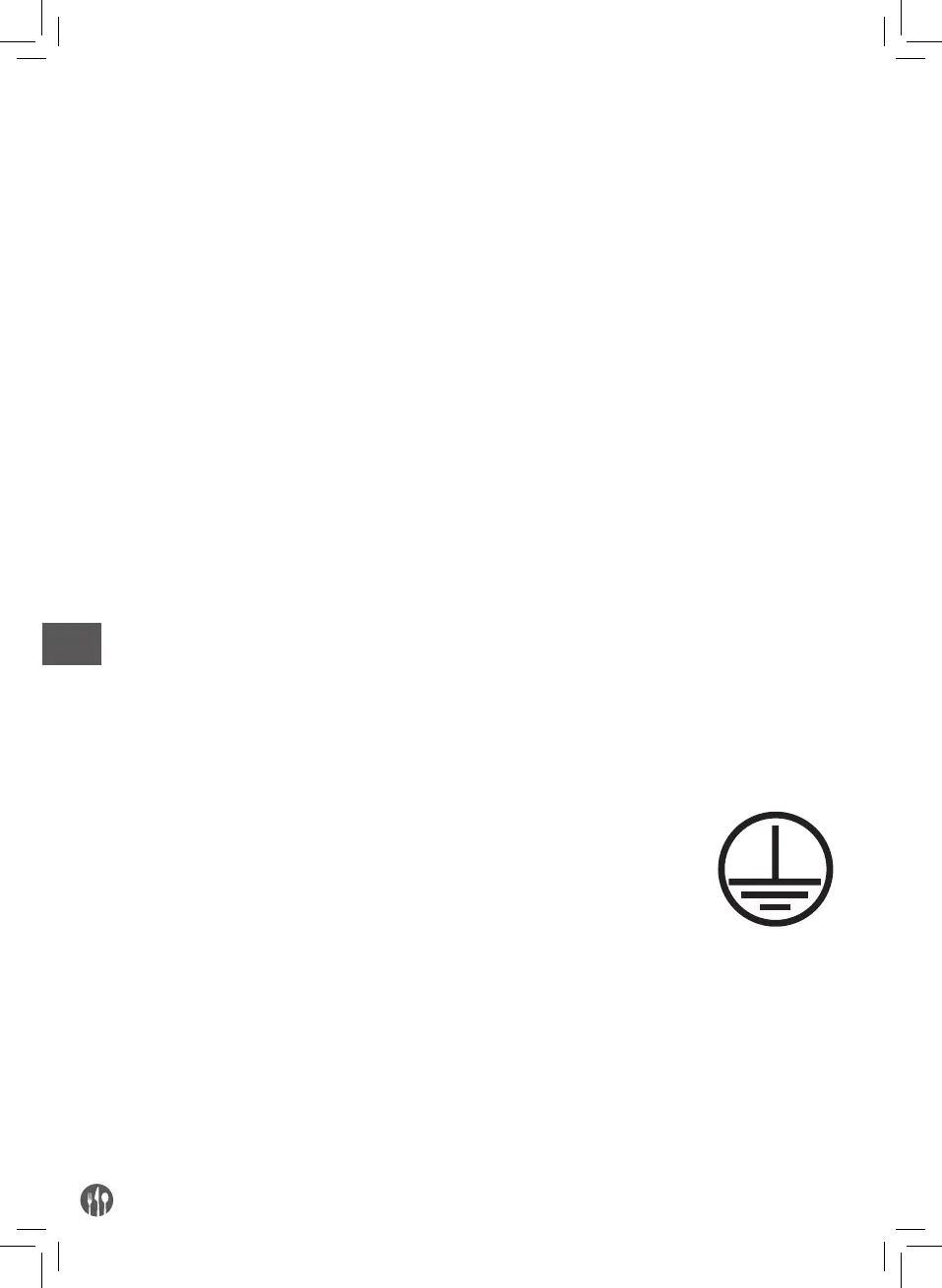
GROUNDING INSTALLATION
This appliance is classified as protection class I appliance and
must be connected to a protective ground. Grounding reduces
the risk of electric shock by providing an escape wire for the
electric current. This appliance is equipped with a cord having a
grounding wire with a grounding plug. The plug must be plugged
into an outlet that is properly installed and grounded.
In case of electrical or refrigeration failure, service agent authorized by the manufac-
turer or professional maintenance staff shall be responsible for the maintenance work
in case of danger or expanded failure.


 To Next Page
 Loading...