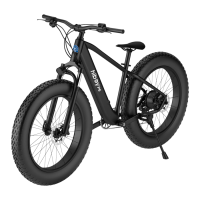
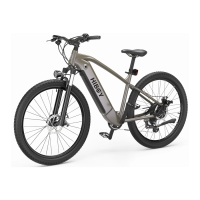
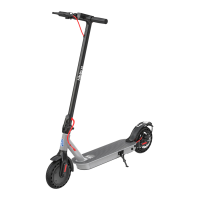
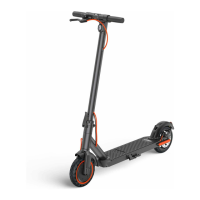
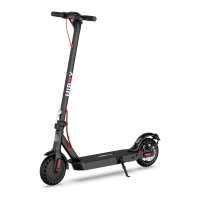
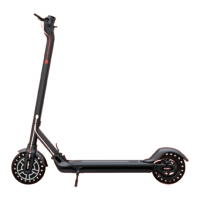
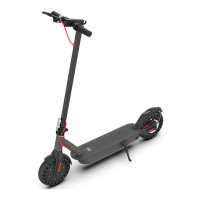
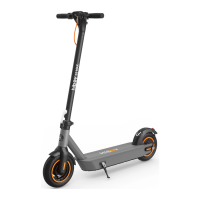
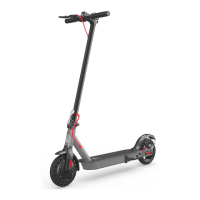
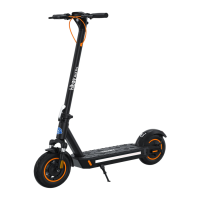
This document is the user manual for the HIBOY ELECTRIC SCOOTER P10, a leisure device designed for personal transportation. The manual provides comprehensive instructions for assembly, riding, maintenance, and safety, along with product specifications and warranty information.
Function Description:
The Hiboy P10 is an electric scooter designed for personal mobility. It features a motorized rear wheel, handlebars for steering, and a seat for comfortable riding. The scooter is equipped with front and rear brakes for stopping, a headlight and taillight for visibility, and a bell to alert pedestrians. It is designed for use in public areas, subject to traffic laws and regulations.
Important Technical Specifications:
- Dimensions:
- Bike Size (Length x Width x Height): 39.3 x 35.4 x 19.6 inches
- Folded (Length x Width x Height): 39.3 x 27.5 x 7.8 inches
- Weight:
- Net Weight: 35.21 lbs
- Max. Load (Weight): 265 lbs (including driver and objects)
- User:
- Performance:
- Max. Speed: 15.5 mph
- Max. Range: 18.6 miles
- Assist Distance Range: 31 miles
- Max. Slope: 15%
- Battery:
- Voltage: 36V DC
- Capacity: 7.5Ah
- Charging Time: 5.5 hours
- Motor:
Usage Features:
- Assembly: The head tube can be unfolded and locked into place. Pedals (L for left, R for right) and a rear flap need to be installed. The handlebars are adjustable for direction and secured with a clamp. The seat height is also adjustable by opening a clamp under the seat post.
- Riding:
- Start the E-Bike by pressing the Power Button.
- Move forward by twisting the Throttle.
- Slow down by letting go of the Throttle and gradually squeezing the Rear Brake.
- Stop by letting go of the Throttle and squeezing both front and rear brakes.
- Use the Bell to alert others.
- The Battery Display shows the remaining charge.
- Safety Techniques:
- Always wear an ASTM F1492 approved helmet and protective gear.
- Keep feet on the pedals while riding.
- Ensure the battery is fully charged, tires are intact, and brakes are functional.
- Maintain a safe speed and distance from others.
- Be aware of surroundings to avoid obstacles and slippery surfaces.
- Ride in open, flat areas initially, avoiding steep slopes or high traffic.
- Comply with local laws and give way to pedestrians.
- Never ride at high speeds on uneven terrain, perform stunts, carry passengers or heavy items, or ride in the rain.
- Do not get off the E-Bike while it is in motion.
- Check the bike before every use for loose parts, low battery, excessive wear, or strange sounds.
- Charging:
- Ensure the E-Bike is off before and during charging.
- The LED light on the charger changes from red to green when fully charged.
- Charging automatically cuts off after a full charge, but long-term charging is not recommended.
- Do not connect the charger if the charging port is wet; cover it when not in use.
- Fully charge the battery before first use (up to 3 hours).
- Charge after each riding session to maximize battery life.
- Charge at least once a month when not in active use.
- Inspect charging ports and cables periodically.
- Charge in a clean, dry environment, avoiding extreme temperatures.
- Use only the provided battery and charging cable.
- Do not charge if there is excessive odor, heat, leakage, or physical damage.
Maintenance Features:
- Cleaning:
- Wipe stains off the body with a damp cloth. For stubborn stains, use toothpaste and a toothbrush, then wipe clean.
- Do not use alcohol, gasoline, kerosene, or corrosive chemical solvents.
- Do not wash with a high-pressure water spray.
- Ensure the bike is off, the charging cable is unplugged, and rubber flaps are closed during cleaning to prevent electric shock or water leakage.
- Storage:
- Store in a cool, dry place between 14°F and 104°F.
- Avoid storing in extremely humid environments to prevent condensation and battery damage.
- Avoid completely exhausting the battery before recharging; charge as soon as possible when low.
- Charge every other month to preserve the battery.
- Use original battery packs and power adapter.
- Do not touch contacts, dismantle, or puncture the casing. Keep contacts away from metal objects.
- Dispose of used batteries properly according to local regulations.

 Need help?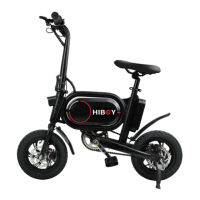

 To Next Page
 General