
 Need help?
Do you have a question about the HIKVISION DS-2XC6685G0 and is the answer not in the manual?
This document serves as a Quick Start Guide for the Anti-Corrosion Network Bullet Camera, providing essential information for its installation, activation, and general use. The manual outlines the product's features, installation procedures, and important safety and regulatory guidelines to ensure proper operation and longevity.
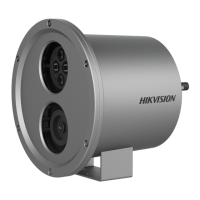
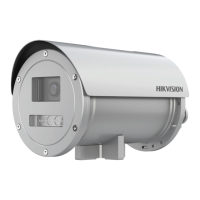
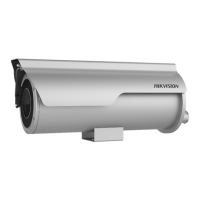
The Anti-Corrosion Network Bullet Camera is designed for surveillance applications, offering robust performance in environments where corrosion resistance is crucial. It is available in two main types: one with a wiper and one without, catering to different environmental needs and maintenance preferences. The camera's design incorporates a front cover, a sun shield, and a main body, with various interfaces for audio input/output, power supply (AC 24V), RJ45 network connection, BNC, and RS-485. The wiper, present in Type I models, is a key feature for maintaining clear visibility in challenging weather conditions, ensuring continuous monitoring without manual intervention for lens cleaning.
For usage, the camera requires a stable power supply, specifically 24 VAC, and users must ensure that the power supply matches the camera's requirements. It is crucial to power off all related equipment during installation to prevent electrical hazards. The camera is designed to be mounted on a wall, and the installation process involves securing a wall mounting bracket with expansion bolts, then attaching the camera to a pedestal on the bracket. The design allows for adjustment of both panning and tilting positions, with a pan range of -45° to 45° and a tilt range of -45° to 45°, providing flexibility in aiming the camera to cover the desired area. This adjustability is critical for optimizing the field of view and ensuring comprehensive surveillance coverage.
The manual emphasizes several important precautions for optimal usage. For cameras supporting IR (Infrared) functionality, users are advised to ensure no reflective surfaces are too close to the camera lens. This is to prevent IR light from reflecting back into the lens, which could cause reflections and impair image quality. The camera should not be aimed directly at the sun or other extremely bright light sources, as this can lead to blooming or smearing effects and potentially reduce the sensor's lifespan. Furthermore, the sensor is vulnerable to laser beams, so care must be taken to prevent exposure to any laser equipment in use.
Maintenance features are implicitly covered through the guidelines provided. The anti-corrosion design itself is a primary maintenance feature, reducing the need for frequent replacement or repair due to environmental degradation. Regular cleaning of the sensor modules is recommended, using a clean cloth with a small amount of ethanol, and users are advised not to touch the sensor modules with bare fingers. When the camera is not in use for extended periods, replacing the lens cap is suggested to protect the sensor from dirt and dust, thereby prolonging its operational life and maintaining image clarity.
The camera's operational environment is also a critical consideration for maintenance and longevity. It should not be placed in extremely hot, cold, dusty, or damp locations. The specified operating temperature range is -30 °C to +60 °C (-22 °F to 140 °F), with a wider range for specific models (-H: -40 °C to 60 °C / -40 °F to 140 °F). Good ventilation is required to prevent heat accumulation, which can negatively impact performance and lifespan. Keeping the camera away from liquids during use is also essential. For delivery, the camera should always be packed in its original packaging or similar protective material to prevent damage.
The manual also touches upon the importance of regular part replacement for certain components, such as electrolytic capacitors, which have an average enduring time. Users are advised to contact their dealer for details on regular checking and replacement schedules, as these can vary based on operating environment and usage history. The device is not suitable for use in locations where children are likely to be present, indicating a focus on professional surveillance applications.
Security is a paramount concern, and the manual stresses that proper configuration of all passwords and other security settings is the responsibility of the installer and/or end-user. This highlights the need for secure setup practices to protect the network camera from unauthorized access and potential cyber threats. In case of any issues or malfunctions, users are instructed to contact their dealer or the nearest service center and explicitly warned against attempting to disassemble the camera themselves, as this could void responsibility for problems caused by unauthorized repair or maintenance.
The guide also includes regulatory information, such as FCC compliance and EU conformity statements, indicating adherence to international standards for electronic devices. It provides instructions for proper disposal of the product and its battery, emphasizing environmental responsibility and the importance of recycling. The battery, if present, is marked with symbols indicating its chemical composition (cadmium, lead, or mercury) and should not be disposed of as unsorted municipal waste. Specific warnings are given regarding battery handling, including the risk of explosion if replaced by an incorrect type, and the dangers of exposure to fire, high temperatures, or low air pressure.
Overall, the Anti-Corrosion Network Bullet Camera is presented as a robust and reliable surveillance solution, designed with durability and ease of installation in mind, while also emphasizing critical safety, environmental, and security considerations for its users. The comprehensive guidelines aim to ensure that the camera operates effectively and safely throughout its lifespan.
 General
| IR Cut Filter | Yes |
|---|---|
| Wavelength | 850 nm |
| Smart Supplement Light | Yes |
| Min. Illumination | 0.0005 Lux @ (F1.2, AGC ON), 0 Lux with IR |
| Aperture | F1.2 |
| Supplement Light Type | IR |
| SNR | ≥55 dB |
| Video Compression | H.265, H.264, H.265+, H.264+ |
| Audio Compression | G.711/G.722.1/G.726/MP2L2/AAC |
| Protocols | IPv4, IPv6, HTTP, HTTPS, UPnP, RTSP, RTMP, ONVIF, ISAPI, DHCP, DNS, DDNS, PPPoE, NTP, SMTP, SNMP, FTP, 802.1x, QoS, UDP, TCP, ICMP, IGMP, ARP |
| Network Interface | RJ45 10M/100M/1000M self-adaptive Ethernet interface |
| On-board Storage | Micro SD/SDHC/SDXC card, up to 256 GB |
| Power | DC12 V ± 25%, PoE+ (IEEE 802.3at) |
| Operating Conditions | -30 °C to 60 °C (-22 °F to 140 °F), Humidity ≤95% |
| Protection Level | IP67 |
| Material | Metal |
| Lens Type | Motorized zoom lens |
| Image Settings | Brightness, Contrast, Saturation, Sharpness, White Balance, Gain |



 To Next Page