
 Need help?
Do you have a question about the HIKVISION HiLook IPC-T250H and is the answer not in the manual?
Details FCC compliance, limits, and conditions for radio frequency emissions.
Covers CE marking and European directives regarding EMC and RoHS compliance.
States compliance with Canadian standards for digital devices.
Highlights potential for serious injury or death if warnings are neglected.
Highlights potential for injury or equipment damage if cautions are neglected.
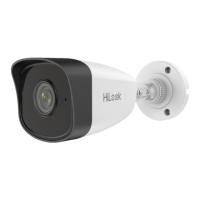
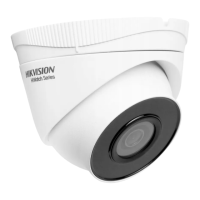
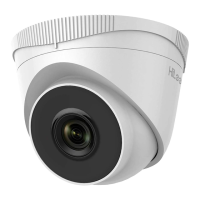
Details the components of the Type I turret camera.
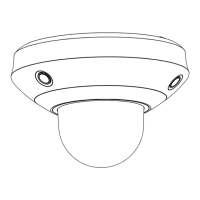
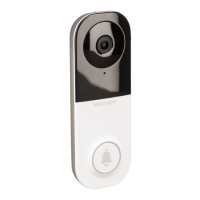
Details the components of the Type II turret camera.
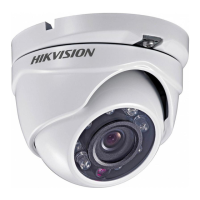
Details the components of the Type III turret camera.
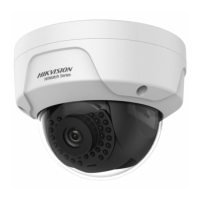
Details the components of the Type IV turret camera.
Steps for installing and removing a memory card in compatible cameras.
Detailed steps for mounting the camera to a ceiling.
Instructions for mounting the camera using a junction box.
Steps for mounting the camera using an inclined base.
Instructions for mounting the camera directly to a wall.
Guide to installing a waterproof jacket for outdoor network cable connections.
This document is a Quick Start Guide for a Network Turret Camera, providing essential information for its installation, activation, and access. The guide outlines various aspects of the camera, from its physical appearance and components to safety instructions, regulatory compliance, and different mounting options.
The primary function of this device is to provide network-based surveillance, capturing images and transmitting them over an Ethernet connection. It is designed for both indoor and outdoor use, with specific instructions for waterproofing the network cable when installed outdoors. The camera supports Power over Ethernet (PoE), which simplifies installation by allowing both power and data to be transmitted over a single Ethernet cable, provided a PoE-enabled switch is used.
Usage features of the Network Turret Camera are detailed through its installation and adjustment processes. The camera comes in different types (Type I, Type II, Type III, Type IV), each with a slightly varied appearance but sharing core functionalities. Key components include an enclosure, camera body, lens (for Type II, III, and IV), mounting base, power cord, and network cable. Some models (Type III and IV) also feature a memory card slot cover, indicating support for local storage.
Installation is a significant aspect of the camera's usage. The guide covers multiple mounting scenarios:
After physical installation, the guide emphasizes adjusting the viewing angle to ensure optimal image capture. The camera allows for adjustments in pan (0° to 360°), tilt (0° to 75°), and rotation (0° to 360°), providing flexibility in surveillance coverage.
Maintenance features are primarily focused on ensuring the longevity and proper functioning of the device, as well as safety. The guide provides a comprehensive list of safety instructions and cautions:
The guide also covers regulatory information, including FCC compliance for Class B digital devices and EU conformity statements (CE mark, WEEE directive, battery directive), indicating the product's adherence to relevant standards and guidelines for electronic waste and battery disposal. Industry Canada ICES-003 Compliance is also mentioned.
Finally, the guide provides a QR code for activating and accessing the network camera, noting that mobile data charges may apply if Wi-Fi is unavailable. This suggests a mobile application or web-based interface for initial setup and ongoing management of the camera.
 General
| Image Sensor | 1/2.7" Progressive Scan CMOS |
|---|---|
| Aperture | F2.0 |
| IR Range | Up to 30 m |
| Video Compression | H.265+/H.265/H.264+/H.264 |
| Ingress Protection | IP67 |
| Lens | 2.8 mm, 4 mm |
| Focal Length | 2.8mm |
| Day & Night | IR cut filter with auto switch |
| Bit Rate | 32 Kbps to 8 Mbps |
| Network Interface | RJ45 10M/100M Ethernet |
| Power Supply | PoE (802.3af) |
| Power Consumption | DC12V: 5W max; PoE: 6.5W max |
| Operating Conditions | -30 °C to 60 °C (-22 °F to 140 °F), humidity: 95% or less (non-condensing) |
| Minimum Illumination | 0 Lux with IR |


 To Next Page