Need help?
Do you have a question about the Hillyard TRIDENT R22SC and is the answer not in the manual?
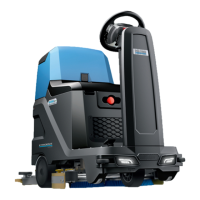
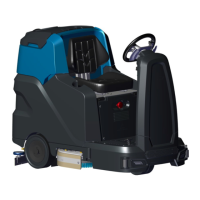
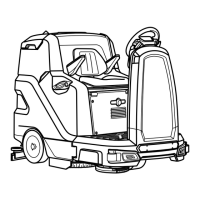
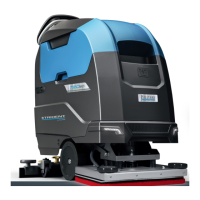
Provides an overview of the TRIDENT R22SC scrubbing machine.
Specifies the machine's purpose and suitable environments for operation.
Symbols for main switch, horn, reverse, brush coupling, and ECO mode.
Symbols for maximum water temperature, drain pipes, and maximum gradient.
Covers machine usage, authorized personnel, slopes, cable damage, emergency button, and children.
Addresses restricted users, storage, temperature, humidity, and electrical grounding.
Instructions for unpacking the machine from its pallet and packaging.
Steps to safely move the machine, checking tanks and engaging the brake.
Identification of controls and indicators on the instrument panel.
Description of levers and switches on the steering column.
Details of components located on the front right of the footboard.
Details emergency button, filling caps, and optional handle support.
Identification of recovery tank cover, blinking light, and drain pipe.
Identification of item-holder tray, storage compartment, and filter at the front.
Specifies the required types of lead traction batteries for the machine.
Guidance on battery maintenance, handling, lifting, and disposal as hazardous waste.
Details the dimensions of the battery compartment and handling requirements.
Step-by-step instructions for inserting the batteries correctly.
Procedure for connecting batteries in series and connecting the battery connector.
Steps to connect the battery charger for versions without an onboard charger.
Steps to connect the battery charger for versions with an onboard charger.
Explanation of the monitor's display for battery charge status.
Description of the display indicating the total machine usage time.
How to control forward speed with the pedal and engage reverse movement.
Ensuring recovery tank is empty and filters are closed before filling.
Methods for filling the tank and guidelines for detergent use and foam prevention.
Adjusting the detergent flow using the steering column lever.
Ensuring the recovery tank is empty before proceeding.
Steps for assembling the squeegee, including connecting pins and vacuum hose.
Procedure for adjusting the tilt of the rear squeegee rubber.
How to adjust the squeegee height based on rubber wear.
Steps for lifting the brush head and installing the brushes.
Information on the optional blinking light feature.
Description of the level indicator tube for the solution tank.
Procedure for assembling an abrasive pad on orbital machines.
Ensures machine readiness: empty recovery tank, key off, battery connected, brake engaged.
Details initial screens, functioning time, and battery technology display.
Adjusting solution, lowering brush/squeegee, and activating vacuum.
How to initiate and control forward movement using the accelerator pedal.
Procedure for reverse movement and lifting the squeegee off the floor.
Explanation of the ECO mode for increased working capacity and reduced noise.
Description of the overflow device and recovery tank full indication.
How to use the emergency button to stop the machine in hazardous situations.
Closing taps, lifting brush/squeegee, turning off, and disconnecting battery.
Detailed steps for emptying and cleaning the recovery tank.
Instructions for cleaning the squeegee and rubbers, then reattaching it.
Procedure for draining the solution tank using the provided tap.
Step-by-step guide for emptying, cleaning, and reassembling the recovery tank.
Procedure for removing and cleaning the float assembly in the recovery tank.
Cleaning the squeegee body, vacuum tube, checking rubber wear, and reassembly.
Instructions for cleaning the detergent/water solution filter.
Checking and cleaning the vacuum hose for obstructions.
Procedure for releasing, cleaning, and reassembling the brush.
Procedure for replacing the front squeegee rubber for optimal drying performance.
Guide to changing the rear squeegee rubber for improved drying.
Steps to replace the brush to maintain cleaning effectiveness.
Checks for battery, connections, and key switch for startup issues.
Troubleshooting insufficient water on brushes, checking tank and filter.
Diagnosing and fixing perfect drying issues with the squeegee.
Addressing poor cleaning by checking brushes, settings, and detergent use.
Solutions for excessive foam, including detergent choice and antifoam.
Troubleshooting checks for the suction motor not functioning.
Diagnosing issues with the brush motor not working.
Procedure for separating materials and sending them to appropriate collection centers.
Details on Polypropylene, Nylon, and Abrasive brush materials.
Guidance on selecting bristle thickness for different floor types.
Description of traditional and CENTER LOCK pad holders.
Reference table for choosing appropriate brushes for the machine.

 To Next Page
 General