
 Need help?
Do you have a question about the Hitachi RAM-50CNHZ2 and is the answer not in the manual?
Guidelines for safe installation of the unit, including grounding and circuit breaker.
Safety measures for moving or maintaining the unit, emphasizing professional assistance.
Safety rules to follow during the normal operation of the air conditioner.
Specifies the maximum allowed height difference between indoor units.
Details the maximum allowable piping lengths for the air conditioner system.
Describes permissible combinations for operating multiple indoor units.
Guidance on adjusting the number of active indoor units for optimal performance.
Information on phenomena observed in stopped indoor units during operation.
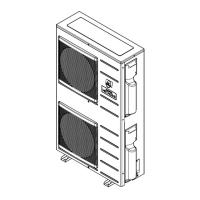
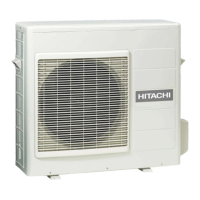
Lists model names and their corresponding physical dimensions.
Details the function and use of the temporary operation switch.
Explains the auto restart function after power failure or interruption.
Describes the function and behavior of the operation indicator lamp.
Explains the function of the timer indicator lamp.
Details the signal receiver for remote control communication.
Indicates when the air filter needs cleaning or replacement.
Overview of the remote controller's buttons and display.
Important guidelines for the proper and safe use of the remote controller.
Details the conditions under which automatic operation mode functions.
Explains the specific mechanism and behavior of the dehumidifying function.
Describes the automatic fan speed control during cooling or heating.
Instructions for setting the timer to turn the unit off at a specific time.
Instructions for setting the timer to turn the unit on at a specific time.
Instructions for setting timers for both turning on and off the unit.
Procedure to cancel any pre-set timer reservations.
Procedure to cancel the sleep timer reservation.
Recommendations for setting the ideal room temperature for comfort and efficiency.
Advice on using curtains or blinds to manage room temperature.
Importance of proper ventilation and fresh air circulation.
Tips for maximizing comfort by effectively using the timer functions.
Emphasizes regular cleaning of the air filter for optimal performance.
Guidance on temperature settings for vulnerable individuals.
Discusses the impact of room heat sources on air conditioner performance.
Explains the unit's behavior and required actions after a power failure.
Instructions for proper shutdown when the unit is not in use for extended periods.
Safety precautions to take during thunderstorms.
Procedure for cleaning and maintaining the air filter.
Checklist of common issues to verify before requesting service.
Specifications and details related to the thermostat component.
Specifications and details for the fan motor component.
Wiring diagram specific to the indoor unit.
Wiring diagram specific to the outdoor unit.
Circuit diagram illustrating the remote control system.
Block diagram illustrating the indoor unit's functional components.
Block diagram illustrating the outdoor unit's functional components.
Conditions required for the defrost cycle to initiate.
Conditions that lead to the termination of the defrost cycle.
Details the outputs and actions taken during the defrost cycle.
Conditions required for the auto-fresh defrost function to activate.
Conditions that lead to the release or termination of auto-fresh defrost.
Details the outputs and actions performed during auto-fresh defrost.
Diagram illustrating the refrigerant cycle for cooling, dehumidifying, and defrost.
Diagram illustrating the refrigerant cycle during heating operation.
Explanation of the reset circuit's function and operation.
Explanation of the outdoor unit's power circuit and its components.
Details the peak current cut-off circuit and its operational waveforms.
Troubleshooting guide for outdoor unit electrical components.
General precautions and safety measures before checking components.
Identifies the physical location of the self-diagnosis indicator lamp.
Step-by-step troubleshooting for basic operational failures.
 General
| Brand | Hitachi |
|---|---|
| Model | RAM-50CNHZ2 |
| Category | Air Conditioner |
| Language | English |


 To Next Page