
 Need help?
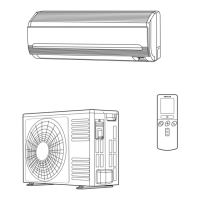
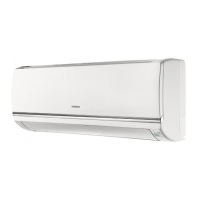
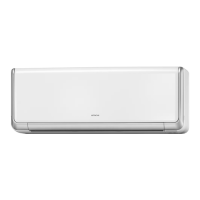
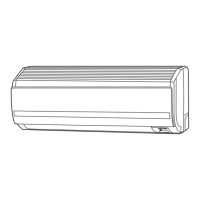
Do you have a question about the Hitachi RAS-16FS3 and is the answer not in the manual?
Setting of rotary and dip switches for indoor units (Unit No., Optional Function, Capacity Code).
Details methods for troubleshooting by alarm codes, check modes, and 7-segment display.
Explains self-checking procedures for PCBs, remote controls, and other main components.
Procedures for performing test runs using remote control or outdoor unit settings.
Instructions for disassembling and servicing various components of the outdoor unit.
Procedures for servicing the RPI series indoor units, covering filters, PCBs, fans, and motors.
Servicing instructions for higher capacity RPI models, including filters, PCBs, and fans.
Steps for removing filters, panels, PCBs, fans, motors, and other parts for cassette units.
Procedures for servicing 2-way cassette units, including filters, panels, and motors.
Instructions for removing filters, panels, motors, thermistors, and PCBs for wall-mounted units.
Procedures for servicing floor-standing units, including filters, panels, motors, and PCBs.
Steps for servicing floor-concealed units, covering filters, panels, motors, and PCBs.
Procedures for servicing ceiling-mounted units, including filters, covers, fans, and PCBs.
Instructions for servicing the total heat exchanger, including structure and electrical parts removal.
Detailed procedures for cleaning heat exchangers in various indoor unit types.
Procedure for safely collecting refrigerant before replacing indoor units.
Details inverter specifications for different power sources and protection functions.
Explains the concept, features, and specifications of the AC chopper for fan control.
Describes the operation and stoppage principles of auto-louver mechanisms for cassette types.
Explains the reliable mechanism, principle of compression, and structure of scroll compressors.
Details the position and characteristics of thermistors used in indoor and outdoor units.
Provides specifications and wiring diagrams for outdoor and indoor electronic expansion valves.
Explains high and low pressure control methods and sensor output characteristics.
Describes the function of the high pressure protection device to prevent compressor damage.
Details the specifications and circuit diagram for the noise filter.
Provides specifications for capacitors used in the inverter circuit.
Details the specifications for the reactor (DCL) used in the inverter.
Describes optional functions for indoor units like remote control, thermostats, and timers.
Explains optional functions for outdoor units like demand control and snow sensor.
Details the names of parts and operation systems for remote control switches.
Identifies the parts and functions of the wireless remote control switch.
Explains the operation and indications of the 7-day timer.
Describes the operation and parts of the central station.
Q&A on compressor burnout caused by insufficient refrigerant charge.
Q&A on poor cooling performance due to long piping length and incorrect settings.
Q&A on high operating sound in ceiling units due to installation without ducts.
Q&A on system stoppage caused by indoor/outdoor unit combination issues.
Q&A on poor cooling due to insufficient space causing hot air circulation.
Design considerations for FXG/FX3 series, including installation sites and piping work.
Guide for selecting drain pipe diameter based on flow volume calculations.
Information on maximum permissible refrigerant concentration and countermeasures.
General maintenance checks for indoor and outdoor units, including fans, heat exchangers, and electrical parts.
Data sheet for recording service and maintenance checks using the 7-segment display.
Data sheet for recording service and maintenance checks using the remote control switch.
General record for service and maintenance activities.
 General
| Brand | Hitachi |
|---|---|
| Model | RAS-16FS3 |
| Category | Air Conditioner |
| Language | English |


 To Next Page