EasyManua.ls Logo

Hitachi RCUE40AG1 - User Manual

Hitachi RCUE40AG1
100 pages
Print Icon
To Next Page IconTo Next Page
Loading...
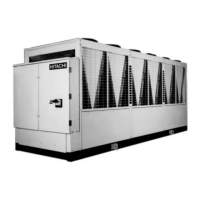
AIR COOLED
WATER CHILLERS
-SCREW TYPE-
Installation, Operation and Maintenance Instructions.
Design Information
Technical Catalog
RCUE40AG1-400AG1 (R407C)
Cooling Capacity 108 kW - 1068 kW

Table of Contents

Questions and Answers

  • R
    roblesjoshuaAug 19, 2025
    How to fix a Hitachi Chiller when the condenser fan does not operate?
    • N
      Nathan Rasmussen Jr.Aug 19, 2025
      If the condenser fan on your Hitachi Chiller isn't working, there are several potential causes: * The current to the unit may be shut off. Try resetting the power supply line. * The fuse for the operation circuit might be blown or have faulty contact. Check for shorted components or loose connections, and tighten or replace as needed. * The contactor holding coil could be burned out or have faulty contact. Identify the cause and repair or replace the coil. * The overcurrent relay may be tripped. Remove the cause and reset the relay. * There might be low voltage. Verify the unit's voltage rating. * The motor or terminals could be shorted. Inspect the motor and terminals, repairing or replacing them if necessary.
  • M
    michellemorrisAug 21, 2025
    What causes high discharge pressure in a Hitachi RCUE40AG1 Chiller and how to resolve it?
    • F
      Frederick WadeAug 21, 2025
      High discharge pressure in your Hitachi Chiller can stem from several issues: * High condenser air temperature or insufficient airflow through the condenser. Check the fan operation and clean the coil if it's clogged. * A defective check valve or a partially closed liquid line valve. Inspect the valves, capillary tubes, and strainer, replacing them if necessary. * Overcharged refrigerant. Purge the excess refrigerant. * Air or non-condensable gas in the refrigerant cycle. Purge the gas. * Suction pressure is higher than standard. See “High Suction Pressure.”
  • F
    Felicia ChristensenAug 23, 2025
    What to do if the compressor does not operate on my Hitachi RCUE40AG1 Chiller?
    • A
      Anna HudsonAug 25, 2025
      If the compressor on your Hitachi Chiller isn't operating, consider these possible causes: * The condenser fan may not be working. Address any issues with the fan. * The interlock circuit for the chilled water pump could be open. Check the pump contactor and the pump itself for faults, repairing or replacing parts as needed. * Electrical protective devices may have tripped. Identify and resolve the cause before resetting the “ON” button. * The wiring connection for the compressor power source may be incorrect. Interchange two of the three terminals (R, S, and T) at the main power source terminals.
  • J
    Jaime GarnerAug 26, 2025
    Why is the suction pressure low in my Hitachi RCUE40AG1, and how can I fix it?
    • L
      larry75Aug 26, 2025
      Low suction pressure in your Hitachi Chiller can be caused by: * Low inlet temperature of chilled water. Check the installation specifications. * Improperly adjusted or faulty expansion valve. Adjust for correct superheat, or repair/replace the valve if necessary. * Insufficient refrigerant charge. Add refrigerant. * Excessive oil in the water cooler. Purge the oil. * Scales on water cooler plates. Clean the plates.
  • J
    Jordan JonesAug 27, 2025
    How to troubleshoot insufficient cooling in a Hitachi RCUE40AG1 Chiller?
    • Z
      zachary70Aug 28, 2025
      If your Hitachi Chiller isn't cooling sufficiently, check the following: * High discharge pressure or low suction pressure. Refer to the sections on “High Discharge Pressure” and “Low Suction Pressure.” * Improper thermostat setting. Readjust the thermostat. * Defective unload mechanism. Adjust the mechanism, and repair or replace any unloaded parts if needed.
  • L
    Lauren WashingtonAug 29, 2025
    What causes a Hitachi RCUE40AG1 compressor to stop on an overcurrent relay?
    • J
      jonesanneAug 30, 2025
      A Hitachi Chiller compressor might stop due to the overcurrent relay tripping because of: * Excessively high discharge and suction pressure. Refer to “High Discharge Pressure” and “High Suction Pressure”. * High or low voltage, single-phase condition, or phase imbalance. Check the power supply line and contactors, repairing as necessary. * Loose connection. Tighten the loose electrical connection or repair it if needed. * Faulty compressor motor. Check the compressor motor and repair or replace it if necessary. * Faulty overcurrent relay. Replace the relay if necessary.
  • A
    alanphillipsSep 1, 2025
    Why does the compressor stop on the freeze protection thermostat in my Hitachi RCUE40AG1 Chiller?
    • D
      Diana AshleySep 1, 2025
      The compressor in your Hitachi Chiller might stop due to the freeze protection thermostat for these reasons: * Excessively low chilled water outlet temperature. Check for an excessively low setting on the chilled water setting knob. * Defective thermistor. Check for malfunction of the thermistor and replace it if necessary. * Shortage of chilled water flow. Check the rotation of the pump. * Air in the water circuit. Purge the air.
  • E
    Eric JonesSep 3, 2025
    What could cause high suction pressure in a Hitachi RCUE40AG1?
    • N
      Nancy RobertsSep 3, 2025
      High suction pressure in a Hitachi Chiller can result from: * High inlet temperature of chilled water. Check the insulation of the piping and the installation specifications. * Excessive opening of the expansion valve. Readjust the opening or replace the valve if it's defective.
  • F
    fduncanSep 5, 2025
    Why does my Hitachi Chiller compressor stop on the high pressure switch?
    • P
      Perry MartinSep 5, 2025
      The Hitachi Chiller compressor may stop due to the high pressure switch for the following reasons: * Excessively high discharge pressure. See “High Discharge Pressure”. * Malfunction of the high pressure switch. Readjust the setting or replace it if defective.
  • U
    ujonesSep 7, 2025
    What causes the compressor to stop on the internal thermostat in a Hitachi Chiller?
    • P
      Paul HernandezSep 7, 2025
      The compressor in your Hitachi Chiller may stop on the internal thermostat or discharge gas thermostat due to: * High or low voltage, single-phase condition, or phase imbalance. Check the power supply line and contactor, repairing if necessary. * Excessive superheat. Check for refrigerant leakage and a faulty solenoid valve for liquid bypass. * Defective element. Check the contact of the internal thermostat during the cold condition. * Excessive high discharge pressure and low suction pressure. See “High Discharge Pressure” and “Low Suction Pressure.”

Summary

Important Notice

Features and Benefits

Introduces the key features and advantages of the new Hitachi air-cooled water chiller.

Features and Benefits

Compressor

Explains the twin screw compressor technology, principle of compression, and capacity control.

Control

Describes the control system's functions, precise temperature control, and energy-saving aspects.

Heat Exchanger

Covers the plate type evaporator and high-performance air-cooled condenser.

Operation Instructions

Hitachi Air-Cooled Water Chillers

Details unit startup, shutdown, daily checks, and basic troubleshooting procedures.

Components of Chiller

Structure Drawing

Shows the physical layout and numbered components of the chiller.

Preparation Initial Check

Initial Check

Covers required materials, installation location, space, and foundation requirements.

Placing the Unit

Provides procedures and safety precautions for placing the chiller unit.

Centre of Gravity

Details weight distribution and center of gravity for various chiller models.

Service Space and Foundation

Specifies required service space and foundation mounting details.

Transportation

Describes safe methods for transporting the chiller unit by rigging or roller.

Installation

Electrical Wiring

Details main power and control wiring procedures, including safety checks.

Water Piping

Gives guidelines for connecting chilled water piping, including valve usage and insulation.

Water Control

Recommends standard water quality parameters and cautions for industrial water use.

BMS Connection

Explains how to connect the chiller to a Building Management System using HARC70-CE1.

Installation Final Check

Lists minimum checks to ensure correct installation before operation.

Test Running

Test Running

Step-by-step guide for conducting the chiller's test run.

Controller Adjustment

Chilled Water Temperature Setting

Details the setting range for chilled water outlet temperature.

Local;Remote Changeover Switch

Describes the switch for selecting local or remote operation.

Neutral Zone Setting

Details the setting for the neutral zone temperature difference.

Control System

Overview of the chiller's control system, including capacity control and panel functions.

Controller Adjustment

Explains specific controller adjustments and switch settings.

Continuos Capacity Control Setting Switch=DSW5

Specific DSW5 settings for temperature bands and output signal times.

Anti-freeze Control by Pump Operation = DSW6-2 pin

Controls pump operation to prevent freezing at low ambient temperatures.

Self-Inspection Functions

Alarm Indication

Details how alarm codes are displayed on the control panel and the function of the 7-segment display.

Function for Indication of Operation Condition

Explains how to view operating conditions like temperature and alarm codes.

Checking Indication 2

Guides on checking operating parameters like discharge pressure and gas temperature.

Setting Water Outlet Temperature (°C)

Displays the configured water outlet temperature.

Ambient Temperature (°C)

Indicates the current ambient temperature.

Control System

Standard Operation Sequence RCUE 40 AG1, 50 AG1

Details the step-by-step operation sequence for RCUE 40/50AG1 models.

Standard Operation Sequence RCUE 60 AG1, 70 AG1

Details the step-by-step operation sequence for RCUE 60/70AG1 models.

Standard Operation Sequence RCUE 80 AG1, 100 AG1

Details the step-by-step operation sequence for RCUE 80/100AG1 models.

Standard Operation Sequence RCUE 120 AG1, 140 AG1

Details the step-by-step operation sequence for RCUE 120/140AG1 models.

Standard Operation Sequence RCUE 150 AG1

Details the step-by-step operation sequence for RCUE 150AG1 models.

Standard Operation Sequence RCUE 180 AG1, RCUE 200 AG1

Details the step-by-step operation sequence for RCUE 180/200AG1 models.

Standard Operation Sequence RCUE 240 AG1, RCUE 270 AG1

Details the step-by-step operation sequence for RCUE 240/270AG1 models.

Standard Operation Sequence RCUE 300 AG1, RCUE330 AG1

Details the step-by-step operation sequence for RCUE 300/330AG1 models.

Standard Operation Sequence RCUE 360, 400 AG1

Details the step-by-step operation sequence for RCUE 360/400AG1 models.

Maintenance

Components

Covers maintenance aspects for the compressor and air-cooled condenser.

Deposits

Explains mineral deposits in heat exchangers and their impact on performance.

Cleaning Method

Details the procedure for cleaning the water cooler heat exchangers.

Winter Shutdown

Instructions for preparing the unit for winter shutdown, including draining and covering.

Spring Start-Up

Steps for preparing the unit for operation after extended shutdown.

Refrigeration Cycle

Covers strainer checks, refrigerant charge, and leakage tests.

Refrigerant Cycle Diagram of Hitachi Air-Cooled Water Chiller (RCUE 40,80 AG1)

Shows the refrigerant cycle diagram for specific Hitachi chiller models.

Compressor Removal

Step-by-step procedure for safely removing the compressor from the unit.

Safety and Protection Control

Details the safety and protective devices equipped to ensure dependable operation.

Options

Lists various optional features available for the chillers.

Normal Operating Pressure

Provides charts for checking normal operating pressures based on temperatures.

Test Running and Maintenance Record

A template for recording test run data and maintenance checks.

Daily Operating Records

A log for recording daily operating parameters like temperature, pressure, and current.

Troubleshooting

Servicing for R407 C Refrigerant System

Guidance for servicing R407C systems, including refrigerant and oil handling.

Troubleshooting

Table of common faults, possible causes, and corrective actions.

Fault

Continues listing faults such as 'Compressor Stops on Freeze Protection Thermostat'.

Check;Corrective Action

Continues providing solutions for various troubleshooting issues.

General Specifications

General Data

Lists key specifications like cooling capacity, power input, dimensions, and compressor type.

Drawings

Dimensional Drawing

Shows the physical dimensions and layout of the chiller units for different model series.

Wiring Diagram

Power circuit diagram for RCUE 40-70AG1 models.

Wiring Diagram

Control circuit for RCUE 40-70AG1 models.

Main Printed Circuit Board (Master)

Detailed diagram of the main printed circuit board.

Relais Printed Circuit Board (Subsidiary)

Diagram of the subsidiary relay printed circuit board for specific models.

Relays Printed Circuit Board

Shows relay PCB diagrams for different model groups.

Customer Wiring

Illustrates customer wiring connections and low voltage control settings.

Components Data

Compressor

Lists specifications for Hitachi screw compressors.

Condenser and Condenser Fan

Details condenser tube specifications, fan quantity, diameter, and motor output.

Water Cooler

Provides dimensions, pressure ratings, and internal volumes for water coolers.

Model Selection

Selection Example

Demonstrates how to select a model using system requirements and performance data.

Performance Table (R407 C)

Detailed performance data for various models under R407C refrigerant.

Electrical Data (R407 C)

Provides electrical data for each model, including voltage, current, and power.

Sound Data

Lists sound power levels and overall dBA for standard and low noise models.

Application Data

Working Range

Specifies operating ranges for voltage, ambient temperature, and water temperature.

Part Load Performance

Shows performance data at various load conditions and ambient temperatures.

Ethylene Glycol Application

Guidelines for using ethylene glycol for low ambient applications and temperature correction factors.

Category

Lists categories for low water temperature applications and required glycol percentages.

Performance

Provides performance data tables with ethylene glycol correction factors.

Hitachi RCUE40AG1 Specifications

General IconGeneral
BrandHitachi
ModelRCUE40AG1
CategoryChiller
LanguageEnglish

Related product manuals