5
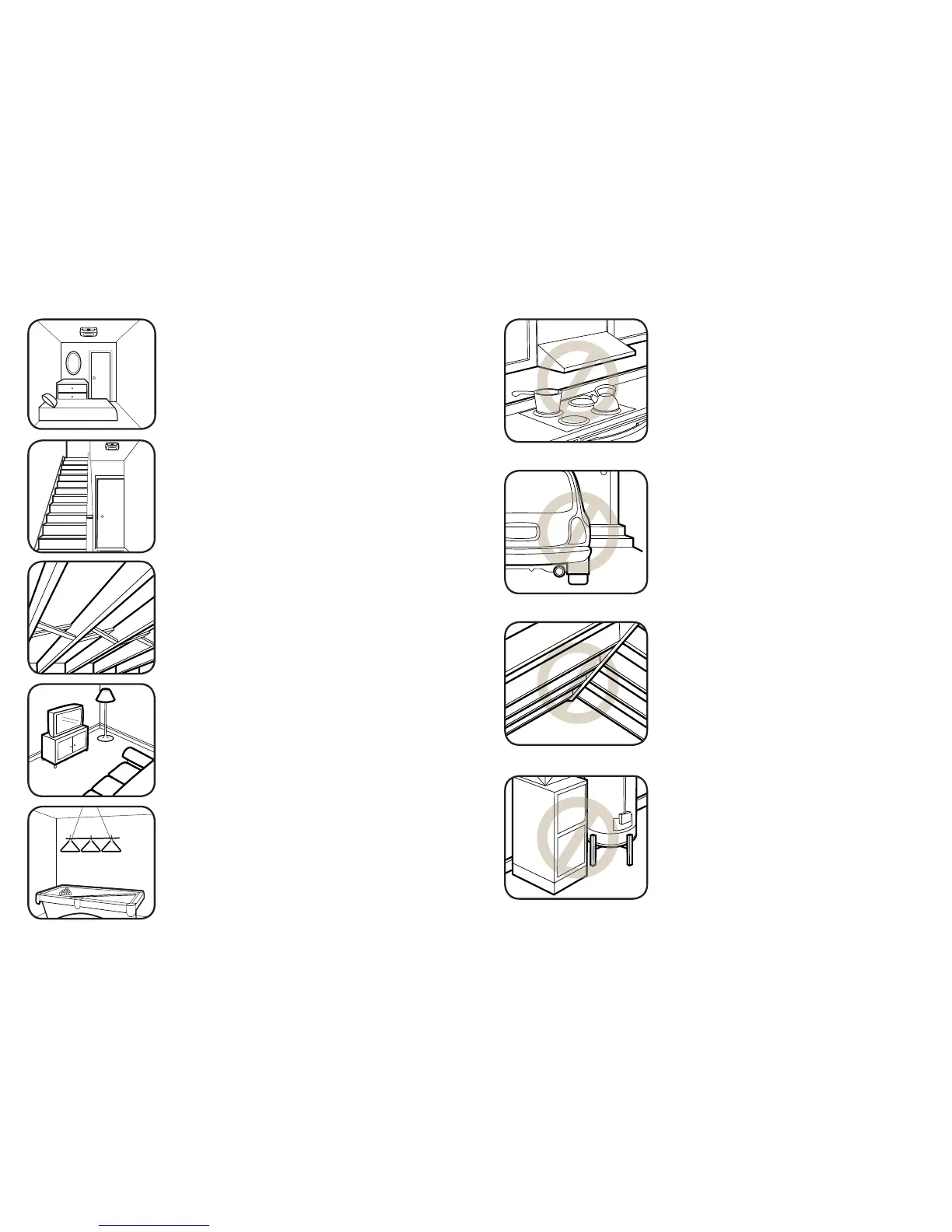
Bedrooms. A major threat from fire occurs
at night when people are sleeping. Smoke
alarms are required protection in all sleeping
rooms.
Living Rooms. To enhance safety, a smoke
alarm should be located in the living room of
a home.
Recommended Locations for your Smoke Alarm
Recreation and Dining Rooms. For
additional protection, a smoke alarm should
be located in the other living spaces of the
home.
Hallways. A principal threat to people
sleeping in bedrooms comes from fires
elsewhere in the home. A smoke alarm
is required to be located outside of each
sleeping area, and on every level of the home.
Basements. A smoke alarm is required
on every level of the house, including the
basement and in living areas of guest suites.
6
Areas Not Appropriate for Smoke Alarms
Kitchens. Do not install near kitchen
appliances. Steam and by-products of
cooking might cause nuisance alarms.
Garages. Do not install in garages.
Exhaust gases from vehicles can trigger
the smoke alarm.
Attics. Do not install in attics. A
smoke alarm can be affected by dust,
small insects or high temperatures. Do
not install the alarm in areas where
the normal ambient temperature can
exceed 100°F (38°C).
Utility and Furnace Rooms. Do not
install close to equipment that can create
steam and gas. This steam and gas can
trigger the smoke alarm.



 To Next Page