INSTALLATION MANUAL
89000007
Page 1-2
15 Nov 2013
© Honeywell International Inc. Do not copy without express permission of Honeywell.
Table 1-1. Interface Services (Cont)
Interface Description of Service
Serial altitude output Connection to a GPS or other device needing serial altitude
data – this allows the transponder to act as a repeater
instead of requiring a second altitude encoder.
Ident input External IDENT switch input.
Standby input External standby input for dual transponder installations.
“On ground” input Allows automatic flight/ground mode switching for aircraft
with a squat switch.
Lighting bus input Used to adjust the backlight and switch lighting intensity.
DME Suppression
Input
Input to limit interference between DME interrogations and
transponder replies – suppresses transponder when active.
Suppression bus I/O ARINC compatible suppression bus signal used in aircraft
with more sophisticated suppression needs, both an input to
and output from the transponder.
Audio output Optionally used by the altitude monitor function.
Audio mute input Toggle function to mute the audio output.
Altitude alert output Output used to signal altitude deviations when altitude
monitor function is used.
GPS Input Connection to a GPS supplying position input for ADS-B
position reporting.
Serial TIS-A Output RS232 output for connection to traffic display.
ARINC TIS-A Output ARINC429 output for connection to traffic display.
1.3 Regulatory
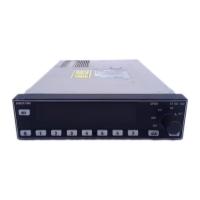
Refer to Table 1-2 for regulatory data for the KT 74 Mode S Transponder.
Table 1-2. Regulatory Data
Specification Characteristics
Compliance ETSO C112d, TSO C112d; Class 1 Level 2es
ETSO C166b, TSO C166b; Class B1S
FCC identification VZI01157
Applicable documents EUROCAE ED-73E, EUROCAE ED-14G (RTCA DO-
160G), RTCA DO-181E, RTCA DO-260B Corrigenda 1
Software ED-12B (RTCA DO-178B) Level B
PLD DO-254B Class C


 To Next Page