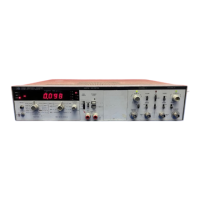
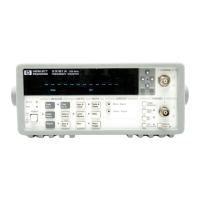
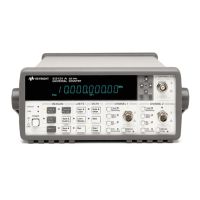
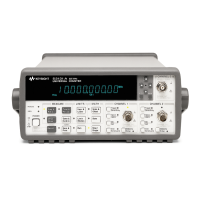
Model 5305B
Replaceable Parts
ENCAP = encapsulated min = minute (time) PIV = peak inverse voltage TFT = thin-film transistor
EXT = external …’ = minute (plane angle) pk = peak TGL = toggle
F = farad MINAT = miniature PL = phase lock THD = thread
FET = field-effect transistor mm = millimeter PLO = phase lock oscillator THRU = through
F/F = flip-flop MOD = modulator PM = phase modulation TI = titanium
FH = flat head MOM = momentary PNP = positive-negative- TOL = tolerance
FOL H = fiIIister head MOS = metal-oxide semi- positive TRIM = trimmer
FM = frequency modulation conductor P/O = part of TSTR = transistor
FP = front panel ms = millisecond POLY = polystyrene TTL = transistor-transistor
FREO = frequency MTG = mounting PORC = porcelain logic
FXD = fixed MTR = meter (indicating POS = positive; position(s) TV = television
g = gram device) (used in parts list) TVI = television interference
GE = germanium mV = millivolt POSN = position TWT = traveling wave tube
GHz = gigahertz mVac = millivolt, ac POT = potentiometer U = micro (10
-6
) (used in
GL = glass mVdc = millivolt, dc p-p = peak-to-peak parts list)
GND = ground(ed) mVpk = millivolt, peak PP = peak-to-peak (used in UF = microfarad (used in
H = Henry mVp-p = millivolt, peak-to-peak parts list) parts list)
h = hour mVrms = millivolt, rms PPM = pulse-position UHF = ultrahigh frequency
HET = heterodyne mW = milliwatt modulation UNREG = unregulated
HEX = hexagonal MUX = multiplex PREAMPL = preamplifier V = volt
HD = head MY = mylar PRF = pulse-repetition VA = voltampere
HDW = hardware µA = microampere frequency Vac = volts ac
HF = high frequency µF = microfarad PRR = pulse repetition rate VAR = variable
HG = mercury µH = microhenry ps = picosecond VCO = voltage-controlled
HI = high µmho = micromho PT = point oscillator
HP = Hewlett-Packard µs = microsecond PTM = pulse-time modulation Vdc = volts dc
HPF = high pass filter µV = microvolt PWM = pulse-width modulation VDCW = volts dc, working (used
HR = hour (used in parts list) µVac = microvolt, ac PWV = peak working voltage in parts list)
HV = high voltage µVdc = microvolt, dc RC = resistance capacitance V(F) = volts. filtered
Hz = Hertz µVpk = microvolt, peak RECT = rectifier VFO = variable-frequency
IC = integrated circuit µVp-p = microvolt, peak-to- REF = reference oscillator
ID = inside diameter peak REG = regulated VHF = very-high frequency
IF = intermediate frequency µVrms = microvolt, rms REPL = replaceable Vpk = volts peak
IMPG = impregnated µW = microwatt RF = radio frequency Vp-p = Volts peak-to-peak
In = inch nA = nanoampere RFI = radio frequency Vrms = volts rms
INCD = incandescent NC = no connection interference VSWR = voltage standing wave
INCL = include(s) N/C = normally closed RH = round head; right hand ratio
INP = input NE = neon RLC = resistance-inductance- VTO = voltage-tuned oscillator
INS = insulation NEG = negative capacitance VTVM = vacuum-tube voltmeter
INT = internal nF = nanofarad RMO = rack mount only V(X) = volts. switched
kg = kilogram NI PL = nickel plate rms = root-mean-square W = watt
kHz = kilohertz N/O = normally open RND = round WI = with
kΩ = kilohm NOM = nominal ROM = read-only memory WIV = working inverse voltage
kV = kilovolt NORM = normal R&P = rack and panel WW = wirewound
Ib = pound NPN = negatlve-posltlve- RWV = reverse working voltage W/O = without
LC = inductance-capacitance negative S = scattering parameter YIG = yttrium-iron-garnet
LED = light-emitting diode NPO = negative-positive zero s = second (time) Zo = characteristic
LF = low frequency (zero temperature …’’ = second (plane angle) impedance
LG = long coefficient) S-B = slow-blow (fuse (used
LH = left hand NRFR = not recommended for in parts list)
LIM = limit field replacement SCR = silicon controlled
LIN = linear taper (used in NSR = not separately rectifier; screw
NOTE
parts list) replaceable SE = selenium All abbreviations in the parts
Iin = linear ns = nanosecond SECT = sections list will be in upper case.
LK WASH = lockwasher nW = nanowatt SEMICON = semiconductor
LO = low; local oscillator OBD = order by description SHF = superhigh frequency
LOG = logarithmic taper OD = outside diameter SI = Silicon
(used in parts list) OH = oval head SIL = silver
log = logarithm(ic) OP AMPL = operational amplifier SL = slide
LPF = low pass filter OPT = option SNR = signal-to-noise ratio
LV = low voltage OSC = oscillator SPDT = single-pole, double-
m = meter (distance) OX = oxide throw
mA = milliampere oz = ounce SPG = spring
MAX = maximum Ω = ohm SR = split ring Abbreviation Prefix Multiple
MΩ = megohm P = peak (used in parts SPST = single-pole. single- T tera 10
12
MEG = meg (10
6
) (used in list) throw G giga 10
9
parts list) PAM = pulse-amplitude SSB = single sideband M mega 10
6
MET FLM = metal film modulation SST = stainless steel k kilo 10
3
MET OX = metal oxide PC = printed circuit STL = steel da deka 10
MF = medium frequency; PCM = pulse-code modulation; SQ = square d deci 10
-1
microfarad (used in pulse-count modulation SWR = standing-wave ratio c centi 10
-2
parts list) PDM = pulse-duration SYNC = synchronize m milli 10
-3
MFR = manufacturer modulation T = timed (slow-blow fuse) µ micro 10
-6
mg = milligram pF = picofarad TA = tantalum n nano 10
-9
MHz = megahertz PH BRZ = phosphor bronze TC = temperature p pico 10
-12
mH = millihenry PHL = Phillips compensating f femto 10
-15
mho = mho PIN = positive-instrinsic- TD = time delay a atto 10
-18
MIN = minimum negative TERM = terminal
9E-6-2
MULTIPLIERS
ABBREVIATIONS (CONTINUED)


 To Next Page