Need help?
Do you have a question about the Huawei B681 and is the answer not in the manual?
Describes how to connect computers and telephones to the device for internet and voice calls.
Explains the status and meaning of various device indicators like Wi-Fi, Network, and Power.
Step-by-step guide for inserting the SIM card into the device.
Instructions on how to attach and use the table stand for upright placement.
Guide for connecting an external antenna for better network coverage.
Steps to connect a telephone for making voice calls.
Instructions on how to connect a computer to the device using an Ethernet cable.
Guide on connecting the device to a power source using the adapter.
How to manually turn the device's Wi-Fi feature on or off.
Describes two methods for setting up a Wi-Fi connection: standard and WPS.
Steps to launch a web browser and log in to manage device settings.
Explains different modes (Auto, Manual, On Demand) for connecting to the internet.
Instructions on how to reset the device to its original factory settings.
Provides tips for troubleshooting, restarting, and contacting support.
General safety guidelines for using electronic devices, including medical and explosive environments.
Safety precautions for using the device while driving or on an aircraft.
Guidelines for device placement, operating temperature, cleaning, and maintenance.
Precautions regarding children's safety and the use of approved accessories.
Instructions on proper handling, cleaning, and avoiding damage to the device and charger.
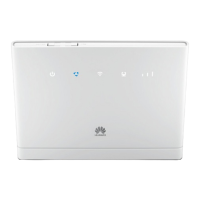
The B681 is a versatile communication device designed to provide internet access and voice call capabilities, suitable for both home and office environments. Its primary function is to act as a gateway, allowing users to connect to the internet via a Subscriber Identity Module (SIM) card and offering options for wired and wireless connectivity, as well as traditional telephone services.
The core function of the B681 is to establish an internet connection using a SIM card. This enables users to access the internet without the need for a fixed-line broadband connection, making it ideal for locations where traditional internet infrastructure is unavailable or inconvenient. The device supports various internet connection modes, including "Auto," "Manual," and "On Demand," allowing users to choose the mode that best suits their data plan and usage patterns. In "Auto" mode, the device automatically connects to the internet upon power-on and remains connected. "Manual" mode requires users to log into the web management page to initiate or terminate the connection, offering more control over data usage. "On Demand" mode connects to the internet only when data is being transferred and disconnects after a period of inactivity, which can be beneficial for data plans charged by connection time.
Beyond internet access, the B681 also integrates voice call functionality. By connecting a standard telephone to the device's telephone port, users can make and receive calls over the cellular network, effectively turning the device into a fixed wireless terminal. This feature provides a cost-effective alternative to traditional landlines, especially in areas with good cellular coverage.
For local network connectivity, the B681 is equipped with LAN ports, allowing computers and other network-enabled devices to connect via Ethernet cables. This provides a stable and high-speed wired connection for devices that require it. Simultaneously, the device features Wi-Fi capabilities, enabling wireless internet access for multiple devices such as smartphones, tablets, and laptops. The Wi-Fi function can be manually turned on or off, and connections can be established either by scanning for the network's Service Set Identification (SSID) and entering a Wi-Fi key, or through a Wi-Fi Protected Setup (WPS) connection for compatible clients.
The device also includes an external antenna port, which is a crucial feature for optimizing signal reception in areas with poor network coverage. Users can connect an external antenna to enhance the device's ability to pick up cellular signals, thereby improving internet speed and call quality. This flexibility ensures reliable performance even in challenging signal environments.
The B681 is designed for ease of installation and use. The process of installing the SIM card is straightforward, involving sliding off a cover, inserting the card with the gold contacts facing down and the beveled edge aligned, and then replacing the cover. This simple procedure ensures that users can quickly get the device ready for operation.
The device offers flexible placement options. It can be placed on a flat surface like a table or desk, or mounted on a wall. An optional table stand is provided to allow the device to stand upright, which can be beneficial for optimizing signal reception and managing cables. For optimal performance, it is recommended to place the device in a high location or near a window to ensure good signal reception. To prevent interference, it should also be kept at least 1 meter (3.28 feet) away from other electrical devices.
Connecting to a computer is achieved by using an Ethernet cable to link the computer to one of the device's LAN ports. The corresponding LAN indicator on the device illuminates once a successful connection is established. For power, a compatible power adapter is connected to the device's power port and then plugged into a power outlet. The device powers on automatically upon connecting to a power outlet. Manual power control is also available through a dedicated power button, allowing users to turn the device on or off by pressing and holding it until all indicators respond accordingly.
Setting up a wireless connection is intuitive. The device's Wi-Fi is typically on by default when powered. Users can manually toggle the Wi-Fi on or off using the Wi-Fi/WPS button. For connecting client devices, users can either scan for the device's SSID and enter the Wi-Fi key (both found on the device label) or utilize the WPS function for a quick, secure connection with WPS-compatible clients. The web management page, accessible via a web browser at a specified IP address, serves as the central hub for configuring and managing all device settings, including network parameters, security settings, and antenna mode. The default password for this page is "admin," though users are advised to change it promptly for security reasons.
The B681 incorporates several features and guidelines to ensure its longevity and reliable operation. Regular maintenance and adherence to safety information are crucial.
The device's indicators provide immediate visual feedback on its operational status. For instance, the Wi-Fi/WPS indicator shows whether Wi-Fi is on, data is transferring, or a WPS connection is being set up. The network status indicator provides critical information about the SIM card status (e.g., unavailable or malfunctioning), network registration, internet connection status, and signal reception. The power indicator confirms if the device is powered on or off, and LAN indicators show the status of wired connections. These indicators help users quickly diagnose and understand the device's current state.
In case of configuration issues or forgotten settings, the device offers a factory reset option. By pressing and holding the RESET button with a sharp-pointed object until specific indicators blink, users can restore the device to its default factory settings. This is a valuable troubleshooting tool, though it's important to note that it will erase all user-defined settings.
For optimal signal reception and to prevent interference, the manual advises placing the device in a high location or near a window and keeping it at least 1 meter away from other electrical devices. When using an external antenna, it is specified that the antenna should only be used indoors and that the antenna mode must be set to "external" via the web management page. Users are also cautioned against switching between internal and external antennas while voice or data services are active.
Safety information is thoroughly provided to guide users on proper handling and usage. This includes warnings about using the device in potentially explosive atmospheres, observing traffic security regulations, and maintaining a safe operating environment. Users are advised to avoid dusty, damp, dirty places, and areas with strong magnetic fields. The device should be placed in a well-ventilated, cool area, away from direct sunlight, and not covered to ensure proper heat dissipation. The operating ambient temperature range is specified as 0°C to 45°C, and a minimum distance of 20 cm between the antenna and all persons should be maintained.
Regarding accessories, users are instructed to use only those delivered by the manufacturer to avoid invalidating warranties or causing device malfunction. Specific attention is given to the charger, emphasizing the use of the correct AC power supply and immediately discontinuing use if the power cable is damaged. Cleaning and maintenance guidelines recommend stopping all applications and disconnecting the device before cleaning. The device and its accessories should be handled with care, kept dry, and cleaned with a damp, soft antistatic cloth, avoiding chemical detergents. Users are explicitly warned against dropping, throwing, bending, or dismantling the device or its accessories, as this can void the warranty and cause damage.
 General
| Model | Huawei B681 |
|---|---|
| Voice Ports | 1 x RJ11 |
| Network Standards | GSM |
| Data Link Protocol | IEEE 802.11b/g |
| Frequency Bands | UMTS 900/2100 MHz, GSM 850/900/1800/1900 MHz |
| Max Download Speed | 7.2 Mbps |
| Max Upload Speed | 5.76 Mbps |
| Wi-Fi | 802.11b/g/n |
| LAN Ports | 1 |
| USB Ports | 1 |

 To Next Page