EasyManua.ls Logo

Huawei B890-75 - User Manual

Huawei B890-75
12 pages
Print Icon
To Next Page IconTo Next Page
Loading...
B890 LTE Wireless Gateway
Quick Start
HUAWEI TECHNOLOGIES CO., LTD.
Question and Answer IconNeed help?

Do you have a question about the Huawei B890-75 and is the answer not in the manual?

Summary

Getting to Know Your Device

Application Scenarios

Illustrates different ways to connect the B890 for internet access and services.

Appearance

Front Panel Overview

Details the indicators and buttons located on the front of the B890 device.

Rear Panel Overview

Identifies the ports, buttons, and slots on the rear of the B890 device.

Indicators

Installation

Scenario 1: Using the WAN Interface

Connects the B890 to the internet using the WAN port and an Ethernet cable.

Scenario 2: Using the USIM Card

Installs a USIM card and connects cables for 3G/4G access.

Scenario 3: Using the USIM Card and WAN Interface

Combines USIM card installation with WAN interface connection for internet access.

Advanced Scenarios: Using More Features

Installing an External Antenna

Guides on attaching an external antenna for improved network signal reception.

Connecting to a USB Device

Instructions for connecting a USB device, like a storage drive, to the B890.

Setting Up a Wireless Connection

Turning the Wi-Fi On

Details how to turn the Wi-Fi feature on or off manually on the B890.

Setting Up a Wi-Fi Connection Manually

Step-by-step guide to manually connect a computer to the B890's Wi-Fi.

Setting Up a Wi-Fi Connection Automatically

Explains WPS connection setup for automatic Wi-Fi configuration.

Logging In to the Web Management Page

Accessing the Internet

Accessing a 3 G;4 G Wireless Network

How to connect to and use the internet via 3G/4G cellular networks.

Accessing an Ethernet Network

How to connect to and use the internet via a wired Ethernet connection.

Accessing the Internet Manually

Manual methods to connect or disconnect the B890 from the internet.

Restoring Factory Defaults

Troubleshooting Tips

Summary

Getting to Know Your Device

Application Scenarios

Illustrates different ways to connect the B890 for internet access and services.

Appearance

Front Panel Overview

Details the indicators and buttons located on the front of the B890 device.

Rear Panel Overview

Identifies the ports, buttons, and slots on the rear of the B890 device.

Indicators

Installation

Scenario 1: Using the WAN Interface

Connects the B890 to the internet using the WAN port and an Ethernet cable.

Scenario 2: Using the USIM Card

Installs a USIM card and connects cables for 3G/4G access.

Scenario 3: Using the USIM Card and WAN Interface

Combines USIM card installation with WAN interface connection for internet access.

Advanced Scenarios: Using More Features

Installing an External Antenna

Guides on attaching an external antenna for improved network signal reception.

Connecting to a USB Device

Instructions for connecting a USB device, like a storage drive, to the B890.

Setting Up a Wireless Connection

Turning the Wi-Fi On

Details how to turn the Wi-Fi feature on or off manually on the B890.

Setting Up a Wi-Fi Connection Manually

Step-by-step guide to manually connect a computer to the B890's Wi-Fi.

Setting Up a Wi-Fi Connection Automatically

Explains WPS connection setup for automatic Wi-Fi configuration.

Logging In to the Web Management Page

Accessing the Internet

Accessing a 3 G;4 G Wireless Network

How to connect to and use the internet via 3G/4G cellular networks.

Accessing an Ethernet Network

How to connect to and use the internet via a wired Ethernet connection.

Accessing the Internet Manually

Manual methods to connect or disconnect the B890 from the internet.

Restoring Factory Defaults

Troubleshooting Tips

Overview

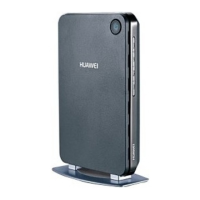
The Huawei B890 LTE Wireless Gateway is a versatile device designed to provide internet access and voice services through various network connections. It serves as a central hub for both wireless (3G/4G) and wireline (Ethernet) data services, allowing users to connect computers, phones, and other devices to the internet or make calls.

Function Description

The B890 functions primarily as a gateway for internet connectivity. It supports multiple application scenarios, adapting to different network environments and user needs.

In its first scenario, the B890 can be connected to an Ethernet port on a wall, utilizing existing Ethernet data services. Users can then connect their computers to the B890 to access the internet, effectively acting as a router for a wired connection.

The second scenario highlights its capabilities as a 3G/4G wireless gateway. By inserting a Universal Subscriber Identity Module (USIM) card, the device can access 3G/4G data and voice services. This allows for mobile internet access and the ability to connect a phone to the B890 for making calls, making it suitable for locations without fixed-line internet or for users who rely on cellular data.

A third, hybrid scenario combines both Ethernet and USIM card functionalities. In this setup, the B890 connects to an Ethernet port for data services while also utilizing a USIM card for 3G/4G voice services. This provides flexibility, allowing users to leverage a stable wired connection for data and a cellular connection for voice, or to use the cellular data as a backup. Computers can still connect to the B890 for internet access, and phones can be connected for calls.

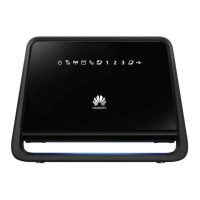
The device features a range of indicators on its front panel that provide intuitive status updates. These include:

  • Power indicator: Shows whether the device is powered on or off.
  • Network status indicator: Displays the status of the USIM card and network registration (e.g., fast red blinking for an unavailable USIM, steady blue for 3G network registration, steady cyan for 4G network registration, or off for no signal).
  • Wi-Fi/WPS indicator: Indicates if Wi-Fi is on, data transfer is in progress, or WPS connection setup is underway. It also shows if Wi-Fi is off.
  • SMS indicator: Notifies the user of new messages (blinking) or a full inbox (steady on).
  • Call status indicator: Shows if a call is in progress (steady on) or if there's an incoming call (slow blinking).
  • Wireless dialing indicator: Indicates the status of wireless dialing.
  • LAN indicators: Show the status of LAN connections.
  • Ethernet dialing indicator: Indicates the status of Ethernet dialing.
  • USB indicator: Shows if a USB storage device is connected or not.

On the rear panel, the B890 provides several ports and buttons:

  • Register button: (Reserved)
  • Power port: For connecting the power adapter.
  • Telephone port: For connecting a telephone.
  • USB port: For connecting USB devices.
  • LAN ports: Multiple ports for connecting devices via Ethernet cables.
  • WAN port: For connecting to an Ethernet port on the wall for WAN services.
  • USIM card slot: Where the USIM card is inserted.
  • Dial-up button: For initiating a dial-up connection.
  • Wi-Fi/WPS button: For controlling Wi-Fi and WPS functions.

Usage Features

The B890 is designed for straightforward installation and operation.

Installation:

The device should be kept upright after installation to ensure proper heat dissipation and visibility of indicators. Only a B890-compatible power adapter should be used to prevent damage.

  • WAN Interface Usage: To use Ethernet data services, an Ethernet cable is connected from the wall's Ethernet port to the B890's WAN port. The device powers on automatically once connected to a power supply.
  • USIM Card Usage: For 3G/4G data and voice services, the USIM card is installed by pulling out and rotating the card slot cover, inserting the card until it clicks, and then replacing the cover. After connecting the power supply, the B890 automatically powers on and searches for networks.
  • Combined USIM Card and WAN Interface Usage: This combines the steps for both WAN and USIM card installation, allowing the device to leverage both wired and wireless capabilities.

Advanced Features:

  • External Antenna: For areas with poor network coverage, an external antenna can be connected to the B890's external antenna port to improve signal reception. The antenna mode needs to be set to "outer" through the web management page. External antennas should only be used indoors and not during thunderstorms.
  • USB Device Connection: A USB device can be connected to the B890's USB port. It's important not to connect a computer to this port. The USB port supplies a maximum current of 500 mA; if a peripheral device requires more, an auxiliary power supply should be used.
  • Wireless Connection Setup: The B890's Wi-Fi automatically turns on when the device is powered on. Wi-Fi can be manually turned off or on by pressing and holding the Wi-Fi/WPS button for 2 seconds.
    • Manual Wi-Fi Setup: Users can manually configure a wireless connection on their computer by finding the wireless network (SSID) and password (Wi-Fi Key) printed on the B890's rear panel label. The connection is then established through the computer's network settings.
    • Automatic Wi-Fi Setup (WPS): If the client device supports WPS, a Wi-Fi key can be generated automatically. This involves ensuring the B890's Wi-Fi indicator is steady on, pressing and holding the Wi-Fi/WPS button until the indicator blinks, and then activating WPS on the client device.

Web Management Page:

The B890's settings can be configured and managed through a web management page. Users access this by launching a web browser, entering http://192.168.1.1 in the address bar, and logging in with the default password "admin." For first-time logins, a Quick Setup Wizard guides the user through initial configuration. Only one user can log in at a time, and it is recommended to change the default password after the first login for security.

Accessing the Internet:

The B890 can access the internet via either wireless (3G/4G) or wireline (Ethernet) networks, but not simultaneously.

  • 3G/4G Wireless Network: If a USIM card is correctly installed, the B890 automatically searches for networks after startup. Once connected, the 3G/4G network indicator turns steady on, allowing internet access. If connection fails, wireless network parameters can be verified on the web management page.
  • Ethernet Network: If connected to Ethernet, the B890 automatically connects to the network, and the Ethernet indicator turns steady on, providing internet access. If connection fails, wireline network parameters can be verified on the web management page.
  • Manual Internet Access: The B890 supports Auto, Manual, or On Demand modes for internet access. To manually connect or disconnect, users press the dial-up button. The network indicators show the connection status.

Maintenance Features

The B890 incorporates features to help users maintain its optimal performance and troubleshoot issues.

Restoring Factory Defaults:

If users are unsure about configured settings or encounter issues, the B890 can be restored to its factory defaults. This is done by using a sharp-pointed object (like a ballpoint pen) to press and hold the RESET button until the signal indicators on the bottom blink. Restoring defaults will restart the B890 and delete all user-defined settings, reverting them to their original factory settings.

Troubleshooting Tips:

For general troubleshooting, if the B890 is not working properly, users are advised to:

  • Consult the help information available on the web management page.
  • Restart the B890.
  • Restore the B890 to its factory defaults.
  • Contact their service provider for further assistance.

The B890 is a robust and adaptable device, designed to provide reliable internet and voice services across various network infrastructures, with user-friendly indicators and management tools to ensure smooth operation.

Huawei B890-75 Specifications

General IconGeneral
Device TypeGateway
Type4G LTE Router
Dimensions180 x 180 x 31.9 mm
WeightApprox. 520g (excluding the power adapter)
WAN Ports1
LAN Ports4
Wireless Standard802.11 b/g/n
Maximum Wireless Speed300 Mbps
Power SupplyAC: 100 V - 240 V; DC: 12 V / 2 A
LTE CategoryCategory 4
Download Speed150 Mbps
Upload Speed50 Mbps
Wi-FiYes
Wi-Fi Speed300 Mbps
Ethernet Ports4
USB Ports1
External Antenna ConnectorYes
Wi-Fi Standards802.11 b/g/n
Wi-Fi Frequency2.4 GHz
Supported LTE BandsLTE FDD 800/900/1800/2100/2600 MHz, LTE TDD 2600 MHz
Network TechnologyLTE, HSPA, GSM
LTE BandsLTE FDD 800/900/1800/2100/2600 MHz, LTE TDD 2600 MHz

Related product manuals