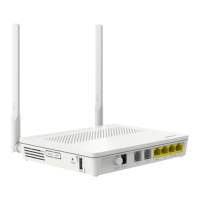
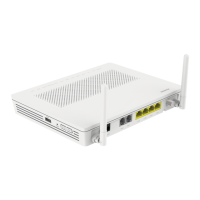
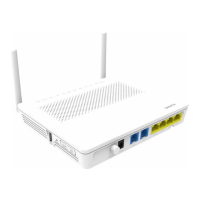
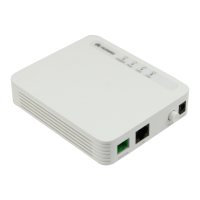
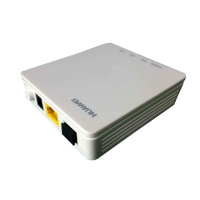
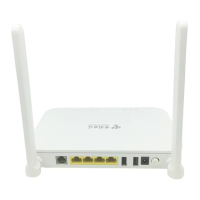
The HG8240 is a versatile optical network terminal (ONT) designed to provide a range of connectivity options for both residential and business users. Its design focuses on delivering high-speed data, voice, and video services through a compact and user-friendly interface.
Function Description
The primary function of the HG8240 is to act as an interface between the optical fiber network and the user's local devices. It converts optical signals into electrical signals, enabling the connection of various devices such as personal computers (PCs), IP set-top boxes (STBs), and telephone sets.
Data Connectivity: The device features four auto-sensing 10/100/1000M Base-T Ethernet ports (LAN1-LAN4), which are RJ-45 type. These ports are crucial for connecting PCs and IP STBs, facilitating high-speed internet access and multimedia streaming. When an Ethernet connection is in the normal state, the corresponding Ethernet port LED (LAN1-LAN4) is always on. If data is being transmitted on the Ethernet port, the LED blinks. If the Ethernet connection is not set up, the LED is off.
Voice Connectivity: For voice services, the HG8240 includes two VoIP telephone ports (TEL1-TEL2), which are RJ-11 type. These ports are used to connect to telephone sets, enabling voice over IP (VoIP) communication. The voice telephone port LED (TEL1-TEL2) indicates the status of the voice connection. If the connection to the voice server is set up, the LED is always on. If the connection to the voice server is set up and the telephone is in the off-hook or ringing state, the LED blinks quickly (twice per second). When the ONT is registering with the voice server, the LED blinks slowly (once every two seconds). If the connection to the voice server is not set up, the LED is off.
Optical Connection: The device has a dedicated optical port, which is equipped with a rubber plug. This port is designed for connecting an optical fiber for upstream transmission, using an SC/APC type optical connector. This is the core interface for receiving optical signals from the optical line terminal (OLT).
Power Management: The HG8240 is equipped with a power port for connecting to a power adapter or an optional backup battery. It also features an ON/OFF button for powering the device on or off. The power supply LED (POWER) indicates the device's power status. A green, always-on LED signifies that the device is powered on. An orange, always-on LED indicates that the device is powered by the backup battery. If the power supply is cut off, the LED is off.
Network Status Indicators: The device includes several LEDs to provide visual feedback on its operational status:
- PON LED: This LED indicates the authentication status of the ONT. Its behavior, in conjunction with the LOS LED, provides detailed information about the connection to the OLT.
- LOS LED: This LED indicates the connection status of the optical link. Its behavior, in conjunction with the PON LED, helps diagnose issues related to optical signal loss or connection problems.
Usage Features
The HG8240 is designed for straightforward installation and operation, making it suitable for a wide range of users.
Easy Connectivity: The clearly labeled ports (LAN1-LAN4, TEL1-TEL2, OPTICAL, POWER) simplify the process of connecting various devices. The auto-sensing capability of the Ethernet ports means users don't need to manually configure speed or duplex settings for connected devices.
Visual Status Monitoring: The array of LEDs on the front panel provides an immediate visual overview of the device's operational status. Users can quickly ascertain if the device is powered on, if the optical connection is established, if data is being transmitted, and if voice services are active. This feature is particularly useful for basic troubleshooting without needing to access complex software interfaces.
Backup Battery Support: The inclusion of an external backup battery monitoring port (BBU) suggests that the device can be integrated with a backup battery system. This is a critical feature for maintaining service continuity during power outages, ensuring that voice and data services remain available. The orange power LED indicates when the device is operating on backup battery power.
Compact Design: While specific dimensions are not provided, the visual representation suggests a compact form factor, allowing for flexible placement in various environments, whether on a desk or mounted.
Maintenance Features
The HG8240 incorporates features that facilitate maintenance and troubleshooting, ensuring reliable long-term operation.
Reset Functionality: A dedicated RESET button is provided on the side panel. This button offers two distinct functions:
- Short Press: Pressing the button for a short duration resets the device, which can be useful for resolving minor operational glitches without interrupting the configuration settings.
- Long Press (longer than 10s): Pressing the button for an extended period (more than 10 seconds) restores the device to its default factory settings and then resets it. This is a crucial feature for advanced troubleshooting, reconfiguring the device from scratch, or preparing it for redeployment.
LED-Based Diagnostics: The detailed indications provided by the PON and LOS LEDs are invaluable for diagnosing network connectivity issues. For example:
- If both PON and LOS LEDs are off, it indicates that the ONT is disabled by the OLT.
- If the PON LED blinks quickly (twice per second) and the LOS LED is off, the ONT is attempting to set up a connection to the OLT.
- If the PON LED is always on and the LOS LED is off, the connection between the ONT and the OLT is successfully set up.
- If the PON LED is off and the LOS LED blinks slowly (once every two seconds), it suggests that the received optical power of the ONT is lower than the optical receiver sensitivity, indicating a potential issue with the optical signal strength.
- If both PON and LOS LEDs blink quickly (twice per second), the OLT detects that the ONT is a rogue ONT, meaning an unauthorized or misconfigured device is attempting to connect to the network.
These clear LED indications allow technicians or even end-users to quickly identify the nature of a problem, streamlining the troubleshooting process and reducing downtime.
Robust Optical Port: The optical port is protected by a rubber plug, which helps prevent dust and debris from entering the connector, thus maintaining the integrity of the optical connection and reducing the need for frequent cleaning or repair. The use of an SC/APC connector is standard in many optical networks, ensuring compatibility and reliable performance.
In summary, the HG8240 is designed to be a reliable and user-friendly ONT, offering essential connectivity for modern communication needs with robust diagnostic and maintenance capabilities.


 To Next Page


 General