Need help?
Do you have a question about the Huawei Quidway NE40E and is the answer not in the manual?
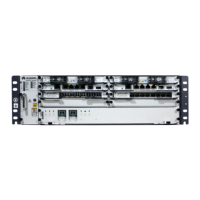
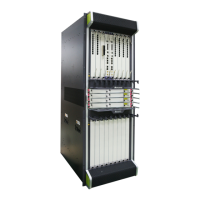
Introduces the Quidway NetEngine 40E-8 Core Router, its applications, capabilities, and slot configuration.
Details the NE40E's distributed hardware forwarding, non-blocking switching, and use of Network Processors.
Presents the logical architecture of the NE40E, detailing three planes: data, control/management, and monitoring.
The Huawei Quidway® NetEngine 40E Core Router (NE40E) is an advanced, high-end network product designed for IP backbone networks, IP Metropolitan Area Networks (MANs), and the edge of other large IP networks. It offers a comprehensive solution for building IP networks with integral architecture and clear hierarchy, capable of networking with core routers from the NE5000E and NE80E series.
The NE40E serves as a versatile service router, integrating powerful IP service processing capabilities typical of core routers with Layer 3 (L3) Ethernet switching functionalities. It provides a rich set of IP edge service features, including Ethernet switching, Provider Edge (PE) capabilities, tunneling, and stream queuing. This makes it particularly well-suited to meet the evolving demands of MAN IP and Ethernet services, pushing IP networks towards broadband, security, service-oriented, and intelligent operations.
Its system architecture is built upon distributed hardware forwarding and non-blocking switching technology, leveraging industry-leading high-performance Network Processors (NPs). This design ensures carrier-class reliability, wire-speed forwarding performance, and a complete Quality of Service (QoS) mechanism. The router also boasts powerful service processing capabilities and high scalability, allowing it to adapt to future network growth and service requirements.
The NE40E's logical architecture is divided into three distinct planes: the data plane, the control and management plane, and the monitoring plane, each with specific responsibilities to ensure efficient and reliable operation.
Data Plane: This plane is responsible for high-speed data packet processing and internal non-blocking switching. Its functions include packet encapsulation/decapsulation, IPv4/MPLS forwarding processing, QoS implementation, packet scheduling, internal high-speed switching, and various statistics collection. This ensures that data traffic is handled with maximum efficiency and minimal latency.
Control and Management Plane: Acting as the "nerve center" of the entire system, this plane handles all system control and management functions. It encompasses protocol and signaling processing, system status configuration, maintenance management, and system status reporting and control. This centralized control allows for comprehensive oversight and configuration of the router's operations.
Monitoring Plane: This plane operates independently to ensure the safe and stable operation of the system by continuously monitoring the system environment. Its functions include voltage detection, system power on/off control, temperature detection, and fan control. A key feature of the monitoring plane is its ability to isolate faults in a timely manner when a unit malfunctions, thereby guaranteeing the normal operation of other system components and enhancing overall system reliability.
The NE40E-8 model, as described, offers significant performance metrics:
The NE40E is designed for high-performance and flexible deployment in critical network infrastructures:
Reliability and ease of maintenance are key considerations in the NE40E's design:
 General
| Brand | Huawei |
|---|---|
| Model | Quidway NE40E |
| Category | Wireless Router |
| Language | English |

 To Next Page