
 Need help?
Do you have a question about the Huawei S5720-SI and is the answer not in the manual?
Procedure for mounting the switch on a desk, including optional security lock installation.
Steps for securely attaching the switch to a wall, with considerations for port orientation.
Detailed instructions for installing the switch into standard 19-inch cabinets or racks.
Guide to logging into the switch for the first time via the web interface.
Procedure for initial login to the switch using a console port connection.
This document serves as a Quick Start Guide for the Huawei S2700, S3700, S5700, and S6700 Series Switches, detailing installation, cable connection, and initial login procedures. It emphasizes safety, proper environmental setup, and step-by-step instructions for various mounting scenarios and component installations.
The Huawei S series switches are designed to facilitate network connectivity and management. They support various port speeds, including 2.5 Gbit/s, 5 Gbit/s, and 10 Gbit/s, depending on the Ethernet cable category used. The switches are capable of handling both AC and DC power supplies, with specific instructions provided for correct cable connections. Certain models offer a Mini USB port for onsite configuration, which takes precedence over the console port when both are connected. The switches support different heat dissipation modes, including forced, intelligent, or natural, to ensure optimal operation. They are designed to be integrated into existing network infrastructures, connecting to upstream network devices and operation terminals (PCs) via various cable types, including Ethernet, optical fiber, and console cables. The web-based configuration system allows for basic and optional settings, including VLAN isolation and interconnection, to tailor the switch's functionality to specific network requirements. For models that do not support web-based first login, a console port is available for initial configuration.
The switches offer flexible installation options, including desk mounting, wall mounting (top and side), and cabinet/rack mounting, to accommodate diverse deployment environments. For desk mounting, rubber pads are attached to the bottom, and an optional security lock can be installed to prevent theft. Wall mounting requires drilling holes and securing the switch with expansion bolts, with specific orientations recommended for certain models to ensure proper port access. Cabinet/rack mounting involves attaching mounting brackets to the chassis and securing it within a standard 19-inch cabinet, with considerations for cable management and clearance for heat dissipation. Guide rails or trays may be required for heavier chassis or specific cabinet configurations.
Component installation is straightforward, with detailed steps for power modules and cards. Power modules are generally hot-swappable, except for the 870 W PoE power module, and it is recommended to install two for enhanced power reliability. Cards are installed by loosening captive screws, turning ejector levers, pushing them into slots, and then securing them. Some cards are hot-swappable, while others require the switch to be powered off during installation. The guide highlights the importance of installing filler panels in vacant slots to maintain proper airflow and prevent dust ingress.
Initial login to the switch can be performed through either the web system or the console port. For web-based login, users can directly connect a PC to the ETH management interface or press and hold the MODE button to enter the initial configuration mode. The default IP address for the ETH management interface is provided, and users are guided to configure their PC's IP address within the same network segment. The web system offers a user-friendly interface for setting up management IP addresses, subnet masks, and user passwords, with a strong emphasis on password security. The Quick Config function simplifies VLAN isolation and interconnection settings. For console port login, a console cable connects the switch to a PC, and terminal simulation software is used with specified communication parameters to access the command-line interface.
The guide provides essential information for maintaining the switch's optimal performance and longevity. It stresses the importance of a suitable site environment, free from flammable gases, smoke, and excessive humidity, and emphasizes the need for good ventilation to prevent overheating. Dust-proofing and water-proofing measures are recommended for wall-mounted switches. Proper grounding is highlighted as a prerequisite for lightning protection, electromagnetic interference reduction, and electrostatic discharge prevention, as well as for PoE functionality.
For cable connections, specific recommendations are given for Ethernet cable categories based on port speed, ensuring reliable data transmission. Optical fibers must be used with optical modules, and attention to bend radius is advised to prevent damage. Power cables should be routed away from signal cables to minimize interference. The document also provides guidance on obtaining product documentation and technical support through Huawei's enterprise technical support website and community forums, ensuring users have access to comprehensive resources for troubleshooting and ongoing maintenance. The inclusion of safety guidelines, warnings, and cautions throughout the document underscores the importance of safe practices during installation and maintenance to protect both personnel and equipment. The guide also mentions the availability of an Open Source Software Notice, providing transparency regarding the software components used in the product.
 General
| Model | S5720-SI |
|---|---|
| Series | S5720 |
| Power Supply | AC or DC |
| Operating Temperature | 0°C to 45°C |
| Storage Temperature | -40°C to 70°C |
| Relative Humidity | 5% to 95% (non-condensing) |
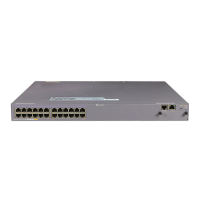
| Ports | 24 or 48 10/100/1000BASE-T ports |
| Fixed Ports | 24/48 |
| Uplink Ports | 4 x GE SFP or 4 x 10GE SFP+ |
| Switching Capacity | Up to 336 Gbit/s |
| Forwarding Capacity | 96 Mpps or 126 Mpps |
| Forwarding Performance | 96 Mpps |
| Dimensions (W x D x H) | 442 mm x 420 mm x 43.6 mm |
| VLAN | 4K VLANs |
| VLAN Features | GVRP |
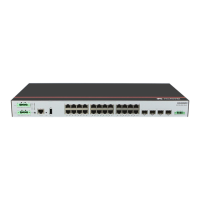

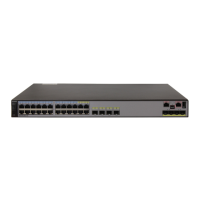
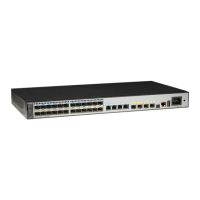
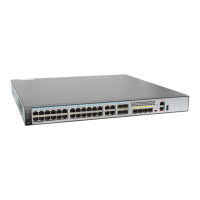

 To Next Page