Need help?
Do you have a question about the HULTDINS SuperSaw 550S and is the answer not in the manual?
Describes important safety instructions for Hultdins SuperFell, SuperSaw, and SuperCut attachments.
Provides safety precautions and steps for performing welding operations on the attachment.
Outlines restrictions on modifying the equipment without manufacturer consent and using non-original parts.
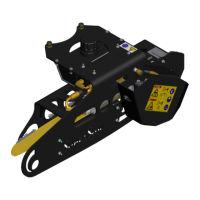
Identifies and lists the main replaceable parts of the SuperSaw 550S unit.
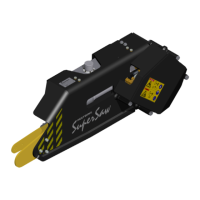
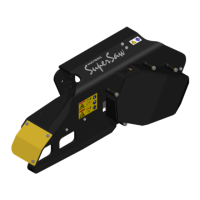
Describes the SuperSaw 550S grapple saw, its typical mounting, and intended use for timber.
Explains the labeling details on the SuperSaw 550S, including product, serial, and warning signs.
Provides detailed technical specifications for the SuperSaw 550S/TL, including dimensions and operating pressures.
Lists torque specifications and required wrench sizes for various fasteners used on the unit.
Specifies the recommended grease type, thread sealant, and greasing intervals for the unit.
Provides detailed technical specifications for the SuperSaw 550S/SG, including dimensions and operating pressures.
Lists essential special tools required for the maintenance and servicing of the SuperSaw 550S.
Lists standard wrenches and Allen keys needed for servicing, which are not supplied with the unit.
Presents the hydraulic system diagram for the SuperSaw 550S/TL model with a component legend.
Presents the hydraulic system diagram for the SuperSaw 550S/SG model with a component legend.
Explains how the chain tensioning system operates automatically during sawing using hydraulic pressure.
Describes the hydraulic system responsible for feeding the saw bar out during operation.
Details the automatic lubrication system that supplies oil to the saw chain during sawing.
Provides step-by-step instructions for mounting the SuperSaw 550S onto TL grapples, including hydraulic connections.
Details the process of installing the SuperSaw 550S onto SG grapples, involving rotator bracket and hydraulic adaptors.
Guides on how to accurately adjust the chain tension pressure using a gauge and regulating valve.
Explains the procedure for setting the correct feed out pressure for the saw bar for optimal cutting performance.
Describes how to adjust the saw bar retraction speed by managing the air pressure in the air tank.
Provides instructions for safely charging the unit's air tank to the required pressure range.
Details the steps for safely releasing air pressure from the unit's air tank.
Guides on locating and replacing the accumulator, including necessary disassembly and reassembly steps.
Provides instructions for refilling the lubrication oil tank, emphasizing cleanliness and correct oil type.
Explains the procedure for bleeding air from the chain tension hydraulic system.
Details the process for bleeding air from the chain lubrication system to ensure proper oil delivery.
Provides a step-by-step guide for safely replacing the saw chain, including tensioner preparation.
Details the procedure for removing and installing a new saw bar, including loosening and tightening guide screws.
Guides on how to replace the bar holder, including loosening guide screws and adjusting stop screws.
Explains how to manually tension the saw chain when the automatic system is unavailable.
Provides instructions for replacing guide screws, typically when damaged after saw bar issues.
Details the process of replacing piston seals, including separating components and using assembly tools.
Guides on how to replace the piston rod seal, involving disassembly of the piston and rod.
Explains how to test the check valve's integrity by monitoring hydraulic pressure during operation.
Provides instructions for correctly fitting tension and lubrication oil hoses to prevent damage and ensure proper connection.
Outlines essential daily checks for the grapple saw, including fasteners, hoses, and leakage.
Details the required checks and inspections for the unit every 250 hours of operation.
Specifies the annual maintenance task of cleaning the filler cap strainer.
Describes the lubrication points, frequency, and recommended grease type for the saw unit.
Emphasizes checking fastener joints and hydraulic hoses for abnormalities during daily maintenance.
Recommends weekly tightening of fasteners during the initial month of the unit's operation.
Lists common symptoms for the SuperSaw 550S, their probable causes, and recommended corrective actions.
Lists common symptoms for the SuperCut, their probable causes, and recommended corrective actions.

 To Next Page
 General