2
Table of Contents
Safety Information
Warranty
Pre-Assembly
Produst Specifications
Operation
Storage
Troubleshooting
Service Parts
Safety Information
SAVE THIS MANUAL FOR FUTURE USE.
When using an electrical appliance, basic precautions should
always be followed, including the following: READ ALL
INSTRUCTIONS BEFORE USING THIS APPLIANCE.
IMPORTANT SAFETY INSTRUCTIONS
1. Do not leave the appliance when it is connected to a power
source. Unplug it from outlet when not in use and before
servicing.
2. Do not allow the appliance to be used as a toy. Pay close
attention when the appliance is used by or near children.
3. Use this appliance ONLY as described in the manual.
4. Do not use this appliance with a damaged cord or plug. If the
appliance is not working correctly, or if it has been dropped,
damaged, left outdoors, or dropped in water, return it to a
service center.
5. Do not pull or carry this appliance by the cord, use the cord as a
handle, close a door on the cord, or pull the cord around sharp
edges or corners. Do not run the appliance over the cord. Keep
cord away from heated surfaces.
6. Do not unplug this appliance by pulling on the cord. To unplug,
grasp the plug, not the cord.
7. Do not handle the plug or appliance with wet hands.
8. Do not put any objects into the openings of the appliance. Do not
use the appliance with any opening blocked; keep free of dust,
lint, hair and anything else that may reduce air flow.
9. Keep hair, loose clothing, fingers, and all body parts away from
the openings and moving parts.
10. Turn off all controls before unplugging appliance.
11. Use extra care when using on or near stairs.
12. If the Air Mover is not working as it should, has missing parts,
has been dropped, damaged, left outdoors, or dropped into
water, call customer service.
13. Do not run cord under carpeting. Do not cover cord with throw
rugs, runners, or similar coverings. Do not route cord under
furniture or appliances. Arrange cord away from trafc area and
where it will not be tripped over.
DANGER: Indicates an imminently hazardous situation
which, if not avoided, will result in death or serious injury.
WARNING: Indicates a potentially hazardous situation
which, if not avoided, could result in death or serious injury.
CAUTION: Indicates a potentially hazardous situation which,
if not avoided, may result in minor or moderate injury.
NOTE: Indicates a practice not related to personal injury
which, if not avoided, may result in property damage.
WARNING: Read all safety warnings and all instruc-
tions. Failure to follow the warnings and instructions may
result in electric shock, re and/or serious injury.
WARNING: To reduce the risk of injury, read the instruc-
tion manual.
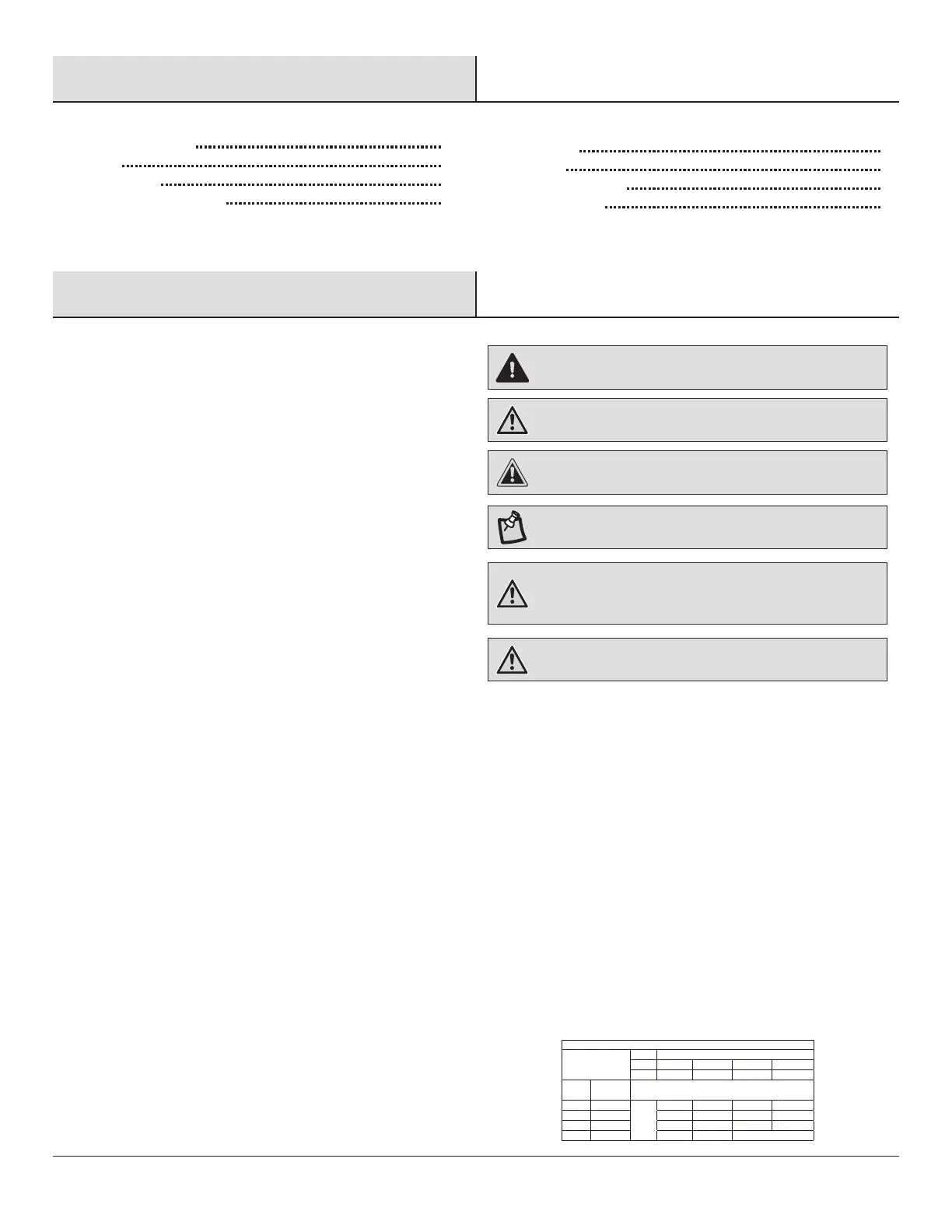
Minimum Gauge for Cord Sets
Ampere Rating
Volts Total Length of Cord in Feet (meters)
120V 25 (7.6) 50 (15.2) 100 (30.5) 150 (45.7)
240V 50 (15.2) 100 (30.5) 200 (61.0) 300 (91.4)
More
Than
Not More
Than
AWG
0 6 18 16 16 14
6 10 18 16 14 12
10 12 16 16 14 12
12 16 14 12 Not Recommended
An extension cord must have adequate wire size (AWG or Ameri-
can Wire Gauge) for safety.
The smaller the gauge number of the
wire, the greater the capacity of the cable, that is 16 gauge has
more capacity than 18 gauge. An undersized cord will cause a drop
in line voltage resulting in loss of power and overheating. When
using more than one extension to make up the total length, be sure
each individual extension cord contains at least the minimum wire
size. The following table shows the correct size to use. If in doubt,
use the next heavier gauge. The smaller the gauge number, the
heavier the cord. If an extension cord is to be used outdoors it
must be marked with the suffix W-A or W following the cord type
designation. For example – SJTW-A indicates it is acceptable for
outdoor use.
SAVE THESE INSTRUCTIONS
ADDITIONAL SAFETY RULES
2
3
4
4
5
7
7
8


 To Next Page
 Loading...