EasyManua.ls Logo

Husqvarna FE 501 2018 - User Manual

Husqvarna FE 501 2018
164 pages
Print Icon
To Next Page IconTo Next Page
Loading...
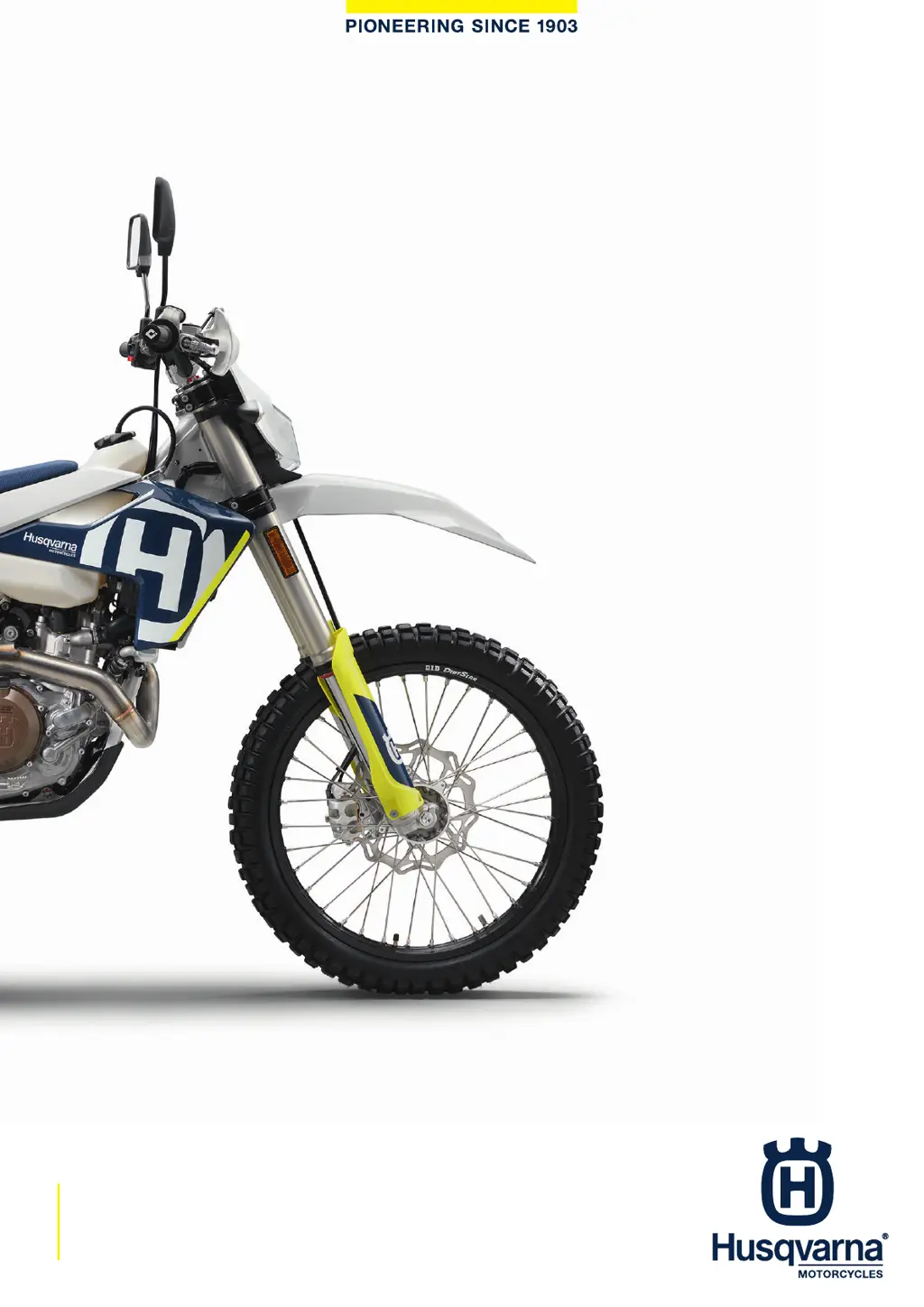
OWNER'S MANUAL 2018
FE 450
FE 501
Art. no. 3402177en

Table of Contents

Questions and Answers

  • M
    Mary CharlesAug 16, 2025
    Why does my Husqvarna FE 501 2018 has high oil consumption?
    • M
      Megan WhiteAug 16, 2025
      If your Husqvarna Motorcycle exhibits high oil consumption, several factors could be at play. A bent engine vent hose can cause this issue, so ensure the vent hose is routed without bends or replace it if necessary. An engine oil level that is too high can also contribute to high consumption, so check and adjust the engine oil level. Using engine oil that is too thin (low viscosity) can also lead to increased consumption, so change the engine oil and oil filter and clean the oil screens. Lastly, worn piston and cylinder can cause high oil consumption, so measure the piston/cylinder mounting clearance.
  • K
    kdonaldsonAug 19, 2025
    Why my Husqvarna FE 501 2018 engine cannot be cranked (electric starter)?
    • K
      Kristopher MortonAug 19, 2025
      If your Husqvarna Motorcycle engine cannot be cranked using the electric starter, there are several potential causes. It could be due to an operating error, so make sure to follow the correct start procedure. The battery might be discharged, in which case you should recharge it, check the charging voltage, closed current, and the alternator's stator winding. A blown main fuse could also be the culprit, so replace it. Alternatively, the starter relay or the starter motor itself could be defective, requiring a check.
  • E
    Emily HenryAug 22, 2025
    What to do if malfunction indicator lamp lights up or flashes on Husqvarna FE 501 2018?
    • E
      Emma OlsonAug 22, 2025
      If the malfunction indicator lamp lights up or flashes on your Husqvarna Motorcycle, it indicates a defect in the fuel injection system. You should stop the motorcycle and identify the faulty part using the blink code. Also, check the cabling for damage and the electrical plug-in connectors for corrosion and damage. It may be necessary to read out the fault memory using the Husqvarna Motorcycles diagnostics tool.
  • J
    Jeffrey JacksonAug 25, 2025
    What to do if Husqvarna FE 501 2018 Motorcycle engine turns but does not start?
    • A
      Alan ArellanoAug 26, 2025
      If your Husqvarna Motorcycle engine turns but does not start, there could be several reasons. You might be making an operating error, so ensure you are following the correct start procedure. Check that the plug-in connection of the fuel hose is connected. A blown fuse 1 or fuse 4 could also be the reason, so replace the fuses. Other potential causes include an incorrectly set idle speed (adjust it), a spark plug that's oily or wet (clean, dry, or replace it), an electrode distance of the spark plug that is too wide (adjust the plug gap to 1.0 mm (0.039 in)). Finally, the ignition system or fuel injection system could be defective, or there could be a short-circuit cable in the wiring harness, so check these systems.
  • S
    smithlarryAug 28, 2025
    Why does my Husqvarna FE 501 2018 Motorcycle engine overheats?
    • Z
      Zachary MooreAug 28, 2025
      If your Husqvarna Motorcycle engine overheats, several factors could be responsible. A low coolant level in the cooling system is a common cause, so check for leaks and verify the coolant level. Insufficient airflow can also lead to overheating, so switch off the engine when stationary. Dirty radiator fins can restrict cooling, so clean them. Foam formation in the cooling system can also cause overheating, so drain and refill the coolant. Other potential issues include a bent radiator hose (replace it) or a defective thermostat (check it; guideline opening temperature: 70 °C (158 °F)).
  • H
    hkennedyAug 31, 2025
    What causes Husqvarna Motorcycle engine not speeding up?
    • K
      katherine76Aug 31, 2025
      If your Husqvarna Motorcycle engine does not speed up, it could be due to a defect in the fuel injection system, which requires reading out the fault memory using the Husqvarna Motorcycles diagnostics tool. Alternatively, the ignition system may be defective, requiring checks of the secondary winding of the ignition coil, the spark plug connector, and the stator winding of the alternator.
  • D
    David BeardSep 3, 2025
    What to do if Husqvarna Motorcycle engine dies during the trip?
    • J
      johnsonkristinaSep 3, 2025
      If your Husqvarna Motorcycle engine dies during the trip, it could be due to a lack of fuel, so refuel. Alternatively, fuse 1 or fuse 4 might be blown, so replace the fuses.
  • C
    cbookerSep 6, 2025
    Why Husqvarna FE 501 2018 Motorcycle engine has too little power?
    • A
      Alexander HoffmanSep 6, 2025
      If your Husqvarna Motorcycle engine has too little power, the air filter might be heavily contaminated, so clean the air filter and air filter box. Also, the fuel filter or fuel screen could be very dirty, so replace the fuel filter or fuel screen.
  • L
    longmadelineSep 9, 2025
    Why is my Husqvarna Motorcycle battery discharged?
    • W
      williammitchellSep 9, 2025
      If the battery in your Husqvarna Motorcycle is discharged, it could be because the battery is not being charged by the alternator, so check the charging voltage and the stator winding of the alternator. Another possibility is an undesired power consumer, so check the closed current.
  • J
    johnsonpamelaSep 12, 2025
    Why are combination instrument values deleted (time, stop watch, lap times) on Husqvarna FE 501 2018?
    • E
      Edward RoachSep 12, 2025
      If the combination instrument values (time, stop watch, lap times) are deleted on your Husqvarna Motorcycle, it is likely that the battery in the combination instrument is discharged, so replace the combination instrument.

Summary

2 Safety Advice

2.1 Use Definition - Intended Use

Defines the intended use and compliance standards for the vehicle.

2.2 Misuse

Details dangers arising from using the vehicle not as intended.

2.3 Safety Advice

Highlights the importance of following safety instructions in the manual.

2.4 Degrees of Risk and Symbols

Explains the different levels of risk indicated by symbols.

2.11 Safe Operation

Provides crucial safety instructions for operating the motorcycle.

2.12 Protective Clothing

Emphasizes the importance and necessity of wearing protective clothing.

3 Important Notes

3.1 Manufacturer and Implied Warranty

Details warranty conditions, voiding factors, and required service.

3.4 Service

Explains the importance of correct service for operation and longevity.

6 Controls

6.9 Indicator Lamps Overview

Provides an overview of the various indicator lamps and their meanings.

7 Combination Instrument

7.7 Setting the Service Display

Explains how to set and switch off the service interval display.

8 Preparing for Use

8.1 Advice on First Use

Provides essential advice and warnings for the initial use of the motorcycle.

8.2 Running-in the Engine

Guides on proper engine running-in procedures to ensure longevity.

8.4 Preparing the Vehicle for Difficult Riding Conditions

Details preparations for riding in challenging conditions like sand or mud.

9 Riding Instructions

9.1 Checks and Maintenance Measures When Preparing for Use

Lists essential pre-ride checks and maintenance tasks for safety.

9.2 Starting the Vehicle

Provides instructions and safety warnings for starting the motorcycle's engine.

9.3 Starting Off

Details the procedure for smoothly starting off from a standstill.

9.4 Shifting, Riding

Explains gear shifting techniques and riding advice for optimal performance.

9.5 Braking

Provides instructions and warnings on proper braking techniques.

9.6 Stopping, Parking

Offers guidance on safely stopping and parking the motorcycle.

9.8 Refueling

Provides detailed, safety-conscious instructions for refueling the motorcycle.

10 Service Schedule

10.2 Required Work

Lists maintenance tasks required at different operating hour intervals.

10.3 Recommended Work

Outlines recommended maintenance tasks based on operating hours or time.

11 Tuning the Chassis

11.1 Checking the Basic Chassis Setting with the Riders Weight

Explains how to adjust chassis settings based on rider weight for optimal handling.

11.3 Adjusting the Low-Speed Compression Damping of the Shock Absorber

Provides instructions on adjusting the low-speed compression damping.

11.4 Adjusting the High-Speed Compression Damping of the Shock Absorber

Details the procedure for adjusting the high-speed compression damping.

11.5 Adjusting the Rebound Damping of the Shock Absorber

Guides on how to adjust the rebound damping of the rear shock absorber.

11.7 Checking the Static Sag of the Shock Absorber

Details how to check the static sag of the rear shock absorber.

11.8 Checking the Riding Sag of the Shock Absorber

Explains how to check the riding sag of the rear shock absorber.

11.9 Adjusting the Spring Preload of the Shock Absorber

Provides instructions for adjusting the spring preload of the shock absorber.

11.10 Adjusting the Riding Sag

Guides on adjusting the riding sag, including spring rate selection.

12 Service Work on the Chassis

12.11 Checking the Play of the Steering Head Bearing

Guides on how to check for play in the steering head bearing.

12.12 Adjusting the Steering Head Bearing Play

Details the procedure for adjusting the steering head bearing play.

12.36 Checking the Chain Tension

Explains how to check the drive chain tension and its importance.

12.37 Adjusting the Chain Tension

Provides instructions for adjusting the drive chain tension.

12.38 Checking the Chain, Rear Sprocket, Engine Sprocket and Chain Guide

Guides on inspecting the drive chain, sprockets, and chain guide for wear.

12.44 Checking;Correcting the Fluid Level of the Hydraulic Clutch

Guides on checking and correcting the hydraulic clutch fluid level.

12.45 Changing the Hydraulic Clutch Fluid

Details the procedure for changing the hydraulic clutch fluid.

13 Brake System

13.2 Checking the Brake Discs

Details how to check front and rear brake discs for wear and damage.

13.3 Checking the Front Brake Fluid Level

Explains how to check the front brake fluid level and potential issues.

13.5 Checking the Front Brake Linings

Guides on checking the minimum thickness and condition of front brake linings.

13.6 Changing the Front Brake Linings

Details the procedure for changing the front brake linings.

13.9 Checking the Rear Brake Fluid Level

Guides on checking the rear brake fluid level and potential issues.

13.11 Checking the Rear Brake Linings

Guides on checking the minimum thickness and condition of rear brake linings.

13.12 Changing the Rear Brake Linings

Details the procedure for changing the rear brake linings.

14 Wheels, Tires

14.1 Removing the Front Wheel

Details the procedure for safely removing the front wheel.

14.2 Installing the Front Wheel

Provides instructions for correctly installing the front wheel.

14.3 Removing the Rear Wheel

Details the procedure for safely removing the rear wheel.

14.4 Installing the Rear Wheel

Provides instructions for correctly installing the rear wheel.

14.6 Checking the Tire Air Pressure

Explains the importance of correct tire air pressure for performance and safety.

15 Electrical System

15.3 Recharging the Battery

Guides on safe battery charging procedures and maintenance for longevity.

16 Cooling System

16.2 Checking the Antifreeze and Coolant Level

Guides on checking coolant level and antifreeze protection with safety warnings.

16.3 Checking the Coolant Level

Details how to check the coolant level in the radiator with safety warnings.

17 Tuning the Engine

17.4 Adjusting the Idle Speed

Details how to adjust the engine idle speed to the specified value.

18 Service Work on the Engine

18.2 Checking the Engine Oil Level

Guides on checking engine oil level at cold and operating temperatures.

18.3 Changing the Engine Oil and Oil Filter, Cleaning the Oil Screens

Provides a comprehensive guide to changing engine oil, filter, and cleaning screens.

18.4 Adding Engine Oil

Explains how to add engine oil and stresses the importance of correct level.

20 Storage

20.1 Storage

Outlines the steps and precautions for storing the motorcycle for extended periods.

21 Troubleshooting

The Engine Cannot Be Cranked (Electric Starter)

Lists possible causes and actions for engine starting failures.

The Engine Turns But Does Not Start

Troubleshooting guide for when the engine cranks but doesn't start.

Engine Does Not Speed Up

Addresses issues related to engine not revving up properly.

Engine Has Too Little Power

Troubleshooting steps for reduced engine power output.

The Engine Dies During the Trip

Possible causes and solutions when the engine stops unexpectedly while riding.

Engine Overheats

Troubleshooting guide for engine overheating issues.

Malfunction Indicator Lamp Lights Up or Flashes

Explains the meaning of the malfunction indicator lamp and related actions.

High Oil Consumption

Troubleshooting steps for excessive engine oil consumption.

Battery Discharged

Covers issues related to battery discharge and charging system checks.

23 Technical Data

23.1 Engine

Provides detailed specifications for the engine, including displacement and bore.

23.2 Engine Tightening Torques

Lists critical torque specifications for various engine components.

23.4 Chassis

Details chassis specifications like frame, fork, suspension, and weight.

23.7 Fork

Provides technical data for the front fork, including damping and preload.

23.8 Shock Absorber

Details specifications for the rear shock absorber, including damping and sag.

23.9 Chassis Tightening Torques

Lists critical torque specifications for various chassis components.

Husqvarna FE 501 2018 Specifications

General IconGeneral
BrandHusqvarna
ModelFE 501 2018
CategoryMotorcycle
LanguageEnglish

Related product manuals