EasyManua.ls Logo

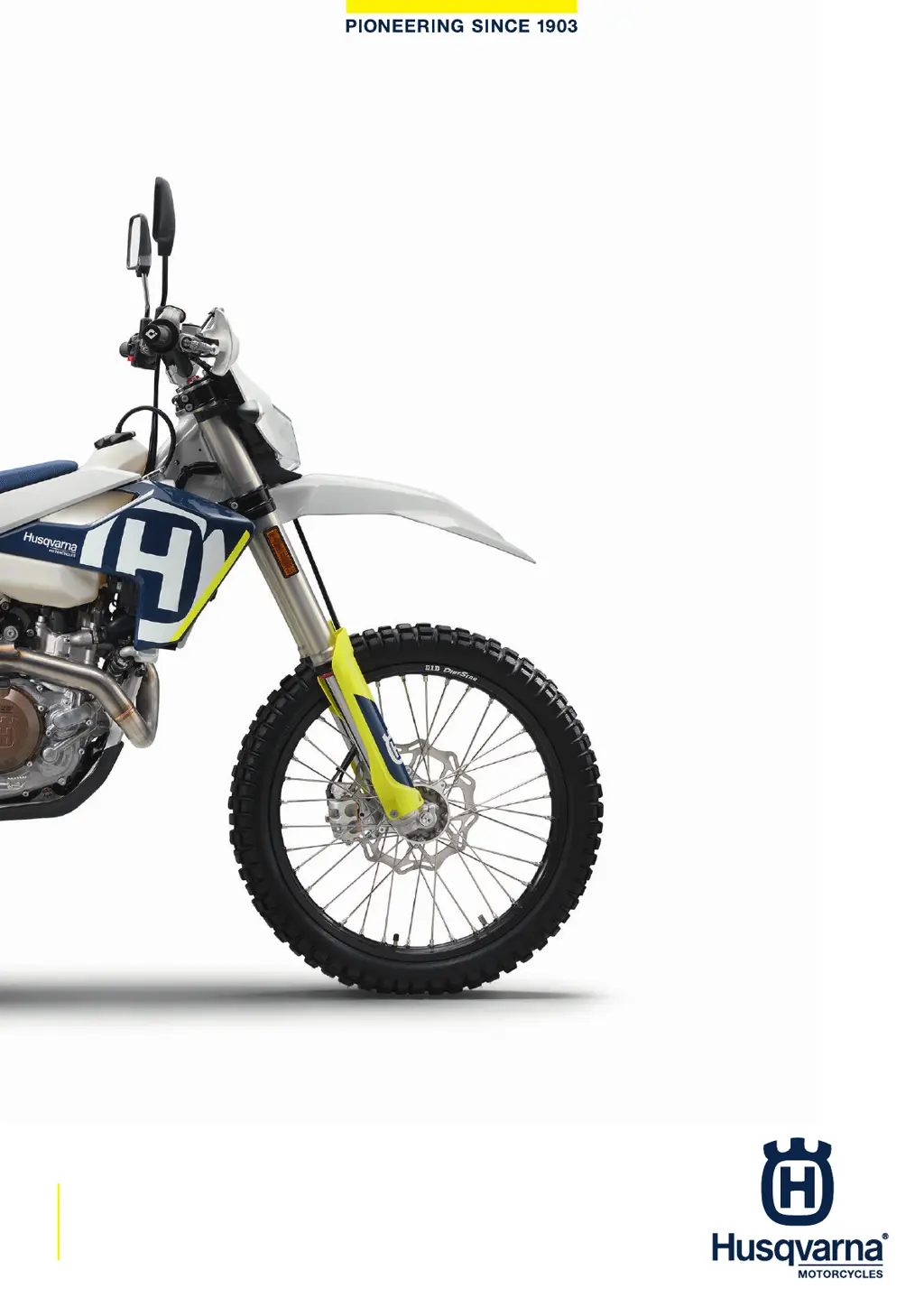
Husqvarna FE 450 2018 - User Manual

Husqvarna FE 450 2018
164 pages
Print Icon
To Next Page IconTo Next Page
Loading...
OWNER'S MANUAL 2018
FE 450
FE 501
Art. no. 3402177en

Table of Contents

Questions and Answers

  • S
    Sarah MaysAug 15, 2025
    Why does my Husqvarna Motorcycle has high oil consumption?
    • T
      Toni AcevedoAug 15, 2025
      If your Husqvarna Motorcycle exhibits high oil consumption, several factors could be at play. A bent engine vent hose can cause this issue, so ensure the vent hose is routed without bends or replace it if necessary. An engine oil level that is too high can also contribute to high consumption, so check and adjust the engine oil level. Using engine oil that is too thin (low viscosity) can also lead to increased consumption, so change the engine oil and oil filter and clean the oil screens. Lastly, worn piston and cylinder can cause high oil consumption, so measure the piston/cylinder mounting clearance.
  • C
    Christine StephensonAug 18, 2025
    Why my Husqvarna FE 450 2018 engine cannot be cranked (electric starter)?
    • A
      Anthony JacksonAug 19, 2025
      If your Husqvarna Motorcycle engine cannot be cranked using the electric starter, there are several potential causes. It could be due to an operating error, so make sure to follow the correct start procedure. The battery might be discharged, in which case you should recharge it, check the charging voltage, closed current, and the alternator's stator winding. A blown main fuse could also be the culprit, so replace it. Alternatively, the starter relay or the starter motor itself could be defective, requiring a check.
  • G
    gutierrezbradleyAug 21, 2025
    What to do if malfunction indicator lamp lights up or flashes on Husqvarna FE 450 2018?
    • A
      Alexandra SuttonAug 21, 2025
      If the malfunction indicator lamp lights up or flashes on your Husqvarna Motorcycle, it indicates a defect in the fuel injection system. You should stop the motorcycle and identify the faulty part using the blink code. Also, check the cabling for damage and the electrical plug-in connectors for corrosion and damage. It may be necessary to read out the fault memory using the Husqvarna Motorcycles diagnostics tool.
  • D
    David BakerAug 25, 2025
    What to do if Husqvarna FE 450 2018 engine turns but does not start?
    • S
      Susan PetersenAug 25, 2025
      If your Husqvarna Motorcycle engine turns but does not start, there could be several reasons. You might be making an operating error, so ensure you are following the correct start procedure. Check that the plug-in connection of the fuel hose is connected. A blown fuse 1 or fuse 4 could also be the reason, so replace the fuses. Other potential causes include an incorrectly set idle speed (adjust it), a spark plug that's oily or wet (clean, dry, or replace it), an electrode distance of the spark plug that is too wide (adjust the plug gap to 1.0 mm (0.039 in)). Finally, the ignition system or fuel injection system could be defective, or there could be a short-circuit cable in the wiring harness, so check these systems.
  • E
    ecarterAug 27, 2025
    Why does my Husqvarna FE 450 2018 engine overheats?
    • J
      jody28Aug 27, 2025
      If your Husqvarna Motorcycle engine overheats, several factors could be responsible. A low coolant level in the cooling system is a common cause, so check for leaks and verify the coolant level. Insufficient airflow can also lead to overheating, so switch off the engine when stationary. Dirty radiator fins can restrict cooling, so clean them. Foam formation in the cooling system can also cause overheating, so drain and refill the coolant. Other potential issues include a bent radiator hose (replace it) or a defective thermostat (check it; guideline opening temperature: 70 °C (158 °F)).
  • G
    Grant YoungAug 30, 2025
    What causes Husqvarna FE 450 2018 engine not speeding up?
    • D
      deleonrandyAug 30, 2025
      If your Husqvarna Motorcycle engine does not speed up, it could be due to a defect in the fuel injection system, which requires reading out the fault memory using the Husqvarna Motorcycles diagnostics tool. Alternatively, the ignition system may be defective, requiring checks of the secondary winding of the ignition coil, the spark plug connector, and the stator winding of the alternator.
  • H
    Holly BeckerSep 2, 2025
    What to do if Husqvarna Motorcycle engine dies during the trip?
    • J
      Jeffrey MillerSep 2, 2025
      If your Husqvarna Motorcycle engine dies during the trip, it could be due to a lack of fuel, so refuel. Alternatively, fuse 1 or fuse 4 might be blown, so replace the fuses.
  • M
    Mark DavisSep 5, 2025
    Why Husqvarna FE 450 2018 Motorcycle engine has too little power?
    • G
      gail09Sep 5, 2025
      If your Husqvarna Motorcycle engine has too little power, the air filter might be heavily contaminated, so clean the air filter and air filter box. Also, the fuel filter or fuel screen could be very dirty, so replace the fuel filter or fuel screen.
  • S
    stephen74Sep 8, 2025
    Why is my Husqvarna FE 450 2018 Motorcycle battery discharged?
    • J
      John JacksonSep 8, 2025
      If the battery in your Husqvarna Motorcycle is discharged, it could be because the battery is not being charged by the alternator, so check the charging voltage and the stator winding of the alternator. Another possibility is an undesired power consumer, so check the closed current.
  • A
    Andrew FrazierSep 12, 2025
    Why are combination instrument values deleted (time, stop watch, lap times) on Husqvarna FE 450 2018 Motorcycle?
    • S
      Sarah GreenSep 12, 2025
      If the combination instrument values (time, stop watch, lap times) are deleted on your Husqvarna Motorcycle, it is likely that the battery in the combination instrument is discharged, so replace the combination instrument.

Summary

Dear Husqvarna Motorcycles Customer

Means of Representation

Symbols Used in Manual

Explains the meaning of specific symbols used throughout the manual for clarity.

Typographical Formats Explained

Details the meaning of different text formats like proprietary names and underlined terms.

Safety Advice and Warnings

Intended Use and Misuse

Defines the proper use of the vehicle and highlights risks associated with misuse.

Risk Levels and Symbols

Explains the different degrees of risk indicated by hazard symbols in the manual.

Vehicle Labels Overview

Identifies and locates important labels and warnings present on the motorcycle.

Safe Operation Guidelines

Provides essential instructions for safe driving and handling of the vehicle.

Protective Clothing Requirements

Emphasizes the necessity of wearing appropriate safety gear for all rides.

Important Notes and Information

Warranty and Service Requirements

Details warranty conditions and the importance of authorized service for maintaining coverage.

Fluid and Substance Handling

Covers the use of operating fluids and environmental considerations.

Service Intervals and Importance

Stresses the significance of adhering to the service schedule for vehicle longevity.

Vehicle Component Identification

Front Left View of Vehicle

Illustrates and labels key parts visible from the front left side of the motorcycle.

Rear Right View of Vehicle

Illustrates and labels key parts visible from the rear right side of the motorcycle.

Vehicle Identification Numbers

Chassis Number Location

Specifies where to find the chassis number for identification purposes.

Engine Number Location

Indicates the location of the engine serial number for identification.

Motorcycle Controls and Switches

Clutch and Brake Levers

Explains the function and operation of the clutch and hand brake levers.

Lighting and Signal Switches

Details the operation of the light switch and turn signal switch.

Starting and Safety Switches

Describes the electric starter button and emergency OFF switch functions.

Fuel Filler Cap Operation

Provides instructions and safety warnings for opening the fuel filler cap.

Instrument Panel Functions

Instrument Overview and Activation

Identifies the components of the instrument panel and how to activate it.

Instrument Display Messages

Explains common messages displayed on the instrument panel.

Setting Instrument Parameters

Guides on adjusting units, time, and service interval displays.

Pre-Ride Preparations and Advice

First Use and Rider Advice

Essential guidance for new riders and initial vehicle preparation.

Vehicle Preparation for Difficult Conditions

Tips for adapting the motorcycle for challenging riding environments.

Specific Preparations for Sand Riding

Outlines necessary steps before riding on dry or wet sand surfaces.

Riding the Motorcycle Safely

Pre-Ride Checks and Maintenance

Lists critical checks to perform before each ride for safety.

Gear Shifting and Riding Techniques

Provides guidance on proper shifting and general riding practices.

Braking Procedures and Warnings

Details safe braking techniques and potential hazards.

Maintenance Schedule and Tasks

Required Maintenance Tasks

Lists essential maintenance jobs required at set operating hours.

Recommended Maintenance Work

Details additional recommended service actions for optimal performance.

Chassis Tuning and Suspension Adjustment

Basic Chassis Setting Adjustment

How to adjust suspension components based on rider weight.

Shock Absorber Damping Adjustment

Guides on adjusting low-speed and high-speed compression damping.

Shock Absorber Spring Preload

Procedure for adjusting the spring preload on the rear shock absorber.

Handlebar Position Adjustment

Steps for modifying handlebar position for rider comfort.

Chassis Service and Repair Procedures

Motorcycle Lifting and Stand Procedures

Instructions on safely raising and removing the motorcycle from a lift stand.

Fork Leg Service

Procedures for removing and installing the front fork legs.

Steering Head Bearing Maintenance

How to check, adjust, and lubricate the steering head bearings.

Shock Absorber Removal and Installation

Detailed steps for removing and reinstalling the rear shock absorber unit.

Brake System Maintenance and Checks

Brake Disc Inspection

How to check the brake discs for wear, damage, and thickness.

Brake Fluid Level Checks

Procedure for checking front and rear brake fluid levels.

Brake Lining Inspection and Replacement

How to check and change front and rear brake linings.

Foot Brake Lever Free Travel

Verifying and adjusting the free travel of the foot brake lever.

Wheel and Tire Maintenance

Front Wheel Removal and Installation

Step-by-step guide for removing and fitting the front wheel assembly.

Rear Wheel Removal and Installation

Step-by-step guide for removing and fitting the rear wheel assembly.

Tire Condition and Air Pressure Checks

How to inspect tire wear, damage, age, and maintain correct air pressure.

Electrical System Components and Service

Battery Service Procedures

How to remove, install, and recharge the motorcycle battery safely.

Fuse Replacement Guide

Instructions for changing main and individual power consumer fuses.

Headlight and Turn Signal Bulb Replacement

Procedures for replacing headlight and turn signal bulbs.

Cooling System Maintenance

Coolant Level and Antifreeze Check

How to check the coolant level and antifreeze concentration.

Coolant Draining and Refilling

Procedures for draining and refilling the motorcycle's cooling system.

Engine Tuning and Adjustments

Throttle Cable Play Adjustment

How to check and adjust the free play in the throttle cable.

Idle Speed Adjustment

Procedure for setting the engine's idle speed to the correct RPM.

Engine Maintenance and Service

Engine Oil Level Check

How to accurately check the engine oil level.

Engine Oil and Filter Change

Comprehensive guide for replacing engine oil and filter.

Motorcycle Cleaning and Care

Motorcycle Cleaning Procedures

Proper methods for cleaning the motorcycle, avoiding damage.

Winter Operation and Maintenance

Steps for preparing the vehicle for winter conditions and road salt.

Motorcycle Storage Procedures

Long-Term Storage Preparation

Steps to prepare the motorcycle for extended storage periods.

Preparing After Storage

Steps for returning the motorcycle to use after storage.

Troubleshooting Common Issues

Engine Starting Problems

Diagnosing and resolving issues related to the engine not starting or running.

Engine Overheating and Power Loss

Identifying causes and solutions for engine overheating and lack of power.

Diagnostic Blink Codes

Throttle Valve Position Codes

Interpreting blink codes related to throttle valve position sensor issues.

Sensor Input Signal Codes

Explains blink codes for various sensor input signal errors.

Technical Specifications and Data

Engine Specifications

Key technical data for the motorcycle's engine.

Chassis and Suspension Specifications

Technical data for the chassis, suspension, and dimensions.

Electrical System Specifications

Technical data for electrical components like battery and fuses.

Recommended Fluids and Lubricants

Brake Fluid and Coolant Specifications

Details on the required brake fluid and coolant types.

Engine Oil and Fork Oil Specifications

Specifications for engine oil and fork oil, including SAE ratings.

Cleaning and Maintenance Products

Air Filter and General Cleaning Agents

Recommended agents for cleaning air filters and general motorcycle care.

Greases and Sprays

Types of greases and sprays recommended for lubrication and protection.

Industry Standards Explained

JASO T903 MA Standard

Explanation of the JASO T903 MA standard for motorcycle engine oils.

SAE Viscosity Classification

Explanation of the SAE standard for classifying oil viscosity.

Index of Special Terms

OBD Definition

Definition of the On-board diagnosis system (OBD).

Understanding Warning and Information Symbols

Yellow and Orange Warning Symbols

Explains the meaning of yellow/orange symbols indicating warnings or errors.

Green and Blue Information Symbols

Explains the meaning of green/blue symbols providing information.

Husqvarna FE 450 2018 Specifications

General IconGeneral
Engine TypeSingle cylinder, 4-stroke
Bore x Stroke95 mm x 63.4 mm
StarterElectric
Transmission6-speed
Throttle Body42 mm
Front Tire90/90-21
Rear Tire140/80-18
Displacement449.9 cc
Fuel SystemFuel injection
Front SuspensionWP XPLOR 48
Rear SuspensionWP XPLOR PDS
Front Brake260 mm disc
Rear Brake220 mm disc
Ground Clearance370 mm
Fuel Tank Capacity8.5 L

Related product manuals