SYSTEM OPERATIONDEFINITION OF TERMS
• Main Voltage – Rated input voltage for the ballast
• Watts – Input power
• Amps – Input current or draw
• Power Factor – A measurement of how effectively the ballast converts electrical current to
useful power output, in this case, output to the lamp. Power factor is measured between 0-1;
the closer you get to 1, the more effective the circuit is said to be. The Phantom’s power factor
is greater than 0.97.
• Working Voltage – The acceptable operating range for input voltage to the ballast. Deviations
from the rated numbers may result in decreased ballast performance and additional case
generated heat.
• Ignitor Voltage – Ballast output during ignition sequence
• THD (Total Harmonic Distortion) – A measurement of all harmonics present in a circuit. The
higher the number, the more stress is applied to internal parts, the lamp, and the power grid.
Generally, a number below 10% is considered desirable in an electronic ballast application.
• CF (Crest Factor) – A measurement of how “clean” the ballast power output wave is. A
perfectly clean output sine wave would have a CF of 1.414. Given that some harmonics must
exist in an electrical system, the crest factor must always be higher than 1.414. Therefore, the
closer the ballast is to a CF of 1.414, the easier it is on the lamp.
• ta (Ambient Temperature) – Maximum rated ambient temperature for the ballast area.
Excessive ambient temperature can result in ballast failure, safety shutdown, or lamp failure.
• tc (Case Temperature) – Maximum temperature that the case of the ballast should reach. If
the case temperature exceeds this number, the ballast may be malfunctioning or the ambient
temperature may exceed the rating.
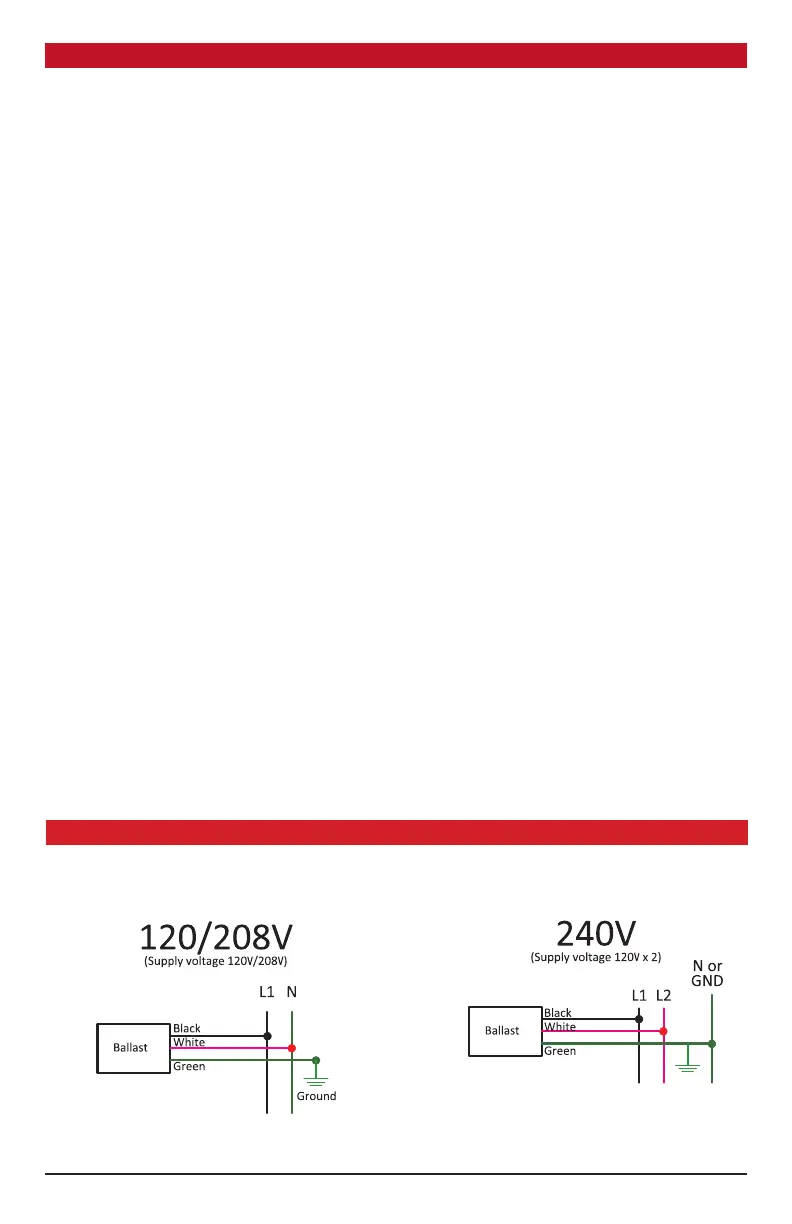
Each ballast MUST be wired to the main’s neutral line back to the circuit.
DO NOT “daisy-chain” a neutral line with any other ballast.
RESIDENTIAL VOLTAGES – SINGLE PHASE POWER
RECOMMENDED WIRING DIAGRAMS
5


 To Next Page