
 Need help?
Do you have a question about the iCarsoft Multi-system Car Diagnostic Tool Series and is the answer not in the manual?
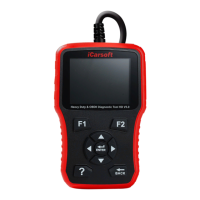
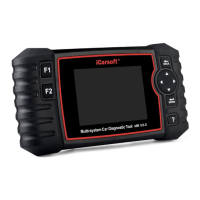
Describes the function of each button on the diagnostic tool, including F1, F2, UP, DOWN, LEFT, RIGHT, ENTER, BACK, and HELP buttons.
Guides on diagnosing electronic control systems, including vehicle identification and diagnostic modes.
Methods for identifying the vehicle, including Auto ID, VIN Identify, and manual Vehicle Select options.
Details the available diagnostic modes: Quick Test, Auto Scan, Control Unit, Service, and Quick Erase.
Steps for performing diagnostic operations like module information and reading fault codes.
Provides access to special maintenance functions for various vehicle systems.
Resets the oil maintenance period and turns off the service lamp after an oil change.
Manages the Electronic Parking Brake system for maintenance, deactivation, and reactivation.
Registers new batteries and resets internal battery monitoring data after replacement.
Manages the DPF regeneration process to clear blockages and turn off the DPF indicator.
Relearns the throttle valve control value after clearing or replacing the throttle valve.
Calibrates the steering wheel to the straight-ahead position or recalibrates SAS after part replacement.
Bleeds the brake system to restore ABS sensitivity after air contamination or component replacement.
Updates injector configuration values for correct fuel injection control after renewal or replacement.
Performs maintenance and calibration for headlamp leveling height sensors.
Executes suspension learning and calibration after maintenance or replacement of height sensors.
Displays sensor IDs, inputs replacement IDs, and tests tire pressure sensors.
Activates the air conditioner to match new components like refrigerant or blower pump.
Activates the replaced fuel pump to ensure normal fuel injection and engine operation.
Adjusts the engine speed for idle speed faults and relearns idle values.
Performs learning and calibration for body stability control units and related components.
Resets air filter learning values after replacement to ensure normal operation.
Learns door window glass positions for pinch protection and one-touch functions.
Restores seat axis position values to default and resets all adaptations.
Shows the vehicle battery status by displaying the voltage from the Data Link Connector.
Supports all 10 modes of OBDII/EOBD for comprehensive vehicle diagnostics.
Allows lookup of diagnostic trouble codes (DTCs) and their definitions.
Enables reviewing saved diagnostic data and creating reports.
Configures tool settings like language, units of measure, and data logging.
Selects the display language for the diagnostic tool interface.
Chooses between Metric and Imperial units for measurements.
Enables or disables the audible buzzer for tool feedback.
Configures the logging function for recording diagnostic data.
Deletes saved logs or records from the tool.
Resets all user data and settings to factory defaults.
Provides assistance and information on using the diagnostic tool.
Displays tool information, including software and hardware versions.
Outlines the terms and conditions of the one-year limited warranty.
Describes the process for returning the tool for repair or service.
Guides on downloading and installing software updates for the diagnostic tool.
Explains how to save and print diagnostic data from the tool to a PC.
 General
| Protocols | OBDII |
|---|---|
| Display | LCD screen |
| Connectivity | USB |
| Functions | Read and clear diagnostic trouble codes (DTCs), live data stream |
| Supported Systems | Engine, Transmission, ABS, Airbag |
| Update | Online updates via PC |
| Compatibility | OBDII/EOBD compliant vehicles (specific vehicle coverage varies by model) |
| Power Supply | 12V vehicle battery |
| Languages | Multilingual menu and DTC definitions (typically English, Spanish, French, German, etc.) |


 To Next Page