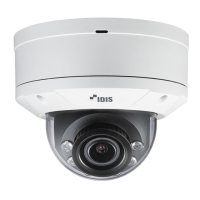
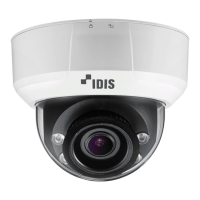
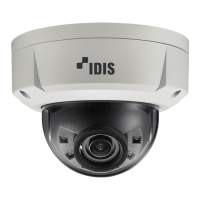
This document serves as an installation manual for the IDIS DC-T Series network camera, specifically the DC-T1833WHR model. It provides essential information for first-time users and those familiar with similar products, emphasizing safety precautions and proper usage to prevent accidents and property damage. The manual outlines the camera's features, connection methods, and troubleshooting steps, ensuring a comprehensive guide for installation and operation.
The IDIS DC-T1833WHR is an IP-based network camera designed to compress and transmit video over Ethernet. It offers versatile management options, allowing users to change settings via the IDIS Discovery program or manage multiple cameras using the IDIS Solution Suite Compact program. For remote viewing of live video, the camera features an embedded web server (IDIS Web), accessible through a web browser. This flexibility ensures that users can monitor and record video efficiently, whether through dedicated software or a standard web interface.
A key feature of this camera is its support for DirectIP mode, which simplifies setup when used with a DirectIP™ NVR. This mode allows users to configure all necessary settings without the need for a PC, streamlining the installation process. The camera also supports the ONVIF protocol (Core specification version 2.4.2), ensuring compatibility with a wide range of network video systems.
For video capabilities, the DC-T1833WHR supports multi-streaming, enabling high-resolution and high-quality video monitoring alongside simultaneous real-time recording. This feature is complemented by flexible configurations to suit various surveillance needs. The camera utilizes H.264 video compression and M-JPEG still image compression algorithms, offering efficient data handling. It supports a 4-stage video compression rate and multiple compression resolutions, providing options for optimizing video quality and storage.
Audio communication is also supported, with two-way audio functionality for remote dialog. This allows for interactive communication, enhancing the camera's utility in various scenarios. The camera includes video stream buffering to counteract pre-/post-event buffering and network delays, which improves the reliability of network recording. Remote monitoring is facilitated through a web browser or remote software, and the camera can automatically generate web casting code (HTML). It supports up to 10 simultaneous remote monitoring connections, making it suitable for multi-user environments.
Security features are robust, including IP filtering, HTTPS, SSL, IEEE 802.1X, and configurable user authority levels. These measures ensure greater security for the surveillance system. To optimize network usage, the camera offers network bandwidth limitation and MAT features.
Additional usage features include easy network access via UPnP (Universal Plug and Play) function and embedded mDNS (Multicast DNS) protocol. It supports slow shutter for improved low-lighting video capture performance and features a Day & Night function with a built-in IR cut filter changer. The camera also boasts auto-focus functionality and a video out feature with selectable NTSC/PAL options. Firmware upgrades are quick and easy over the network, and redundant firmware with auto-recovery features enhances system stability. Network-based integrated management of multiple network cameras further simplifies system administration.
The DC-T1833WHR includes a motorized focus and zoom lens, allowing for precise adjustments. It supports both 12 VDC and PoE (Power over Ethernet) for power, offering flexibility in installation. A built-in heater enables operation in sub-zero temperatures, specifically when using 12 VDC power, making it suitable for diverse environmental conditions. Multiple event detection modes are also supported, enhancing its surveillance capabilities.
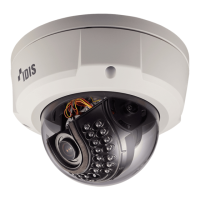
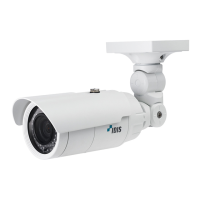
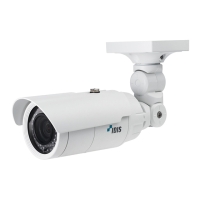
The manual provides a detailed overview of the camera's physical components, including the lens, IR LED, body, stand, bottom cover, mounting bracket, and sun shield screw hole. It explains how to adjust the camera direction and lens' rotation angle using the stand and how to mount the camera to a wall or ceiling with the provided bracket.
Regarding connections, the camera features a network port (RJ-45) for Ethernet connection, which can also supply power if a PoE switch is used. A BNC video out port is available for previewing video. Power is supplied via a 12 VDC adapter. It includes an FGND (Frame Ground) for grounding the device, audio in (line in) and audio out (line out) ports, and alarm in/out ports. The alarm out is a BJT (Bipolar Junction Transistor) - open collector output, with specific voltage and current limits to prevent damage. Users are advised to connect a diode in parallel with external inductive loads for protection.
Maintenance features include a factory reset option, which can be performed remotely to return all settings to their original state. This is useful for troubleshooting or reconfiguring the camera. The manual also provides a troubleshooting section for common issues such as the unit not turning on, blurry images, incorrect video color, blinking images, and difficulties launching IDIS Web. It advises checking power connections, camera status, network connections, lens cleanliness, focus, and lighting conditions. For lost admin IDs and passwords, users are directed to contact their dealer or distributor.
The manual also emphasizes important safeguards, such as reading all instructions, retaining them for future reference, and cleaning the equipment with a damp soft cloth. It warns against using unauthorized attachments, operating near water, and placing the equipment on unstable surfaces. Proper ventilation is crucial to prevent overheating. Power sources must match the marking label, and a UPS system is recommended for safe operation. Power and TNT connections should be removed before handling the equipment. During lightning storms, unplugging the unit and disconnecting antenna/cable systems is advised, along with using a surge protection device. Overloading wall outlets and extension cords should be avoided, as well as pushing objects into the equipment or spilling liquids on it. Servicing should only be performed by qualified personnel.
The document also includes FCC compliance statements, WEEE disposal information, copyright details, and registered trademarks. It notes that the product contains open-source software, with codes available for download. Overall, the manual serves as a comprehensive guide for the installation, operation, and maintenance of the IDIS DC-T1833WHR network camera, ensuring safe and effective use.


 To Next Page
 General