8
OPERATING INSTRUCTIONS
7-WAY ROUND PIN TESTING PROCEDURE
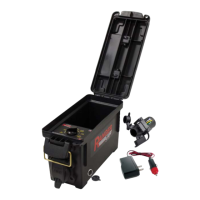
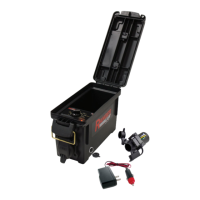
1. Install a fully charged 12V DC battery into your Ranger MUTT
®
.
2. Plug the trailer’s 7-way round pin cable into the front of the Ranger MUTT
®
. Be sure to
push fi rmly until the fl ap locks in behind it.
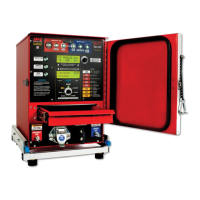
3. To begin testing your trailer, turn the power switch to the “On” position. The power
switch will illuminate. Turn the control knob to the desired circuit.
4. The Ranger MUTT
®
will send up to 10A @ 12V DC to the selected circuit, e.g., turn
signals, brake lights, etc. Perform a visual inspection by walking around the trailer to
verify proper lights are illuminated.
5. Step 4 should be repeated for all lighting circuits.
WARNING: LEFT TURN AND RIGHT TURN SIGNALS FLASHING TOO QUICKLY OR
TOO SLOWLY ARE AN INDICATION OF LOW BATTERY VOLTAGE. STOP AND CHARGE
BATTERY IMMEDIATELY TO PREVENT DAMAGE TO TURN SIGNAL FLASHERS.
SHORT CIRCUIT AND OVERLOAD TESTING
SHORT CIRCUIT: When a positive power source (12V +) is directly connected to, or
touching the negative terminal or ground connection, wire insulation can wear through
due to vibration. Exposed copper wire can make contact with the metal trailer frame
resulting in a short circuit and a blown fuse in the vehicle.
OVERLOAD: When the load (lights and/or electric brakes) attempts to draw more current
(amps) than the circuit was designed to handle, it often results in blown fuses.
SUMMARY: The Ranger MUTT
®
is capable of providing up to 10 amps of current to
a selected circuit. It is equipped with an internal, auto-resetting fuse, which is designed to
remove power to the selected circuit when the load exceeds 10 amps in overload condi-
tion. Once power is removed, the circuit breaker requires a 30-second cool-down cycle
until power can be reapplied. If the source of the excessive current draw, i.e., the overload
condition, is still present, the circuit breaker will immediately remove power once again.
This process will be repeated until the source of the excessive current draw is removed.
Most trailers should not exceed 10 amps per circuit when wired properly. You should
check the specifi ed current draw for each light bulb or LED on the trailer circuit to deter-
mine whether it is an overload condition, short circuit condition or faulty equipment, e.g.,
electric brakes, lights, harnesses, etc.
NOTE: The auto-resetting fuse used in the Ranger MUTT
®
is thermally activated and
requires a short cool-down time between uses. The more often it is tripped, the longer
the required cool-down time before it will become active again.
5
• Make sure tester cable clamps make tight connections.
• Battery explosion can cause injury.
ACID BURNS
• Battery acid is highly corrosive sulfuric acid.
• Wear safety goggles, both user and bystanders.
• Wear safety gloves.
• Make sure someone can hear you or is close enough to provide aid when working near
battery.
• Have plenty of fresh water and soap nearby. If battery acid contacts skin, clothing
or eyes, fl ush the exposed area with soap and water for 10 minutes before seeking
medical help.
• Do not touch eyes after handling battery.
• Battery acid can burn eyes and skin.
CHARGER WARNINGS
RISK OF ELECTRIC SHOCK AND FIRE
• Do not operate the charger with a damaged cord or plug.
Replace the cord or plug immediately.
• Position the power cord and charger cables away from the hood, doors or hot and/or
moving engine parts where they could be damaged.
• Unplug the power cord using the plug rather than the cord when disconnecting the
charger from the outlet.
• Unplug the power cord from the outlet before cleaning or maintaining the tester and
charger. Turning off the controls does not reduce this risk.
• Do not operate the charger after a sharp impact, drop or any other damage.
• Do not disassemble the charger.
• Use only recommended attachments.
• Do not charge a frozen battery. Do not overcharge a battery.
• Use the charger only for lead-acid automotive batteries. Do not use the charger for
charging dry cell batteries.
• Electric shock or fi re can cause injury.
RISK OF ENTANGLEMENT
• Keep yourself, any clothing and the battery charger leads clear of moving parts such
as fan blades, pulleys, hood and doors.
• Moving parts can cause injury.
RISK OF BURNS
• Batteries can produce short circuit current high enough to weld jewelry such as rings,
bracelets and watches. You must remove them before working near battery.
• Short circuits can cause injury.


 To Next Page
 Loading...