Need help?
Do you have a question about the iPECS 1030i and is the answer not in the manual?
Access the stored telephone numbers in your system.
Press the Message button followed by one of the following options: 1- to give an internal user a call back.
Once you have accessed your voicemail inbox here are the options available to you: Dial 1 - New messages.
Lift the handset or press the speaker key. To answer a call on another extension use the PICKUP soft key.
Lift the handset and dial a 9 for an outside line, followed by the number that you require.
Lift the handset and dial the extension number or press the flex key assigned to the contact.
Press the DND button when a call comes in.
To park an active external call, press Transfer, dial the park code or use the Park key.
When dialling an extension that is engaged, the Camp On feature allows the station to be notified that there is a call waiting.
During an active call, press either the Transfer button or the TRANS soft key. Dial the extension number.
Press the Green flashing flex key or the Transfer button.
List of phone numbers called and received.
Makes your extension unavailable.
Group calling (3 or more callers).
Routes your calls to another extension/group/speed dial.
The Ericsson-LG Enterprise iPECS 1030i is a business communication solution designed to provide a comprehensive set of telephony features through a user-friendly handset. This guide details its layout, key functions, and various call management capabilities.
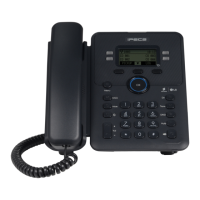
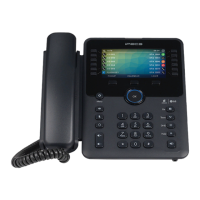
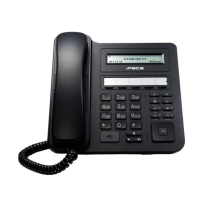
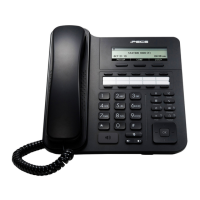
The 1030i handset features a clear LCD Display that serves as the primary interface for status updates, dialing directories, and text message information. A Ring/Message Indicator provides visual alerts for incoming calls and new messages.
The handset includes a traditional Handset for private conversations and a built-in Speaker for hands-free communication.
The device is equipped with a Dial Pad for entering numbers and text. Above the dial pad, a Navigation Key (up, down, left, right arrows) allows users to scroll through menus and lists, complemented by an OK Key for selection.
For quick access to frequently used functions, the 1030i features Soft Keys located directly below the LCD display. These buttons are interactive, and their function changes based on the phone's current status, offering dynamic options. Additionally, there are Flexible Buttons which are programmable, allowing users to assign lines or specific features to them. The 1030i boasts 18 such programmable keys spread across three pages, providing extensive customization.
A dedicated Menu Button grants access to the phone's settings, enabling users to customize aspects like font, display, and overall configuration. A Volume Button allows for adjustment of the ring, headset, handset, and speaker volumes. The Speaker Button toggles the speakerphone on and off during a call and illuminates when the phone is in menu mode.
The 1030i incorporates several fixed buttons with dedicated functions:
The 1030i is designed for business communication environments, supporting a range of features essential for efficient call handling. While specific technical specifications like power consumption or network protocols are not explicitly detailed in this guide, the emphasis on "Enterprise iPECS" suggests integration within a robust IP-based communication system. The presence of 18 programmable keys across three pages indicates a high degree of customization and capacity for managing multiple lines or features simultaneously. The "LCD screen" provides a visual interface, which is standard for modern business phones, and the "Ring/Message Indicator" offers clear visual cues for user attention.
The guide primarily focuses on operational features rather than explicit maintenance. However, the ability to access "Menu button" for "settings for your phone, such as changing the font and display or changing configuration" implies user-level customization and basic configuration management. For more complex issues or password resets, the guide directs users to "contact your system administrator," suggesting that system-level maintenance and troubleshooting are handled by IT personnel rather than end-users. The robust design of a business-grade handset typically implies durability and minimal user maintenance beyond keeping the device clean.

 To Next Page

 General