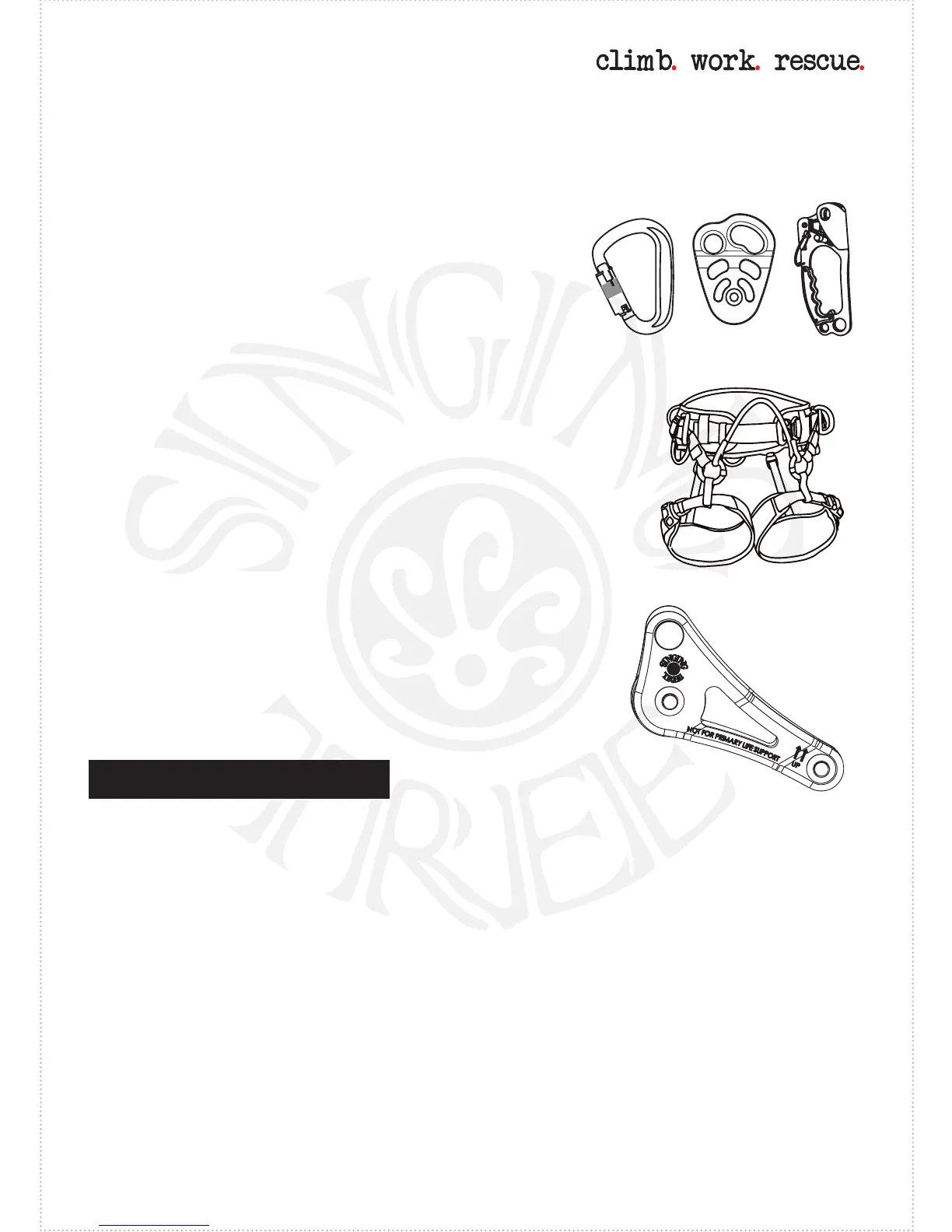
Karabiners, Pulleys, and Ascenders.
Each of these devices will be slightly different depending on the choices of the climber. As such, they will
all have their own set of inspections to be made. Follow these general guidelines
1. Always begin by consulting the instructions or owner’s
manual for that particular device.
2. Operate the device several times to verify proper operation
(for example, for the Karabiner, unlock, open, and let it close).
3. Check for burrs or sharp edges.
Harness.
Each harness will be different depending on the choice of the
climber. Consult the harness’s instructions or owner’s manual
for directions regarding pre-climb inspections.
Rope Wrench Specic Inspections
1. Inspect the entire device for burrs or sharp edges that may
have developed through use or during storage.
2. Visually check the Slic Pin to ensure the spring- loaded tab
is sticking out and keeping the Slic Pin from moving.
3. Attempt to pull the Slic Pin out to ensure the spring- loaded
tab will not allow it to come out.
4. Ensure the wear on the Slic Pin is not excessive. The Slic Pin
is prone to wear due to friction between itself and the climbing
rope.
5. Check the Side Plates for damage. The Side Plates are
designed to be slightly bent but symmetrical.
6. Rotate the Wheel to ensure it moves freely and is not
obstructed by rope bers or anything else.
7. Ensure the Tether Attachment Point bolt is tight and that
there are no gaps between the bolt heads and the outsides of
the Side Plates.
Dynamic Inspections
Throughout the course of a climb, the climber, as an expert, must constantly monitor the system and
surroundings for changes that may present a hazard. For example, a friction hitch may begin to loosen
and respond differently after a very long ascent. Memorize the “TREES” method described below for
maintaining safety while climbing.
[ T ]ight friction hitch. Always be sure the friction hitch is tight and will engage in the event of a fall at all
times. Even if a friction hitch was very tight when rst tied, it can become loose over the course of a climb.
[ R ]ope must be securely attached to a solid anchor point and remain free of damage or wear at any
point it is repeatedly contacting anything (branches, pulleys, rope wrench, etc.)
[ E ]xcess rope at the end of the climbing rope. This is DESIRED so that the climber does not come off
the rope.
[ E ]xcessive slack in the system. This is NOT DESIRED and should be avoided.
[ S ]harp objects. Burrs and sharp edges in the system or in the tree can damage the rope and must be
avoided.
[ TREES ] Inspect all parts of the tree supporting any part of the body weight to ensure they are not
cracking, creaking, or overly bent.



 To Next Page