Rope Wrench
Always use the original Rope Wrench manufactured by ISC. Do not attempt to use a “home-made” Rope
Wrench.
Climbing Rope
It is recommended that a 11mm to 13mm diameter, 16 or 24 strand rope made of nylon, polyester,
polypropylene or kernmantle and that is approved for arboriculture be used with the Rope Wrench
system. Ultra static climbing ropes are not recommended. The rope should have just enough “give” or
“bounce” to be comfortable.
Friction Hitch
It is advised that a heat resistant rope of a different material than the climbing rope be used for the
friction hitch.
It is the responsibility of the climber to select a suitable friction hitch.
(Note 1) The above recommendations for the selection of ropes are general guidelines only. There are
many factors that go into selecting suitable ropes for climbing. A professional arborist should carefully
consider all the factors present before making a decision regarding the ropes to be used.
(Note 2) It is recommended that each rope used in the Rope Wrench system be a different colour or
pattern for clarity of distinction.
Tether
It is required that a stiffened tether be used in conjunction with the Rope Wrench. Stiffened tethers
designed specically for use with the Rope Wrench are commercially available. Do not use tethers made
of a brittle material such as acrylic or wood.
It is the responsibility of the climber to select a suitable tether.
Equipment Requirements
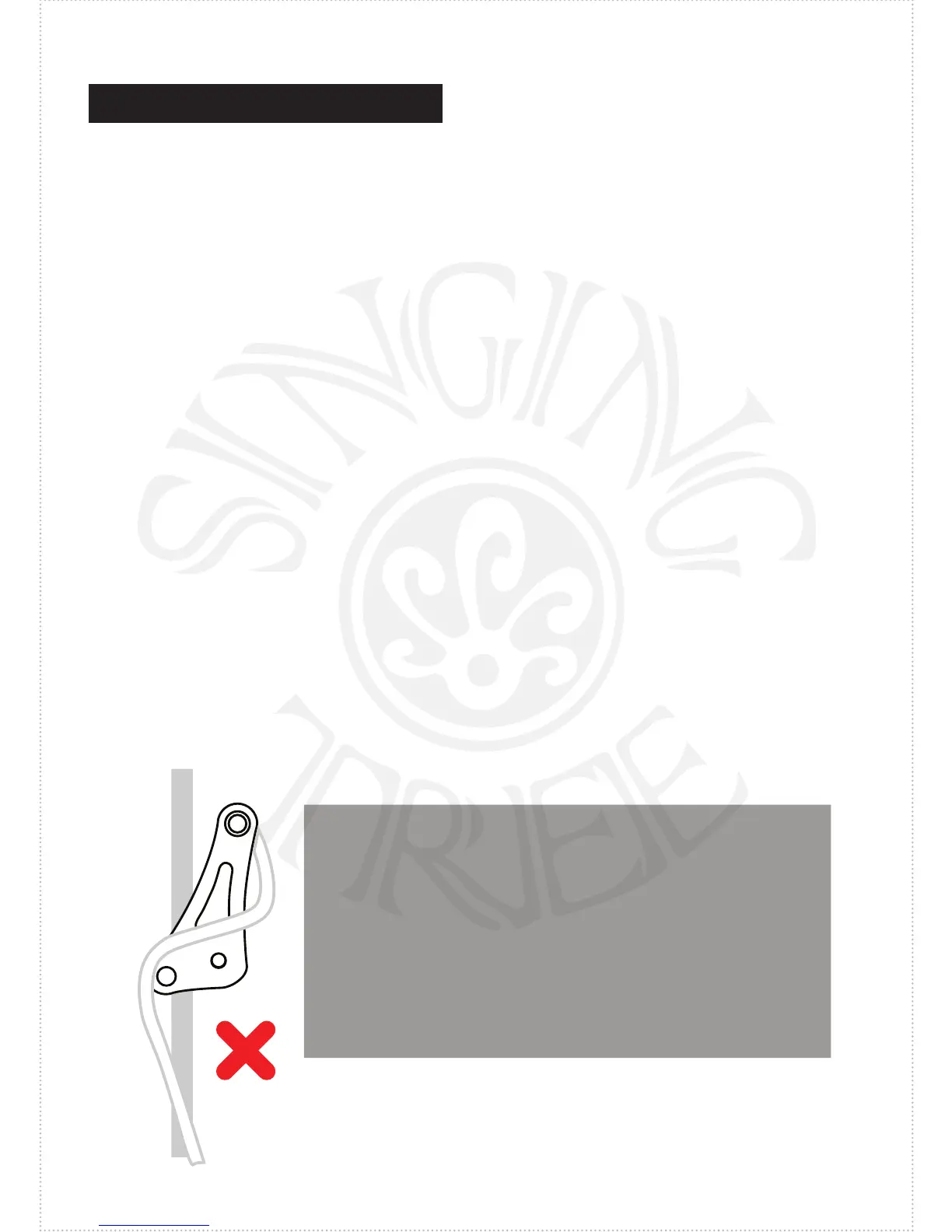
Fig 3
DANGER: FREE FALL HAZARD
Do not use a loose or supple tether with the Rope
Wrench. It may become entangled in the Rope
Wrench and cause it to be locked in neutral and
release the grip of the friction hitch. This will lead
to free fall resulting in serious injuries or death.
Dangerous result of using a loose or supple tether:
Rope Wrench is stuck in neutral position and could
release the grip of the friction hitch below it.
Fig 3
A suitable tether allows 8cm (3") of room between the hitch and the Rope Wrench in an engaged and
fully equalised set up



 To Next Page