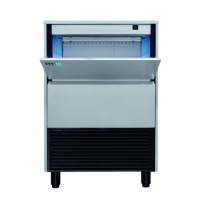
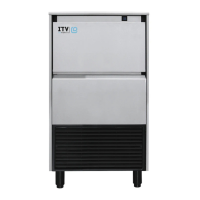
This document serves as the user manual for ITV Ice Makers' ALFA / GALA / DELTA MAX series of ice cube makers, specifically the NG machines (R290 refrigerant) in undercounter, self-contained models. The covered models include NDP60, NG80, NG120, NG130, and NG150.
Function Description
The ALFA / GALA / DELTA MAX ice cube makers are designed to produce ice cubes using potable water. These are self-contained, undercounter units suitable for various applications, including staff kitchen areas in shops, offices, and other working environments; farmhouses; hotels, motels, and other residential type environments; bed and breakfast establishments; and catering and similar non-retail applications. The machines are not intended for outdoor use or exposure to rain. They are designed to operate within specific ambient and water temperature ranges to ensure optimal performance and longevity.
Important Technical Specifications
The machines utilize R290, a flammable refrigerant, which necessitates specific safety precautions regarding ventilation and handling.
- Operating Temperatures:
- Room Temperature: Minimum 41°F (5°C) to Maximum 109.4°F (43°C). Operating below the minimum may cause difficulties in ice cube removal, while exceeding the maximum shortens compressor life and reduces production.
- Water Temperature: Minimum 41°F (5°C) to Maximum 95°F (35°C).
- Water Pressure:
- Minimum: 14 psi (1 Bar / 0.1 MPa)
- Maximum: 85 psi (6 Bar / 0.6 MPa)
- A pressure regulator is required if input water pressure exceeds 85 psi.
- Electrical Connection: The machines are supplied with a 6-foot power cable and require an independent power supply of proper capacity. Voltage and tension specifications are indicated on the nameplate. Variations exceeding 10% of the stated voltage can damage the machine or prevent start-up. Grounding the equipment is mandatory to prevent electric shock and equipment damage, adhering to local and national regulations.
- Water Connection: A dedicated water connection with a 1/4" nominal ID tubing from the water valve to the ice machine is required. The machine must be plumbed according to applicable Federal, State, and local regulations.
- Drainage: Drainage should be located at least 5.91 inches (150 mm) below the machine level, using a 1.18 inch (30 mm) inside diameter pipe with a minimum gradient of 0.36"/ft (3 cm/meter).
- Ventilation (Air-Cooled Models): NG machines with air-cooled condensers draw air through the front section and expel it through the lateral, back, and front louvers. It is crucial not to obstruct the front louver or place anything over the maker. Minimum clearances for installation are: >5cm (2") from the side, >75cm (29") from the rear, and >10cm (4") from the top. If the front louver is insufficient or receives hot air from another device, installing a water condenser unit is recommended if the machine's location cannot be changed. Water piping should not pass near heat sources to avoid losing ice production.
Usage Features
- Installation: Installation must be performed by the Technical Assistance Service department. The socket should always be accessible. The supply cord must not be trapped or damaged. Multiple portable socket-outlets or power supplies should not be located at the rear of the appliance.
- Start-Up Procedure:
- Ensure the machine is leveled.
- Verify voltage and frequency match the nameplate.
- Confirm discharges are connected and operating.
- Check ambient and water temperatures are within the specified ranges.
- Verify water pressure is appropriate.
- Open the water inlet and check for leaks.
- Remove protection elements behind the curtain.
- Connect to the electrical network.
- Push the main switch on the front.
- Verify no vibrations or frictions, and the curtain moves freely.
- Ensure nozzles spray water correctly onto the evaporator.
- After 10 minutes, check the water container for leaks through the overflow pipe.
- Safety Warnings:
- Always disconnect power before cleaning or maintenance.
- Electrical installation changes must be done by qualified personnel.
- Modifying the machine is extremely dangerous and voids the warranty.
- Not for use by persons with reduced physical, sensory, or mental capabilities, or lack of experience, unless supervised.
- Children must be supervised and not allowed to play with the appliance.
- Risk of child entrapment: remove doors before disposing of old refrigerators/freezers.
- Connect to potable water supply only.
- In case of flammable refrigerant leakage: do not generate flames, do not switch on/off or plug in/off, ventilate the area immediately, and call authorized technical service.
- Keep ventilation openings clear.
- Do not use mechanical devices or other means to accelerate defrosting other than those recommended by the manufacturer.
- Do not damage the refrigerant circuit.
- Do not use electrical appliances inside food storage compartments unless recommended.
- Do not store explosive substances (e.g., aerosol cans with flammable propellant).
Maintenance Features
Regular maintenance and cleaning are crucial for good ice quality and machine longevity. These operations, especially those related to cleaning, should mostly be performed by qualified personnel.
- General Maintenance: Maintenance and cleaning intervals depend on site conditions and water quality. The ice machine's water system should be cleaned and sanitized at least twice a year. In dusty environments, the condenser may require monthly cleaning.
- Safety during Maintenance: Always wear rubber gloves and safety goggles when handling Ice Machine Cleaner or Sanitizer. The unit must always be disconnected from power during maintenance/cleaning.
- Sanitization: Sanitize the ice storage bin as frequently as local health codes require, and every time the ice machine is cleaned and sanitized.
- Front Grid Removal: To access the condensing unit, remove the front grid by pressing the two clips on the right side.
- Cleaning the Condenser:
- Air Condenser: Disconnect power, close water faucet, and clean with a vacuum cleaner, brush, or low-pressure air.
- Water Condenser: Disconnect power, close water faucet, disconnect water entry/exit, prepare a Scale-Kleen solution in distilled water (more effective at 35°-40°C), and distribute it through the condenser. WARNING: DO NOT USE HYDROCHLORIC ACID.
- Cleaning the Evaporator / Water Deposit:
- Switch off the machine.
- Remove the overflow pipe to empty the water reservoir.
- Prepare an appropriate cleaning solution (e.g., Scale-Kleen, not hydrochloric acid) according to manufacturer instructions.
- Fill the water reservoir with the solution.
- Press the switch on the Panel control board and turn on the machine. Keep pressure on the PCB's switch until the water pump starts. Let the pump run for 30 minutes to circulate the solution; the machine will stop automatically. Then, power off.
- Remove the overflow pipe to empty the reservoir.
- Perform sanitary cleaning using an approved (EPA/FDA) sodium hypochlorite food equipment sanitizer (100-200 ppm free chlorine yield; household bleach 12.5% can be used).
- Switch on the machine again and discard the first two ice harvests.
- Cleaning the Ice Bin: Unplug the machine, turn off water supply, empty ice, and wipe with a cloth soaked in bleach and detergent. For white lime stains, rub with lemon or vinegar, wait, and wipe again. Rinse with plenty of water, dry, and run the machine.
- Cleaning the Outside of the Machine: Follow the same procedure as for the ice bin.
- Cleaning the Inlet Filters: Loosen the hose and clean the filters under water.
- Cleaning Spray Nozzles and Connecting Pipes:
- Remove the curtain (clean with vinegar or phosphoric acid, rinse, clean with bleach, rinse).
- Remove and clean the metal grill.
- Pull the connecting pipe upwards.
- Remove spray nozzles from the square pipe and the pipe ends. Clean everything.
- Remove and clean the main filter of the water pump.
- Reassemble the filter, nozzles, and connection pipes. ATTENTION: Spray nozzles must be completely perpendicular; otherwise, some cubes may not form completely.
- Place the grill over the nozzles, ensuring back slots are secure.
- Install the curtain, ensuring all strips move freely.
- Run the machine but discard the first set of ice cubes.
- Checking for Water Leaks: This should be done whenever maintenance is carried out, checking all water connections, braces, tubes, and hoses.
The manufacturer reserves the right to make changes in specifications and design without prior notice. Disposal of the ice maker should follow country-specific regulations for eco-friendly disposal of electric and electronic devices. Users should contact the manufacturer for appropriate differentiated collection methods.



 To Next Page

 General