Need help?
Do you have a question about the Jabra Link 360 and is the answer not in the manual?
Specifies necessary Bluetooth profiles (HFP/HSP, A2DP) for pairing Jabra devices directly with computers.
Steps to resolve connectivity issues when pairing Jabra devices directly with computers or softphones.
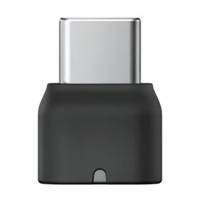
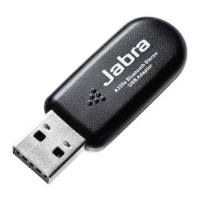
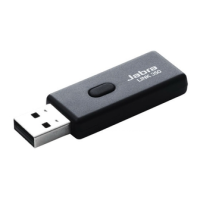
The Jabra Link 360 Adapter is designed to facilitate the connection of Jabra Enterprise Bluetooth devices to computers, ensuring optimal functionality and user experience. While it is technically possible to pair a Jabra Enterprise Bluetooth device directly with a computer without the adapter, the adapter is engineered to provide the full range of features and reliable performance that Jabra devices are known for.
The primary function of the Jabra Link 360 Adapter is to create a robust and fully functional Bluetooth connection between a Jabra Enterprise Bluetooth device and a computer. This adapter acts as a dedicated bridge, optimizing the communication protocols to ensure that all features of the Jabra device are accessible and perform as intended. When used, the adapter ensures that the Jabra device can seamlessly integrate with various softphone clients, such as Microsoft Teams, allowing for comprehensive call control directly from the device's buttons. This includes answering and ending calls, adjusting volume, and muting, functionalities that might be limited or unavailable when pairing directly with a computer's built-in Bluetooth.
The adapter specifically supports the necessary Bluetooth profiles for both audio transmission and device control. It ensures compatibility with the Hands Free Profile (HFP) or Headset Profile (HSP) for voice communication, enabling clear audio for calls and meetings. Additionally, it supports the Advanced Audio Distribution Profile (A2DP), which is crucial for high-quality stereo audio streaming, making it suitable for listening to music or other multimedia content. By guaranteeing support for these profiles, the adapter eliminates potential compatibility issues that can arise when relying on a computer's generic Bluetooth capabilities, which may not always fully support the specific requirements of enterprise-grade audio devices.
Using the Jabra Link 360 Adapter simplifies the connection process and enhances the overall user experience. The adapter is designed for plug-and-play functionality, typically requiring minimal setup. Once plugged into a computer's USB port, it establishes a dedicated Bluetooth connection that is optimized for Jabra devices. This dedicated connection is more stable and reliable than a direct computer-to-device pairing, reducing instances of dropped connections or audio interruptions.
For users who choose to pair their Jabra Enterprise Bluetooth device directly with a computer, it is imperative that the computer supports both the Hands Free (HFP) or Headset (HSP) Bluetooth profile and the Advanced Audio Distribution Profile (A2DP). Without these profiles, the device's functionality will be severely limited, potentially only allowing basic audio input and output without any call control features. Even with profile support, direct pairing often results in a less integrated experience, where buttons on the Jabra device may not control softphone functions.
When pairing directly with a computer, the process generally mirrors that of pairing with a mobile device. Users would typically put their Jabra device into pairing mode and then search for it within the computer's Bluetooth settings. However, the critical distinction lies in the level of functionality achieved. The adapter ensures that the Jabra device is recognized as a fully integrated communication tool, not just a basic audio peripheral. This integration is vital for professionals who rely on their Jabra device for daily communication and collaboration, as it allows for efficient management of calls and meetings without needing to interact with the softphone client directly on the computer screen.
The adapter also plays a role in ensuring consistent audio quality. By managing the Bluetooth connection, it helps to prioritize audio streams and minimize latency, which is particularly important for real-time communication. This dedicated approach to connectivity ensures that the Jabra device performs at its peak, delivering clear audio for both the user and the recipient of their calls.
Maintaining optimal performance of the Jabra Link 360 Adapter and the connected Jabra Enterprise Bluetooth device primarily involves ensuring that all components are up to date and that troubleshooting steps are followed when issues arise. The adapter itself typically does not require physical maintenance beyond keeping its USB connector clean and free from debris. Its robust design is intended for long-term, reliable use.
A crucial aspect of maintaining the system's functionality is keeping the firmware and software of all devices updated. This includes the Jabra Enterprise Bluetooth device, the Jabra Link 360 Adapter (if applicable for firmware updates), and the softphone client installed on the computer. Manufacturers frequently release updates that improve performance, add new features, and address bugs or compatibility issues. Regularly checking for and installing these updates is essential for ensuring the best possible experience.
In situations where users encounter challenges when connected directly to a computer or softphone client without the adapter, several troubleshooting steps can be taken. These steps are designed to diagnose and resolve common connectivity and functionality problems:
Check Bluetooth Connection Activity: Verify that the Bluetooth connection on the computer is active and enabled. Sometimes, Bluetooth can be inadvertently turned off or put into a low-power state, preventing devices from connecting.
Remove and Re-pair: If a connection is unstable or functionality is limited, removing the previous pairing from the computer's Bluetooth settings and then re-pairing the Jabra device can often resolve the issue. This process refreshes the connection parameters and can clear any corrupted pairing data.
Reset Jabra Device: Performing a factory reset on the Jabra device can often resolve persistent issues. A reset returns the device to its default settings, which can eliminate software glitches or misconfigurations that might be affecting its performance. Users should consult their device's manual for specific instructions on how to perform a reset.
Update Softphone Client: Ensure that the latest version of the softphone client (e.g., Microsoft Teams, Zoom, etc.) is installed on the computer. Outdated softphone software can have compatibility issues with newer operating systems or device drivers, leading to functionality problems.
Select Jabra Device as Audio Device: Confirm that the Jabra device is explicitly selected as the primary audio input and output device within both the computer's sound settings and the softphone client's audio settings. Sometimes, the computer or softphone may default to internal speakers/microphones or other connected devices, preventing the Jabra device from being used.
By diligently following these maintenance and troubleshooting steps, users can ensure that their Jabra Enterprise Bluetooth device, whether used with the Jabra Link 360 Adapter or directly paired, continues to provide reliable and high-quality communication capabilities. The adapter, in particular, minimizes the need for such extensive troubleshooting by providing a dedicated and optimized connection from the outset.
 General
| Bluetooth Version | 4.0 |
|---|---|
| USB Version | USB 2.0 |
| Operating Range | Up to 30 meters (98 feet) |
| Bluetooth Profiles | A2DP, AVRCP, HSP |
| Operating Temperature | 0°C to 45°C |
| Relative Humidity | 5% to 95% non-condensing |
| Device Type | USB Bluetooth Adapter |

 To Next Page