119
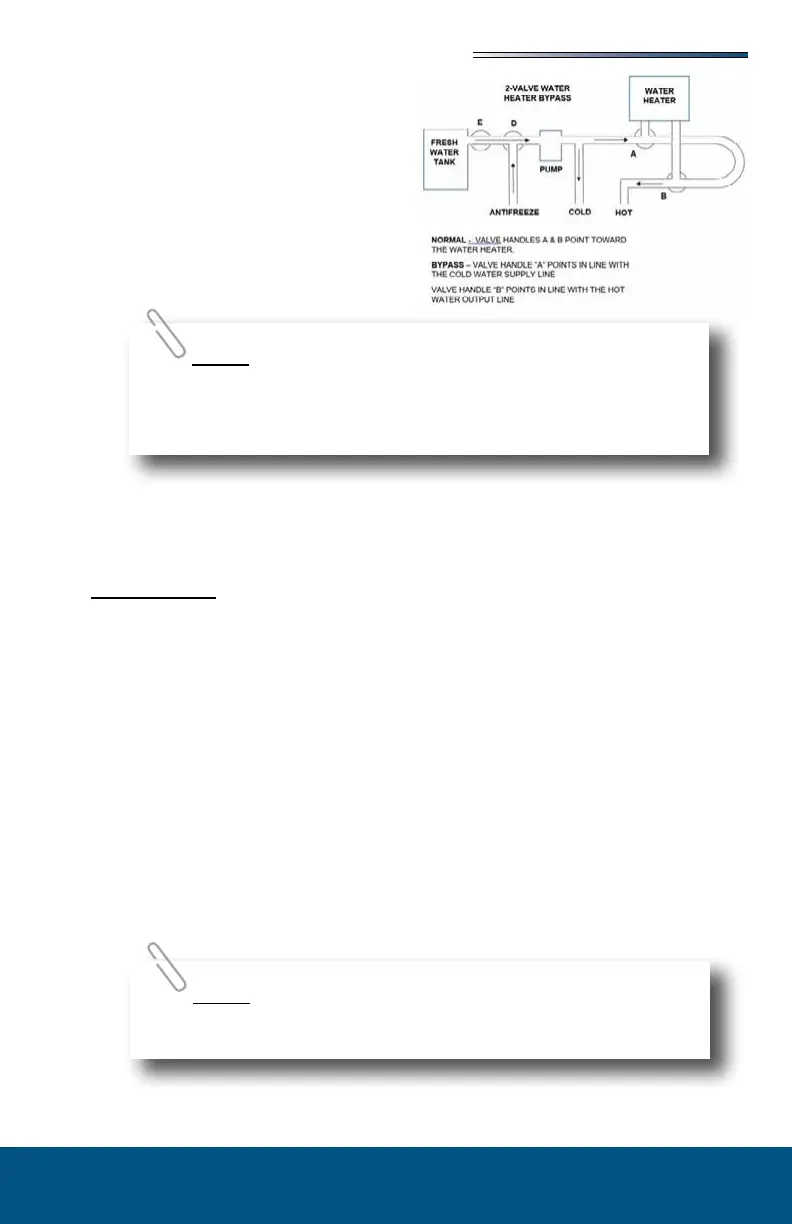
operation diverts the ow
of water around the water heater keeping
water out of the water heater. Hot water
bypass valve handle (B) should point inline
with the hot water outlet line. Cold water
bypass valve handle (A) should point inline
with the cold water inlet line.
When your recreation vehicle is new.
At the beginning and end of each season.
When the water system becomes contaminated or every three months of use.
1. Turn water heater power OFF (storage style-both electric and LP gas switches; tank less
water heater turn power switch OFF).
2. Set the bypass valves to the position. (refer to Water Heater Bypass Valves
section).
3. Level the RV and drain the fresh water system (see Draining the Fresh Water System).
4. Close the low point drain valves and the fresh water tank drain valve.
5. If the RV has a cartridge type water lter it must be removed and bypassed using the
(supplied) bypass tube. Sanitizer should never be allowed into a water lter.
6. Prepare a chlorine solution using 1/4 cup of household bleach (sodium hypochlorite
solution) to one gallon (3.785 liters) of water in a container. Prepare one gallon of
solution for every 15 gallons of tank capacity. This will result in a residual chlorine
concentration of 50 ppm in the water system.
If a 100-ppm concentration is required, use ½ cup of household bleach with one gallon
of water to prepare the chlorine solution. One gallon of the solution should be used for
each 15 gallons of tank capacity.
Fresh water tank sizes vary by model; contact your dealer or
customer service for your specic tank size.
: Valve D is the suction (siphon) valve that has the clear hose
attached to it for siphoning in antifreeze, sanitizer or fresh water from an
external container. Valve E (if equipped) is a shutoff valve for the fresh water
tank. Valves D and E are typically located at the water pump.




 To Next Page