To Next Page
T
Travis MooreAug 22, 2025
Why does my John Lewis Refrigerator run for so long?
- AAndrew GarciaAug 22, 2025
Warm air entering the John Lewis Refrigerator when you open the doors causes it to run for longer periods. Try to open the doors less often.

Why does my John Lewis Refrigerator run for so long?
Warm air entering the John Lewis Refrigerator when you open the doors causes it to run for longer periods. Try to open the doors less often.
Why is my John Lewis Refrigerator temperature too warm, but the freezer is fine?
If your John Lewis Refrigerator temperature is too warm while the freezer temperature is satisfactory, the fridge control may be set too warm. Set the fridge control to a colder setting and allow 24 hours for the temperature to stabilize.
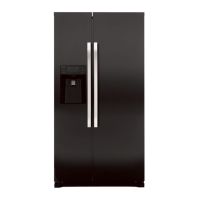
Why is my John Lewis JLAFFB2011 temperature too warm?
If your John Lewis Refrigerator temperature is too warm, it might be because the doors are opened too frequently or left open for too long. Warm air enters the fridge freezer whenever a door is opened, so try to open the door less often. Also, check if the door is slightly open.
Why is my John Lewis JLAFFB2011 Refrigerator ice maker not making enough ice?
If the ice maker in your John Lewis Refrigerator is not making enough ice, the freezer might not be cold enough, so check the temperature settings. Ensure the household water line valve is completely open. If the water dispenser is dispensing slower than normal, replace the ice and water filter cartridge.
What to do if the doors of my John Lewis JLAFFB2011 will not close?
If the doors of your John Lewis Refrigerator will not close, ensure you are closing them gently, as closing a door too hard can cause the other door to open slightly. Also, make sure the fridge is level and not touching a wall or cabinet. If the floor is not level or solid, contact a carpenter to correct it.
Why is the compressor on my John Lewis JLAFFB2011 not running?
If the compressor of your John Lewis Refrigerator is not running, it might be in a defrost cycle, which is normal for a fully automatic defrost fridge and lasts about 30 minutes. Also, ensure the mains plug is tightly pushed into the outlet, check and replace the house fuse with a 15 amp time-delay fuse or reset the circuit breaker. If there is a power cut, check house lights and call your local electric company if they are not working.
Why does moisture collect on the inside of my John Lewis JLAFFB2011 walls?
If moisture collects on the inside walls of your John Lewis Refrigerator, it may be due to hot and humid weather, which increases frost buildup and internal sweating. Also, check if a door is slightly open or being opened too often or for too long. Open the door less often to allow the internal temperature to stabilize.
Why does the ice from my John Lewis Refrigerator have bad odour and taste?
If the ice from your John Lewis Refrigerator has a bad odour and taste, it might have absorbed odours or flavors from strong-smelling food stored in the fridge or freezer, or the ice hasn't been used frequently enough. Cover foods tightly and discard any stale ice, allowing the ice maker to produce a fresh supply. Also, the ice and water filter cartridge could be clogged, so replace it. The dispensing system operates best at 2.1 bar - 6.9 bar water pressure; ensure the water pressure falls within this range.
Why is my John Lewis JLAFFB2011 Refrigerator ice maker not making ice?
If your John Lewis Refrigerator's ice maker isn't making ice, start by connecting the water supply and opening the household water line valve. If that doesn't solve the issue, the freezer may not be cold enough, the valve on the cold water pipe could be clogged, the water filter might be clogged or not completely seated. Clean or replace the valve, replace the filter cartridge, or push the water filter firmly until it snaps into place. If the water dispenser is not dispensing water, the ice and water filter cartridge must be replaced.
Why is my John Lewis Refrigerator dispenser not dispensing water?
If the water dispenser of your John Lewis Refrigerator is not dispensing water, ensure that the freezer door is closed, the household water line valve is open and the water supply is connected. Also, the ice and water filter cartridge may be clogged or the water filter may not be fully installed. In these cases, replace the filter cartridge or push the filter firmly until it snaps into place.
Key safety guidance for user operation and preventing hazards.
Lists all components included with the fridge freezer upon purchase.
Crucial safety advice to prevent hazards before initial product use.
Lists critical warnings for product usage, child safety, and electrical hazards.
Details product sustainability, eco-friendly features, and disposal guidelines.
Instructions and warnings regarding power connection, earthing, and extension cable use.
Identifies and explains the function of each button and display element on the control panel.
Guides on adjusting fridge and freezer temperatures and display settings.
Suggests how to best utilize different compartments for optimal food storage.
Instructions on operating the water and ice dispenser features correctly.
Steps for removing and cleaning the ice cube container.
Instructions for cleaning the removable water collecting shelf.
Guidance on removing and replacing internal food storage containers.
Instructions for removing and replacing shelves within the fridge and freezer.
Steps for removing and refitting the door storage rack.
Guidance on removing and refitting vegetable cases and freezer drawers.
Pre-installation checks, site selection, and clearance advice for optimal setup.
Step-by-step guide for safely detaching the freezer door from the appliance.
Step-by-step guide for safely detaching the fridge door from the appliance.
Instructions for correctly reattaching the freezer door to the appliance.
Instructions for correctly reattaching the fridge door to the appliance.
Procedures for ensuring the appliance is level for optimal performance and stability.
Steps to adjust door height and alignment for proper closure and appearance.
Guide on fitting the exterior door handles to the appliance using provided tools.
Steps for inserting the water filter into the appliance's water system.
Instructions for connecting the appliance to the cold water supply.
Information on environmentally sound disposal of the appliance and packaging.
Details of the product's warranty coverage, duration, and claim process.
Solutions for issues related to the compressor not running or running frequently.
Addresses issues with freezer or fridge temperatures being too cold.
Solutions for when the fridge or freezer compartments are operating at temperatures too high.
Guidance on dealing with condensation and frost build-up inside the appliance.
Troubleshooting steps for issues with ice production, separation, and taste.
Solutions for when the water dispenser fails to operate or water has odd taste.
Addresses internal odours and problems with doors not closing properly.
Steps to resolve issues with interior lighting not functioning correctly.
Information on obtaining genuine spare parts and contacting authorised service engineers.
 General
| Type | Fridge Freezer |
|---|---|
| Energy Efficiency Class | A+ |
| Noise Level | 42 dB |
| Number of Shelves | 4 |
| Number of Door Bins | 3 |
| Freezer Compartment | Yes |
| Dimensions (H x W x D) | 185 x 60 x 65 cm |
| Colour | White |