901-10113 - 30 - 9/16/2024
5.3 Cold Plate Inspection
It is most effective (and most pleasant) to do the Cold Plate Inspection at the conclusion of a defrost
process.
• Check that Cold Plates are not leaking solution.
o Look for surface stains that appear “salty”.
• Check that Cold Plates are not bulging.
o A cold plate with a loose, saggy surface may be evidence of a solution leak.
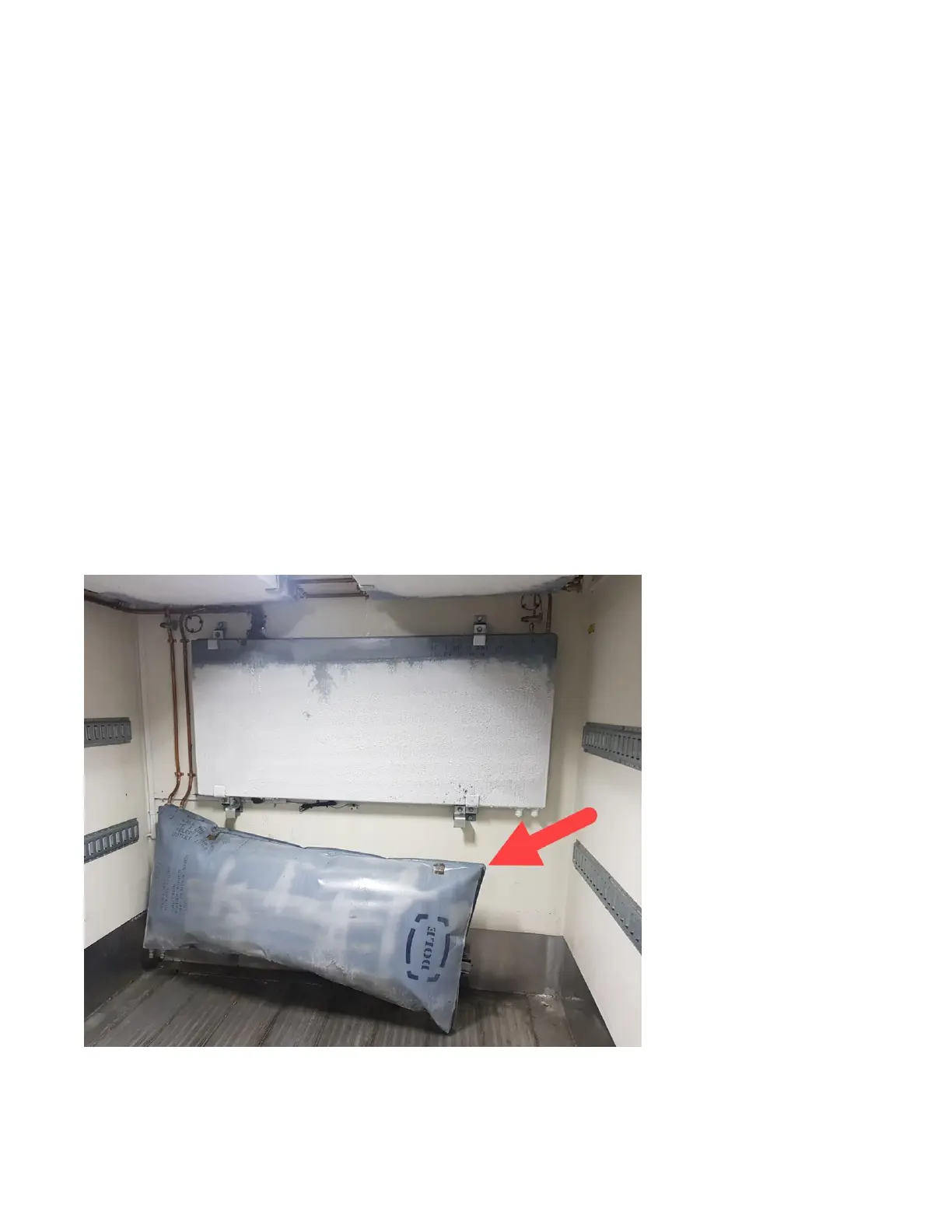
o A cold plate with a tight, swollen surface may have an internal refrigerant leak which
allows refrigerant gas to inflate the Cold Plate. This is a rare failure. Use caution,
because the distortion could even cause the Cold Plate to break free from its mounting
brackets as seen in Figure 7.
• Check that Cold Plate mounting brackets are intact and secure.
o Look for problems like loose or broken fasteners or components.
• Check that refrigerant piping (copper tubing) is in good condition. See Figure 8.
o Look for problems like:
▪ Damage (dents, crushing, or bends)
▪ Oil stains (evidence of a small refrigerant leak)
Figure 7: Cold Plate with internal refrigerant leak, fell out of plate brackets.



 To Next Page