13
ENGLISH
4.7 Use
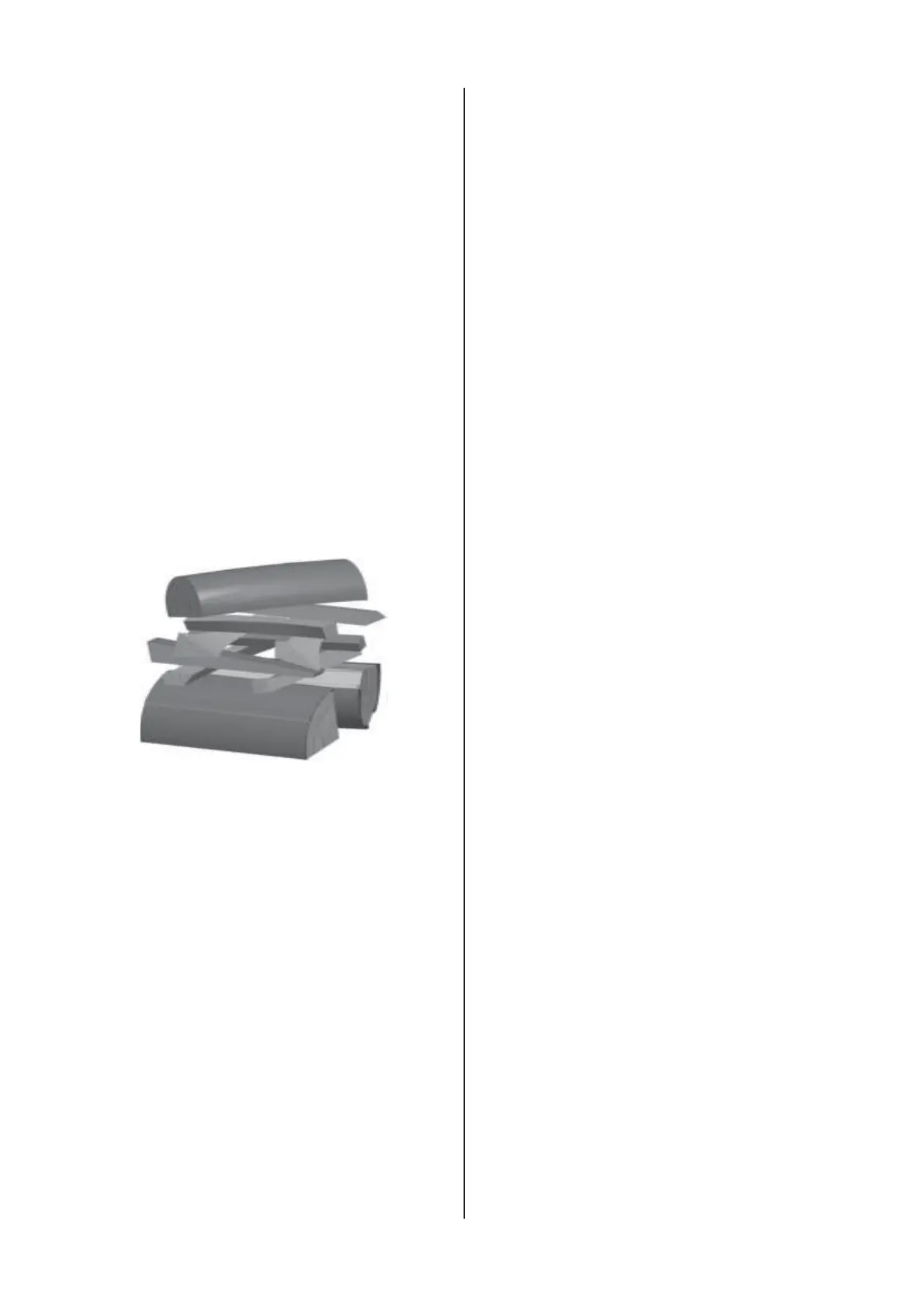
• Open the air vent and the ignition vent by pulling it out all
the way (A). If necessary, keep the door slightly open. (Use
a glove, for example, as the handle can become hot.)
• Place two medium sized logs in/out on each side of the
base. N.B. In order to avoid sooting on the glass, it is
important that the log is not placed adjacent to the glass
on the product.
• Put 2-3 briquettes (or birch bark) between these and add
some kindling wood in a criss-cross pattern on top and
light the newspaper.
• Gradually increase the size of the woodlogs.
• Finally, place a medium-sized log on the top of the pile.
• Then regulate the rate of combustion to the desired level of
heating by adjusting the air vent.
• Close the stove door. It must always be closed when the
fi re is lit.
• Operation with the air controls or appliance dampers open
can cause excess smoke. The appliance must not be
operated with air controls, appliance dampers or door left
open except as directed in the instructions.
• Operation with the door open can cause excess smoke.
The appliance must not be operated with the appliance
door left open except as directed in the instructions.
Fig. 18
Adding fi rewood
Stoke the stove frequently but only add small amounts of fuel
at a time. If the stove is fi lled too full, the heat created may
cause extreme stress in the chimney. Add fuel to the fi re in
moderation. Avoid smouldering fi res as this produces the most
pollution. The fi re is best when it is burning well and the smoke
from the chimney is almost invisible.
If there is insuffi cient burning material in the fi rebed to light
a new fuel charge, excessive smoke emission can occur.
Refuelling must be carried out onto a suffi cient quantity of
glowing embers and ash that the new fuel charge will ignite
in a reasonable period. If there are too few embers in the fi re
bed, add suitable kindling to prevent excessive smoke.
Danger of overheating
The fi replace must never be used in a manner that causes
overheating.
Overheating occurs when there is too much fuel and/or too
much air so that too much heat develops. A sure sign of
overheating is when parts of the fi replace glow red. If this
happens, reduce the air vent opening immediately.
Seek professional advice if you suspect that the chimney is
not drawing properly (too much/too little draught). For further
information, see «4.0 Installation» (Chimney and fl ue pipe).
Condensation
Condensation in a fi replace / fl ue pipe / chimney may occur.
This may be caused by moist fi rewood or diff erences in
temperature in the fi replace and environment.
Condensed water coming from the fi replace appears as a
black, tar-like liquid. This should be wiped off immediately
to avoid discoloration of the fi replace, fl oor or surrounding
building components.
It is important to get the wood burning quickly to avoid
condensation
.
If the condensation continues, mineral sand can be placed on
the bottom plate.
Removing the ashes
• Only remove ashes when the fi replace is cold.
• Use a showel to scrape the ashes out, but always leave
a little ash at the bottom of the combustion chamber as a
protective insulating layer.
• Ashes should be placed outside in a metal container.
5.0 Daily use
Odours when using the fi replace for the
fi rst time
Odours when using the fi replace for the fi rst time
When the fi replace is used for the fi rst time, it may emit an
irritating gas which may smell slightly. This happens because
the paint dries.The gas is not toxic but the room should be
thoroughly ventilated. Let the fi re burn with a high draught
until all traces of the gas have disappeared and no smoke or
odours can be detected.
Heating advice
NB: Logs that have been stored outdoors or in a cold room
should be brought indoors 24 hours before use to bring them
up to room temperature.
There are various ways of heating the stove but it is always
important to be careful about what you put in the stove. See
the section on “Wood quality”.
NB! Combustion with too low air supply can lead to poor
combustion, poorer effi ciency, high particulate emissions, black
carbon and other health and climate hazardous compounds.


 To Next Page
 Loading...