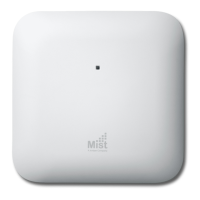
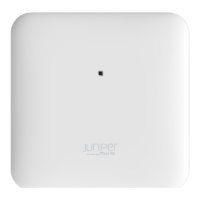
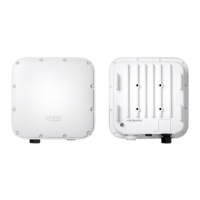
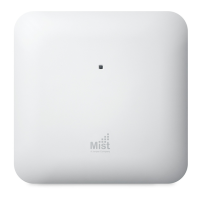
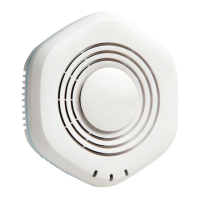
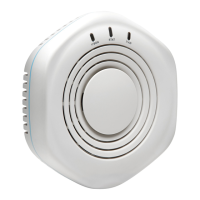
The provided document describes the AX411 Access Point and its basic connection overview, focusing on how to establish a wireless Local Area Network (LAN) using this device. The AX411 Access Point is designed to connect to an SRX Series device and a power source to enable wireless connectivity.
Function Description:
The primary function of the AX411 Access Point is to facilitate wireless LAN connectivity. It acts as a bridge between wired network infrastructure (specifically an SRX Series device) and wireless client devices. By connecting the AX411 to a network and providing it with power, it broadcasts a wireless signal, allowing devices such as laptops, smartphones, and other wireless-enabled equipment to connect to the network. This enables users to access network resources and the internet wirelessly. The document highlights that the AX411 is part of a system that includes an SRX Series device, suggesting it integrates into a broader network security and routing solution provided by Juniper Networks.
Important Technical Specifications (Inferred from the document):
While the document does not list explicit technical specifications like data rates, frequency bands, or antenna gain, it provides crucial information about its connectivity and power options:
- Network Interface: The AX411 Access Point connects to an SRX Series device via an Ethernet connection. This implies it has at least one Ethernet port for wired network integration.
- Antennas: The device utilizes external antennas, as indicated by "Access point antennas" and "Connecting External Antennas to the AX411 Access Point." This suggests the antennas are detachable or require installation, potentially allowing for different antenna types or configurations to optimize wireless coverage.
- Power Options: The AX411 Access Point supports two primary methods for power:
- Power over Ethernet (PoE): This is a significant feature, allowing the device to receive electrical power through the same Ethernet cable that carries data. This simplifies installation by eliminating the need for a separate power outlet near the access point, offering flexibility in placement. The document explicitly states, "Omit power supply if connecting access point to Power over Ethernet (PoE) port."
- Dedicated Power Supply: If PoE is not available or preferred, the AX411 can be powered by a dedicated power supply. This is indicated by "Providing Power to the AX411 Access Point Using the Power Supply."
- Integration: The AX411 is designed to integrate with an "SRX Series device," implying a specific ecosystem or compatibility requirement for optimal functionality. The SRX Series devices are typically security gateways or firewalls, suggesting the AX411 operates within a secure network environment managed by the SRX device.
Usage Features:
The document outlines the fundamental steps and considerations for deploying and using the AX411 Access Point:
- Simple Setup: The process involves connecting the access point to an SRX Series device and a power source. The visual representation in Figure 1 illustrates a straightforward physical connection process.
- Flexible Powering: The choice between PoE and a dedicated power supply offers flexibility in deployment scenarios. PoE is particularly useful for installations where power outlets are scarce or where a cleaner installation with fewer cables is desired.
- Antenna Installation: The mention of "Installing the AX411 Access Point Antennas" and "Connecting External Antennas to the AX411 Access Point" suggests that the antennas might need to be physically attached to the device during setup. This could imply user-replaceable or configurable antennas, which can be a usage feature for optimizing signal direction or strength.
- System Integration: The AX411 is not a standalone wireless router but rather an access point designed to extend the wireless capabilities of an existing network infrastructure, specifically one managed by an SRX Series device. This implies that network configuration and management would likely be handled through the SRX Series device or a centralized management system.
- Power Management: The document refers to "Powering On and Powering Off the AX411 Access point," indicating standard power control mechanisms are in place, although the specifics (e.g., a power button, software control) are not detailed.
Maintenance Features:
The document primarily focuses on initial setup and connection, so explicit maintenance features are not detailed. However, some aspects can be inferred:
- Modular Antennas: If the antennas are indeed external and user-installable, this could imply they are also user-replaceable, which might be a maintenance feature for troubleshooting signal issues or upgrading to different antenna types.
- Power Source Flexibility: The option to use either PoE or a dedicated power supply provides redundancy or flexibility in case one power source fails or needs maintenance. For instance, if a PoE switch port malfunctions, the access point could potentially be powered by a traditional power supply, minimizing downtime.
- Integration with SRX Series: As the AX411 integrates with an SRX Series device, it is likely that much of the operational monitoring, diagnostics, and potential firmware updates would be managed through the SRX device's interface or a broader Juniper network management system. This centralized management approach can simplify maintenance tasks.
- Troubleshooting Guidance (Implied): While not explicitly stated as a maintenance feature, the structured breakdown of connections and related topics (e.g., "Connecting the AX411 Access Point to the SRX Series Device," "Providing Power...") serves as a guide for initial setup and can also be used for basic troubleshooting if the device is not functioning correctly. For example, if the device isn't powering on, checking the power connection (PoE or power supply) would be a primary troubleshooting step.
In summary, the AX411 Access Point is a component designed to extend wireless connectivity within a network environment anchored by an SRX Series device. Its key features include flexible power options (PoE or dedicated power supply), external antennas, and seamless integration into a Juniper network infrastructure. The document serves as a basic guide for its physical setup and connection.

 Need help?
 General

 To Next Page