Before Setting Surface Controls
Using proper cookware
_DO NOT place flammable items such as plastic
salt and pepper shakers, spoon holders or plastic wrappings on
the cooktop when it is in use. These items could melt or ignite.
Potholders, towels or wooden spoons could catch fire if placed
too close to the range cooktop.
Important: DO NOT place aluminum foil, or ANY
material that can melt on the range cooktop. If these
items melt they may damage the cooktop.
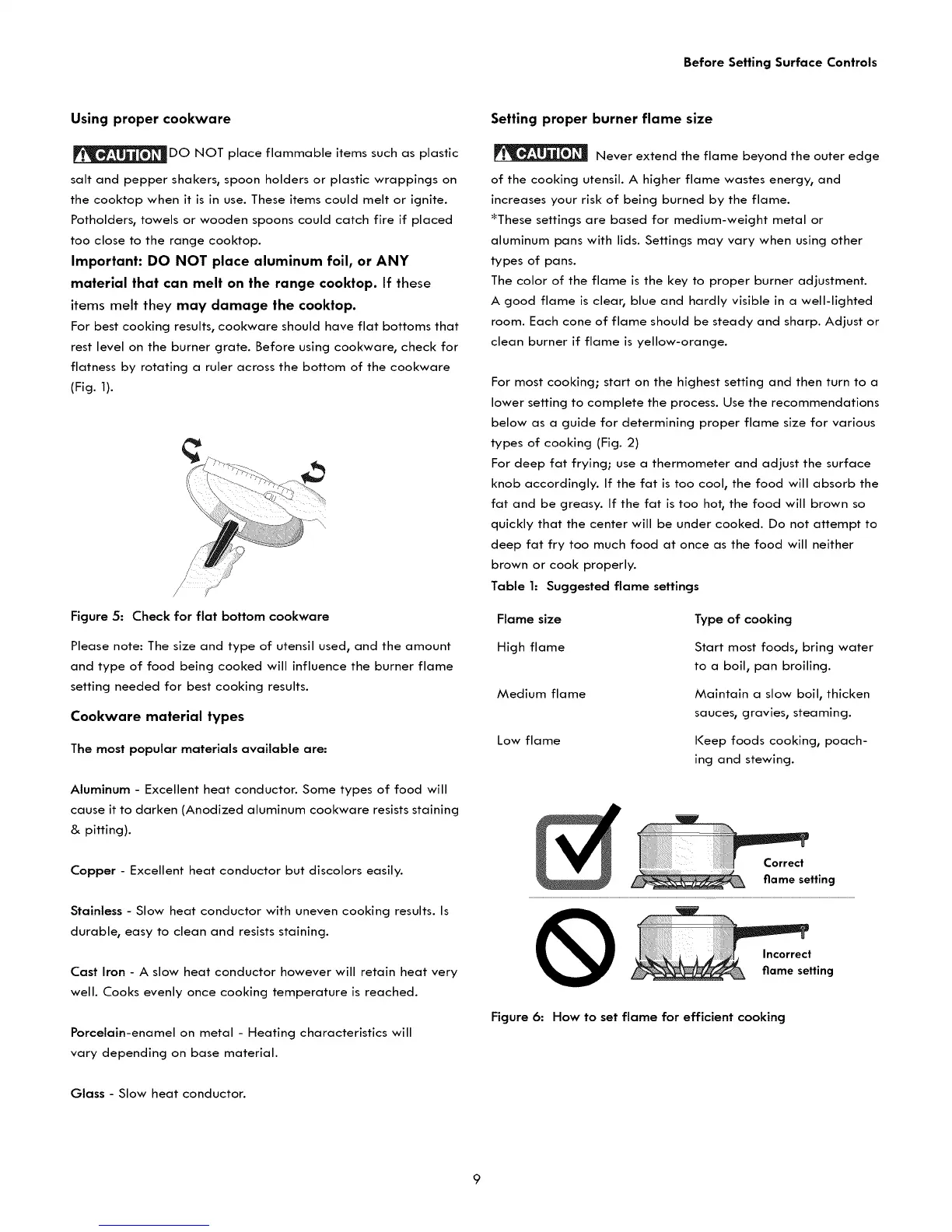
For best cooking results, cookware should have flat bottoms that
rest level on the burner grate. Before using cookware, check for
flatness by rotating a ruler across the bottom of the cookware
(Fig. 1).
Figure 5.- Check for flat bottom cookware
Please note: The size and type of utensil used, and the amount
and type of food being cooked will influence the burner flame
setting needed for best cooking results.
Cookware material types
The most popular materials available are:
Aluminum - Excellent heat conductor. Some types of food will
cause it to darken (Anodized aluminum cookware resists staining
& pitting).
Copper - Excellent heat conductor but discolors easily.
Stainless - Slow heat conductor with uneven cooking results. Is
durable, easy to clean and resists staining.
Cast Iron - A slow heat conductor however will retain heat very
well. Cooks evenly once cooking temperature is reached.
Porcelain-enamel on metal - Heating characteristics will
vary depending on base material.
Glass - Slow heat conductor.
Setting proper burner flame size
Never extend the flame beyond the outer edge
of the cooking utensil. A higher flame wastes energy, and
increases your risk of being burned by the flame.
_These settings are based for medium-weight metal or
aluminum pans with lids. Settings may vary when using other
types of pans.
The color of the flame is the key to proper burner adjustment.
A good flame is clear, blue and hardly visible in a well-lighted
room. Each cone of flame should be steady and sharp. Adjust or
clean burner if flame is yellow-orange.
For most cooking; start on the highest setting and then turn to a
lower setting to complete the process. Use the recommendations
below as a guide for determining proper flame size for various
types of cooking (Fig. 2)
For deep fat frying; use a thermometer and adjust the surface
knob accordingly. If the fat is too cool, the food will absorb the
fat and be greasy. If the fat is too hot, the food will brown so
quickly that the center will be under cooked. Do not attempt to
deep fat fry too much food at once as the food will neither
brown or cook properly.
Table 1: Suggested flame settings
Flame size
High flame
Medium flame
Low flame
Type of cooking
Start most foods, bring water
to a boil, pan broiling.
Maintain a slow boil, thicken
sauces, gravies, steaming.
Keep foods cooking, poach-
ing and stewing.
i_777777 i
° 77f77i7iiii
i/;
flame setting
Figure 6: How to set flame for efficient cooking






 To Next Page