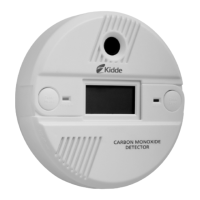
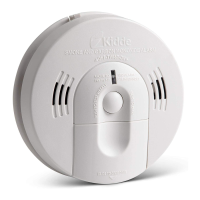
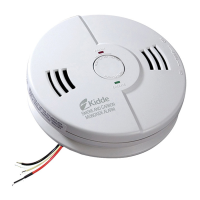
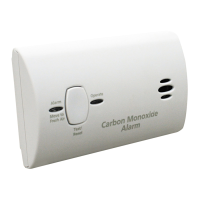
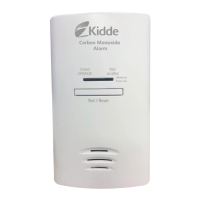
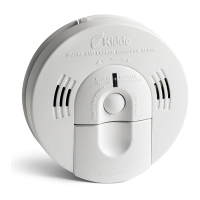
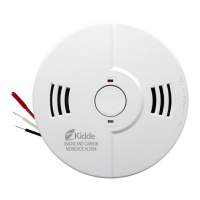
The Kidde K4MCO is a 230V Mains Carbon Monoxide (CO) Alarm equipped with a rechargeable battery back-up, designed to detect carbon monoxide from any source of combustion in a residential environment. This Type B apparatus is certified to BS EN 50291-1:2018 and is intended for use in ordinary family homes.
Function Description:
The primary function of the K4MCO alarm is to detect carbon monoxide gas. It operates on a 230V AC, 50Hz constant supply and includes a rechargeable battery back-up that provides at least 72 hours of operation during a power failure. The alarm is time-weighted, meaning the higher the CO level, the sooner it will alarm. It features an electrochemical CO sensor for accurate detection. The device is capable of interconnecting with up to 24 other compatible Kidde devices (including smoke and heat alarms), with up to 18 initiating devices, creating a comprehensive safety system. In an interconnected system, smoke/heat alarms will override CO alarms.
Important Technical Specifications:
- Power: 230V, 50Hz, 30mA max.
- Sensor: Electrochemical CO Sensor.
- Storage and Transport Conditions: -20°C to +60°C, 5-95% RH (non-condensing).
- Temperature Range (Operating): 0°C to 40°C.
- Humidity: Up to 90% relative humidity (RH), non-condensing.
- Alarm Sound: 85dB+ at 3 metres (10ft) @ 3.4 +/- 0.5 KHz pulsing alarm.
- Weight: 220g.
- Dimensions: 145mm x 145mm x 40mm.
- Battery Back-up: Rechargeable lithium batteries, sealed within the unit.
- Interconnection: Hardwired interconnects with up to 24 other compatible Kidde devices (1SFW, 1SFWR, 2SFW, 2SFWR, 3SFW, 3SFWR, 4MCO, 4MDCO, K4MCO). Maximum wire run distance between first and last unit is 300m. Interconnect wiring resistance shall be a maximum of 10 ohms.
- End of Life: 7 years from installation date.
Usage Features:
- Visual Indicators (LEDs):
- Green (Power LED): Continuous ON when AC mains are connected and active. Flashes every 7 seconds during mains power failure or battery discharge.
- Red (Alarm LED): Flashes during an alarm, error conditions, or end of life.
- Amber: Flashes during error conditions, end of life, or low battery.
- Audible Indicators (Sounder):
- Alarm: 4 loud beeps/pause/4 loud beeps repeated.
- Interconnected CO Alarm: 4 loud beeps/pause/4 loud beeps repeated.
- Interconnected Heat/Smoke Alarm: 3 loud beeps/pause/3 loud beeps repeated.
- Error Condition -1: Chirp/30 seconds.
- Error Condition -2: Constant loud sound.
- End of Life: Chirp twice every 30 seconds.
- Low Battery: Chirp/15 seconds.
- Mains Power Failure (Low Battery): Chirp/15 seconds.
- Battery Back-up Close to Discharge: Chirp/60 seconds.
- Test/Reset Button: Used to test the alarm's functionality and silence an alarm (unless dangerous CO levels persist).
- CO Alarm Procedure: In case of an alarm, users are instructed to remain calm, open doors and windows, turn off fuel-burning appliances, evacuate if the alarm persists, seek medical help for CO poisoning symptoms, and contact emergency services or a Gas Safe Registered Engineer.
- End of Life Notification: After 7 years, the unit will chirp twice every 30 seconds, and the amber and red LEDs will flash, indicating it's time for replacement.
- Battery Back-up Charging: When AC mains are connected, the battery back-up charges, and the unit continues to monitor for CO.
Maintenance Features:
- Regular Cleaning: The alarm should be cleaned at least once a year using compressed air or a vacuum cleaner to clear openings around the perimeter. The exterior can be wiped with a damp cloth (water only).
- Avoidance of Contaminants: Do not use detergents, solvents, air fresheners, hair sprays, or other aerosols near the alarm. Do not paint the unit, as this can seal vents and interfere with the sensor.
- Disassembly: The unit is sealed, and the cover is not removable. Users are warned against attempting to disassemble the unit, as this voids the warranty and poses risks of electric shock or malfunction.
- Professional Installation: The CO alarm must be installed by a competent person according to the provided instructions and local regulations.
- Sensor Sensitivity: The sensor can be affected by substances such as methane, propane, iso-butane, iso-propanol, ethylene, benzene, toluene, ethyl acetate, hydrogen sulphide, hydrogen, sulphur dioxide, alcohol-based products, paints, thinners, solvents, adhesives, hair-sprays, aftershaves, perfumes, and some cleaning agents. Users are advised to move the alarm to another location during activities involving these substances and ensure good ventilation.
- Replacement: The manufacturer recommends replacing the alarm seven years from the installation date. The sealed lithium batteries can only be removed by qualified professionals at recycling points.
- Testing: Weekly testing by pressing the test button is recommended to ensure proper operation.
- This CO alarm is not a substitute for proper installation, use, and maintenance of fuel-burning appliances, including appropriate ventilation and exhaust systems.
- It is not designed to detect smoke, fire, or other gases like natural gas; separate smoke alarms are required for fire detection.
- The alarm is intended for residential use and not for compliance with occupational safety standards.
- Individuals with specific medical conditions may require an alarm that operates below 30ppm and should consult a doctor.
- The device cannot warn against chronic effects of CO exposure or protect individuals at specific risk.
- Altering the alarm in any way may lead to electric shock or prevent correct functioning.
- The alarm only indicates CO presence at the sensor location; CO may be present in other areas.
- The alarm will not work without power and requires a continuous supply.
- The alarm is not suitable for use in caravans or boats; only CO alarms certified to EN50291-2 are approved for this purpose.
- It is crucial to determine and address the source of CO after an alarm sounds.
The Kidde K4MCO provides essential carbon monoxide detection with robust features for household safety, emphasizing proper installation, regular maintenance, and adherence to safety protocols.

 Need help?
 General

 To Next Page