OPERATION
The proper fastening torque may differ depending upon the kind or size of the screw/bolt, the material
of the work piece to be fastened, etc. The relation between fastening torque and fastening time is
shown in the figures.
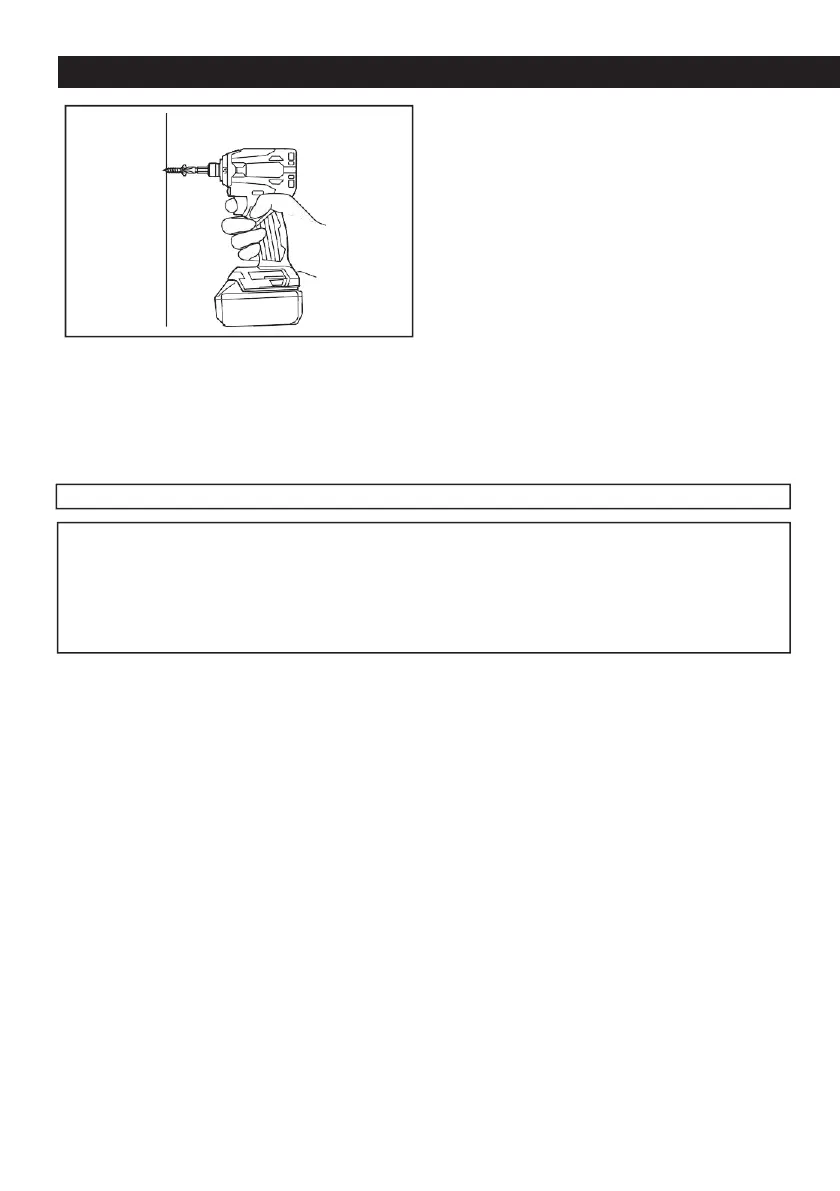
Hold the tool firmly and place the point of the driver bit in the screw head. Apply forward pressure to
the tool to the extent that the bit will not slip off the screw and turn the tool on to start operation.
NOTE: Use the proper bit for the head of the screw/ bolt that you wish to use.
NOTE: Hold the tool pointed straight at the screw.
NOTE: If the impact force is too strong or you tighten the screw for a time longer than shown in the
figures, the screw or the point of the driver bit may be over- stressed, stripped, damaged, etc. Before
starting your job, always perform a test operation to determine the proper fastening time for your
screw.
The fastening torque is affected by a wide variety of factors including the following. After fastening,
always check the torque with a torque wrench.
1. When the battery cartridge is discharged almost completely, voltage will drop and the fastening
torque will be reduced.
2. Driver bit or socket bit
Failure to use the correct size driver bit or socket bit will cause a reduction in the fastening torque.
3. Bolt
Even though the torque coefficient and the class of bolt are the same, the proper fastening torque
will differ according to the diameter of bolt.
Even though the diameters of bolts are the same, the proper fastening torque will differ according to
the torque coefficient, the class of bolt and the bolt length.
4. The manner of holding the tool or the material of driving position to be fastened will affect the torque.
5. Operating the tool at low speed will cause a reduction in the fastening torque.
NOTICE: If you use a spare battery to continue the operation, rest the tool at least 15 min.


 To Next Page