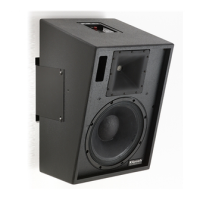
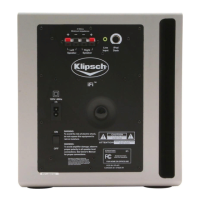
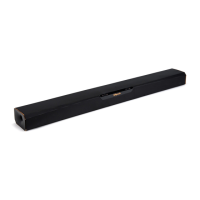
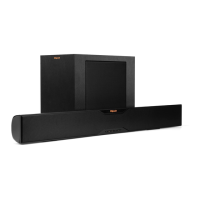
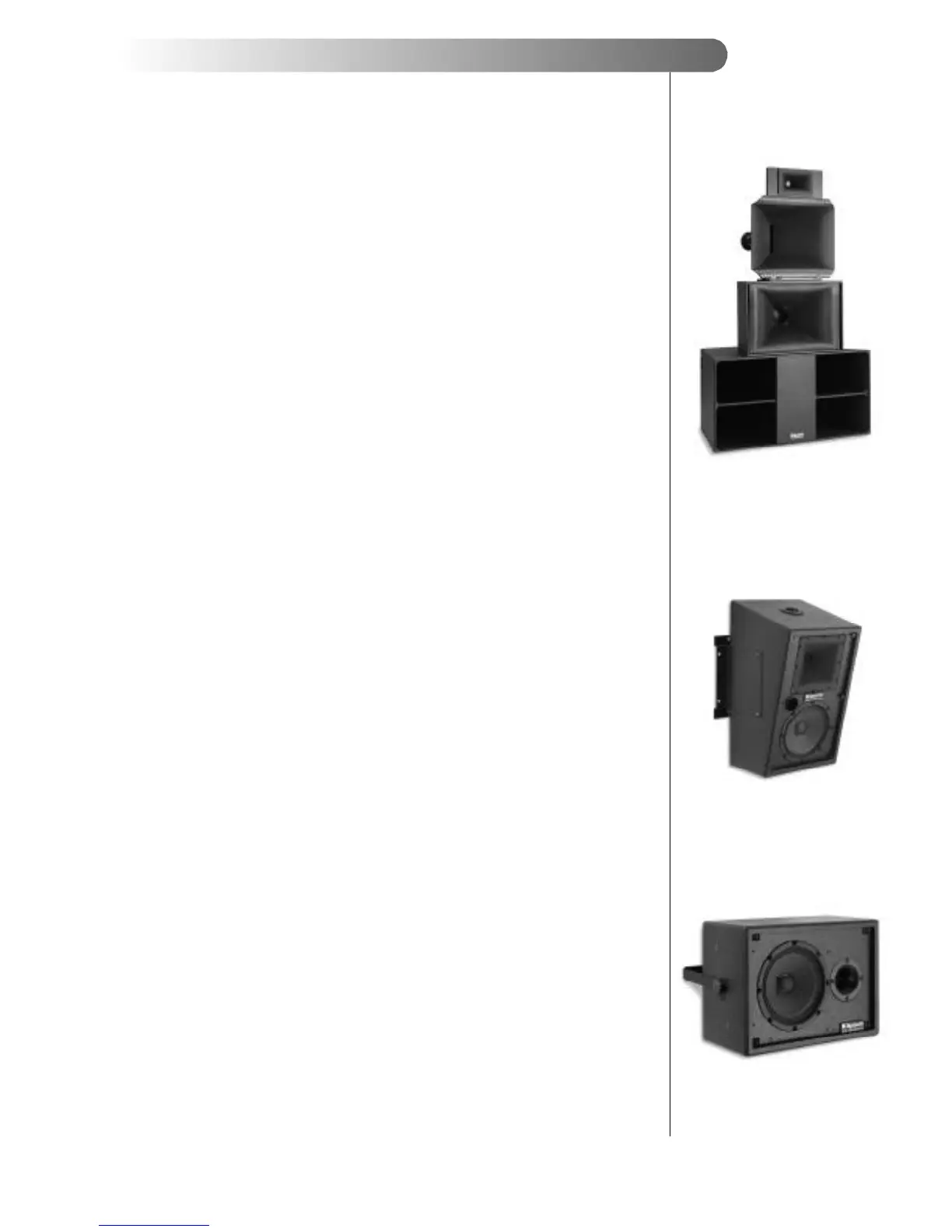
The hardware required to mount the component modules is included with the speaker
components on all Klipsch behind-the-screen and stage speaker systems. Hardware
primarily consists of brackets, yokes, bolts, nuts and washers for mounting and properly
aiming the mid-bass and high frequency horns and drivers above the low frequency
enclosures. The surround sound speakers, intended for wall mounting, are pre-drilled for
use with industry standard Goldberg, APC and OmniMount® brackets. Please refer to the
loudspeaker model installation diagrams in the following sections for specific assembly
details.
S a f e t y
After assembling the components on each speaker system, but before operation, all bolts
and nuts should be double-checked for proper seating and tightness. Due to the weight
and size of the components, damage could occur if the devices were to become
unattached.
A m p l i f i c a t i o n
For B-chain amplifier power matching, please refer to the specifications for each
component module. Amplifiers should be overrated to ensure available dynamic
headroom and freedom from distortion on loud signal passages. Level capabilities in the
house should meet or exceed your specific processor system standards when speaker
component specifications are factored in. Note that nominal dialogue levels in modern
theaters are typically 85dB or greater, with effect and music levels at a 105dB average.
When using passive crossovers (as opposed to actively dividing signals for the low,
mid-bass, high frequency and optional extended high frequency sections), Klipsch
recommends designing the system with 6dB of amplifier headroom.
Wire Gauge
The choice of gauge for speaker interconnect wire plays a major role in the power transfer
efficiency between amplifiers and speakers. Signal loss per distance charts for the various
gauges of speaker wire and loudspeaker impedances indicate that the largest gauge of wire
should be used, whenever possible, to minimize insertion loss, amplifier loading and
frequency response non-linearities.
C r o s s o v e r s
Although passive crossovers are available for a number of the Klipsch screen and stage
systems, there are advantages to using active crossovers. By actively dividing the frequency
sections for the systems, less power is lost to heat in the passive crossover, and device
control (damping factor) is greatly improved. In virtually every case, the speaker system
performance is improved through bi- or tri-amplification. Of course, the performance
improvements must be weighed against the cost of additional amplifier channels.
Klipsch Professional Theater Speaker Systems


 To Next Page
 Loading...